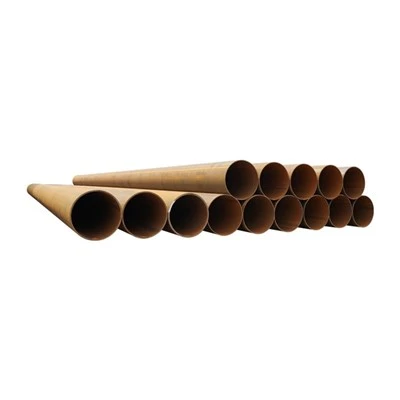
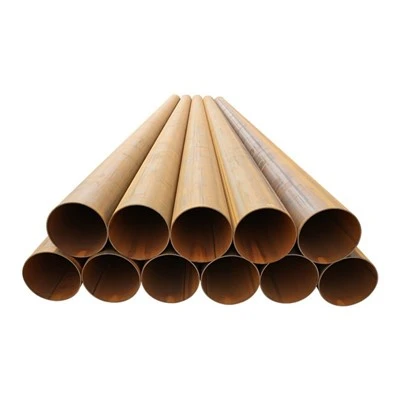
HFW steel pipe is an important welded steel pipe product used in oil and gas transmission, water transportation, industrial pipelines, and infrastructure projects. Manufactured through a high frequency welding process, HFW steel pipe combines continuous production efficiency with controlled longitudinal seam welding, making it suitable for projects that require consistent dimensions, reliable mechanical performance, and stable quality.
For pipeline contractors and project owners, the value of HFW steel pipe goes beyond its manufacturing efficiency. The selection of steel grade, pipe diameter, wall thickness, length, welding parameters, inspection methods, and corrosion protection system all influence the final performance of the pipe. A qualified HFW steel pipe manufacturer should therefore be capable of controlling the complete production process and supplying products according to the applicable standard and project specification.
| Parameter | Typical HFW Steel Pipe Range / Requirement | Importance |
|---|---|---|
| Production Method | High Frequency Welding | Controls longitudinal seam formation |
| Outside Diameter | Approx. Φ48–Φ660.4 mm | Determines pipeline capacity |
| Wall Thickness | Approx. 2.0–22 mm | Influences pressure and structural capacity |
| Pipe Length | Approx. 6–27 m | Affects transportation and installation |
| Standards | API 5L, ASTM, EN, GB/T and others | Ensures specification compliance |
| Inspection | UT, hydrostatic, dimensional and visual testing | Verifies product integrity |
| Coating | FBE, 3PE, 3PP and other systems | Provides corrosion protection |
What Is HFW Steel Pipe and How Is It Manufactured?
HFW steel pipe is produced by continuously forming steel strip or coil into a cylindrical shape and joining the longitudinal edges using high-frequency electrical energy. Unlike conventional arc welding methods that rely on welding consumables, HFW uses localized electrical resistance heating followed by pressure to create the seam.
What Happens During the HFW Welding Process?
The steel strip first passes through a series of forming rolls that gradually transform the flat strip into a cylindrical shape. As the edges approach each other, high-frequency current generates concentrated heat at the welding area.
The heated edges are then pressed together, forming a continuous longitudinal weld. After welding, excess material can be removed from the weld area, and the pipe passes through sizing equipment to achieve the required outside diameter and dimensional accuracy.
What Factors Influence Weld Quality?
Welding speed, electrical power, edge condition, forming stability, squeeze pressure, and material characteristics can all influence the final seam. Consistent control of these parameters is essential, particularly when producing pipe for pressure or energy transportation applications.
What Advantages Does HFW Steel Pipe Offer to Pipeline Contractors?
HFW steel pipe offers several advantages that make it attractive for standardized pipeline projects. Its continuous manufacturing process supports efficient production while maintaining controlled dimensions.
What Makes HFW Pipe Efficient for Large Orders?
For projects requiring hundreds or thousands of tons of steel pipe, production efficiency can directly affect delivery schedules. HFW technology is well suited to continuous production, allowing manufacturers to produce large quantities of pipe with consistent dimensions.
This can be particularly valuable for natural gas, oil, water, and industrial pipeline projects where many pipe sections need to be connected in sequence during field installation.
What Role Does Dimensional Consistency Play?
Consistent outside diameter, wall thickness, straightness, and roundness help reduce alignment difficulties during field welding. This can improve construction efficiency and reduce the need for corrective work at the project site.
What Standards Can HFW Steel Pipe Meet?
The applicable standard is one of the most important factors when purchasing HFW steel pipe. Different applications require different requirements for chemical composition, mechanical properties, dimensions, testing, and weld quality.
What Is the Role of API 5L?
API 5L is widely used for steel line pipe in oil and gas transportation. Depending on project requirements, HFW steel pipe can be supplied in different API 5L grades and product specification levels.
The selection between PSL1 and PSL2 depends on the project specification and required level of control over chemical composition, mechanical properties, toughness, testing, and manufacturing requirements.
What About ASTM and EN Standards?
HFW steel pipe may also be manufactured according to ASTM, EN, GB/T, and other recognized standards depending on the application and destination market.
A professional manufacturer should confirm the complete standard before production because a standard determines more than the pipe's nominal size. It may also specify material properties, tolerances, testing, marking, and acceptance criteria.
What Applications Can HFW Steel Pipe Support?
HFW steel pipe is used across a wide range of pipeline and industrial applications because its dimensions and material grades can be selected according to different operating conditions.
What Role Does HFW Pipe Play in Oil and Gas Transportation?
Oil and gas transmission systems require pipes capable of safely containing internal pressure over long operating periods. HFW steel pipe manufactured to appropriate line pipe standards can be used for selected onshore transmission and distribution systems.
For natural gas applications, material selection, weld integrity, hydrostatic testing, and non-destructive inspection are particularly important because pipeline reliability directly affects operational safety.
What Other Pipeline Systems Use HFW Pipe?
HFW steel pipe is also used for water transmission, industrial utility pipelines, fire water systems, cooling water systems, structural applications, and other engineering projects.
The final specification should consider the transported medium, operating pressure, temperature, installation environment, and expected service life.


What Quality Control Measures Are Used for HFW Steel Pipe?
Quality assurance is essential when HFW steel pipe is supplied for major infrastructure projects. Manufacturers need to control both the raw material and every major production stage.
What Tests Help Verify Pipe Quality?
Depending on the applicable standard, testing may include chemical analysis, tensile testing, impact testing, hydrostatic testing, ultrasonic testing, visual inspection, and dimensional measurement.
Ultrasonic inspection can be particularly useful for examining the longitudinal weld and identifying potential discontinuities that may not be visible from the external surface.
What Is the Importance of Hydrostatic Testing?
Hydrostatic testing provides an important verification of pressure resistance. The pipe is subjected to the specified test pressure for the required period, allowing manufacturers to identify leakage or unacceptable deformation.
For pipeline projects, hydrostatic testing requirements should be established according to the applicable standard and customer specification.
What Corrosion Protection Options Are Available for HFW Steel Pipe?
Pipeline steel is often exposed to soil, moisture, chemicals, salt, or other corrosive environments. Surface protection can therefore play an important role in extending service life.
What Coating Systems Can Be Applied?
Depending on the application, HFW steel pipe can be supplied with external coating systems such as FBE, 3PE, or 3PP. Internal epoxy coatings can also be considered for applications where internal corrosion protection is required.
The appropriate coating system depends on the operating environment, transportation medium, installation method, temperature, and project design life.
What Should Buyers Consider When Ordering Coated Pipe?
Coating thickness, surface preparation, adhesion, holiday detection, appearance, and repair requirements should all be clearly specified before production. Coordination between pipe manufacturing and coating operations can help ensure consistent final quality.
What Should Buyers Check Before Purchasing HFW Steel Pipe?
Selecting an HFW steel pipe manufacturer requires more than comparing unit prices. Buyers should evaluate production capability, applicable standards, quality-control procedures, inspection facilities, delivery capacity, and experience with similar projects.
For international projects, documentation and traceability are also important. Material certificates, inspection reports, testing records, coating documentation, and product markings should correspond with the purchase specification.
What Can an HFW Steel Pipe Project Tell Us About Manufacturer Capability?
The TITAS natural gas transmission project in Bangladesh is one example of welded steel pipe being supplied for energy infrastructure. The project involved approximately 1,700 tons of ERW steel pipe, with specifications of API 5L PSL1 Grade B, DN200–DN400.
The project demonstrates the importance of combining appropriate line pipe standards with stable production, dimensional control, weld inspection, and reliable delivery. For natural gas transmission, every stage from raw material selection to final testing contributes to the reliability of the completed pipeline.
Read More:
How Does HFW Steel Pipe Deliver Reliable Performance in High-Pressure Pipeline Applications?
How Can LSAW Steel Pipe Improve The Performance Of Large Structural Projects?