


Hebei Huayang Steel Pipe Co., Ltd. was established in 2005 with fixed assets of RMB 1.2 billion. Our pipe caps include pipe port caps, carbon pipe caps, buttweld caps, etc. Pipe caps are made to cover pipe ends of various forms and serve as a protective measure. End cap pipe fittings are mostly used to waterproof the connections. Additionally, they are employed to seal the extremities of hydraulic or pneumatic pipelines and tubes.
-
![Pipe Port Caps]() Pipe Port CapsBrand: Huayangview more
Pipe Port CapsBrand: Huayangview more
Origin: China
Diameter: 76mm-1442mm
Thickness: 2.5mm-50mm
Material: carbon steel
Standards: national standard, American standard, European standard, British standard, etc. -
![Carbon Steel Pipe Cap]() Carbon Steel Pipe CapBrand: Huayangview more
Carbon Steel Pipe CapBrand: Huayangview more
Origin: China
Diameter: 76mm-1442mm
Thickness: 2.5mm-50mm
Material: carbon steel
Standards: national standard, American standard, European standard, British standard, etc. -
![Carbon Pipe Cap]() Carbon Pipe CapBrand: Huayangview more
Carbon Pipe CapBrand: Huayangview more
Origin: China
Diameter: 76mm-1442mm
Thickness: 2.5mm-50mm
Material: carbon steel
Standards: national standard, American standard, European standard, British standard, etc. -
![Buttweld Caps]() Buttweld CapsBrand: Huayangview more
Buttweld CapsBrand: Huayangview more
Origin: China
Diameter: 76mm-1442mm
Thickness: 2.5mm-50mm
Material: carbon steel
Standards: national standard, American standard, European standard, British standard, etc. -
![Piping Steel End Cap]() Piping Steel End CapBrand: Huayangview more
Piping Steel End CapBrand: Huayangview more
Origin: China
Diameter: 76mm-1442mm
Thickness: 2.5mm-50mm
Material: carbon steel
Standards: national standard, American standard, European standard, British standard, etc.


Why Choose Us?
Fully Equipped
Huayang currently has 17 new automated steel pipe production lines and an advanced testing center that can conduct various physical and chemical tests on steel pipes.
Customized Solutions
We provide steel pipe processing services and provide customized solutions such as customized pipe sizes, materials and specifications to meet specific customer requirements.
Strong Strength
Hebei Huayang Steel Pipe Co., Ltd. was established in 2005 with a registered capital of RMB 500 million, covers an area of 600,000 square meters, has more than 600 employees, annual sales revenue of nearly RMB 10 billion, and an annual production capacity of 2 million tons.
Production Market
Our products are exported to more than 80 regions including Southeast Asia, the Middle East, South America, Europe and the United States, and "Huayang" brand steel pipes have won a good reputation at home and abroad.
Types of Pipe Cap
Buttweld caps
Buttweld caps, also known as butt-welded end caps, are pipe fittings that are designed to cover or terminate the end of a pipe. Buttweld caps are commonly used in piping systems to prevent the ingress of foreign materials, to provide a clean and safe termination point for the pipe, or to serve as a closure for a piping system.
Piping steel end cap
A piping steel end cap is a specific type of end cap made from steel and used in piping systems. Piping steel end caps are widely used in industries such as oil and gas, chemical processing, and power generation, where piping systems are subject to high pressures and temperatures and require robust and reliable fittings.
Pipe port caps
Pipe port caps are used to seal these ports when they are not in use or to prevent the ingress of contaminants. They are typically made from materials that are compatible with the process fluid and the operating conditions of the piping system. Pipe port caps May be attached via threading, welding, or other methods depending on the specific application and the requirements of the piping system.
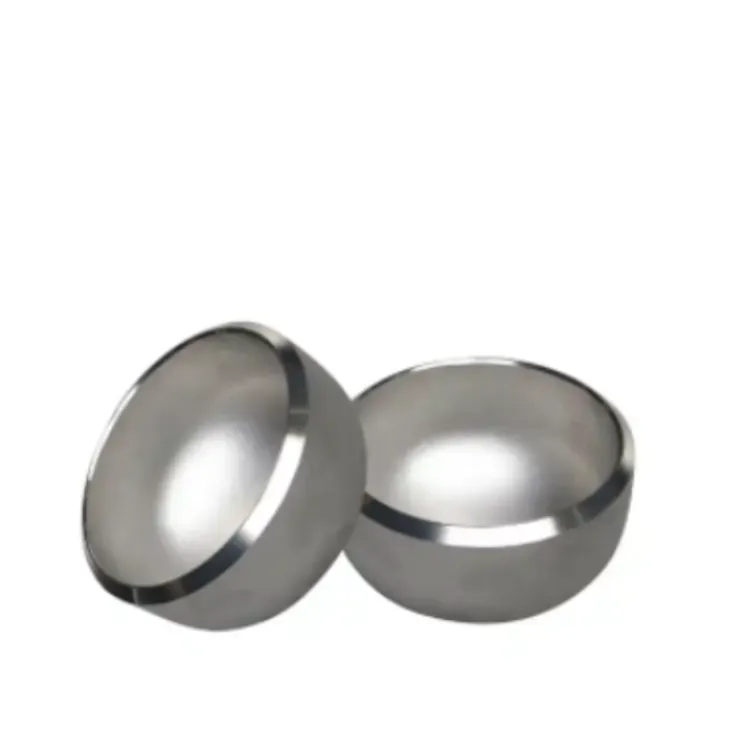
Specifications of Pipe Cap

Different Characteristics of Pipe Cap
NPT (National Pipe Thread) size: This characteristic is appropriate for caps with a round form when the item that has to be protected has a male NPT thread.
BSP (British Standard Pipe) size: This size choice is only appropriate for caps with a round form and a male BSP thread on the item to be capped.
Diameter: Only round caps and plugs may be made with this crucial size. The primary thread diameter is the most crucial factor to take into account when fittings have straight threads. However, when a cap, plug, or item to be capped has a tapered (NPT or BSP) thread, its size is not a crucial factor to take into account.
Shape: The size and shape of pipe caps are other crucial factors to take into account. distinct pipe caps have distinct features. Features include:
· Round Caps: The flange, slotted head, knurled or faceted head, retaining head, and tear tab are all common characteristics of round caps. A flange is designed to make it simple to remove pipes or tubes or to provide additional protection. Additionally, flanges aid in preventing inadvertent plug ejection through the aperture. A screwdriver makes it simple to put on or take off slotted caps.
· Square or Rectangular Cap: When choosing a square or rectangular cap, the length and breadth should be taken into account the most. For square caps, the length and breadth are the same dimension, but the width is the smaller cross sectional measurement for rectangular caps.
Tensile Strength of Pipe Cap
|
Grade B Carbon Steel |
(ASTM A53, A523, API 5L PSL1) |
API 5L PSL2 |
|
Minimum Tensile Strength: |
60,000 psi |
60,000 psi |
|
Maximum Tensile Strength: |
None |
110,000 psi |
Surface Treatment of Pipe Caps
Galvanizing - This surface treatment involves the application of a layer of zinc to the surface of carbon steel pipes. Galvanizing provides excellent protection against corrosion and rust.
Epoxy coating - Epoxy coating is a type of paint that provides a protective layer for carbon steel pipes. Epoxy coating is often used in pipelines for transporting acidic materials, water treatment plants, and oil and gas pipelines.
Powder coating - Powder coating is a type of surface treatment that involves the application of a dry powder to the surface of carbon steel pipes. The powder is electrostatically charged and adheres to the surface of the pipe. It is then baked in an oven to create a protective and durable coating.
Phosphating - Phosphating is a chemical treatment that involves the application of a layer of phosphate to the surface of carbon steel pipes. The phosphate layer provides corrosion resistance and improves the adhesion of paint and other coatings.
Anodizing - Anodizing is a type of surface treatment that is commonly used on aluminum, but can also be used on carbon steel. It involves the application of an oxide layer to the surface of the pipe, which improves its resistance to corrosion and wear.
In order to determine whether the hardness standard of carbon steel pipes after heat treatment meets the requirements, a hardness test is required. Hardness testing methods include Rockwell hardness test, Vickers hardness test, Brinell hardness test, etc. Among them, Brinell hardness test is the most commonly used testing method.
Brinell hardness testing is usually measured using a Brinell hardness tester. The material needs to be flattened before measurement and calibrated before testing. When testing, the hardness tester needs to be pressed on the surface of the material to be tested, and it generally needs to be kept stable for 10 to 15 seconds. The hardness tester will rotate the pointer according to the pressure and display the hardness value.

Usage of Pipe Cap

Pipe caps are made to cover pipe ends of various forms and serve as a protective measure. End Cap Pipe Fittings are mostly used to waterproof the connections.
They are employed to seal the extremities of hydraulic or pneumatic pipelines and tubes. They are utilized in the machinery, processing equipment, and plumbing systems for home, commercial, and industrial water supply lines. They are installed on water pump lines with the express objective of eliminating air obstructions.
Other Services
|
Accepted delivery terms: |
FOB, CFR, CIF, EXW, FAS, CIP, FCA, CPT, DDP, DDP, DDU, Express Delivery, DAF, DES. |
|
Delivered Duty Paid: |
DDP, DDU, Express Delivery, DAF, DES. |
|
Accepted Payment Currencies: |
USD, EUR, CAD, AUD, HKD, GBP, CNY. |
|
Accepted Payment Methods: |
T/T, L/C, D/P, D/A, MoneyGram, Credit Card, PayPal, Western Union, Cash, Third Party Payment Escrow. |
Certificate


FAQ
Hebei Huayang Steel Pipe Co., Ltd is one of the most professional pipe cap manufacturers and suppliers in China, providing high quality customized products with low price. We warmly welcome you to wholesale cheap pipe cap from our factory.
Pipe Port Caps, Pipe Cap, Carbon Steel Pipe Cap


