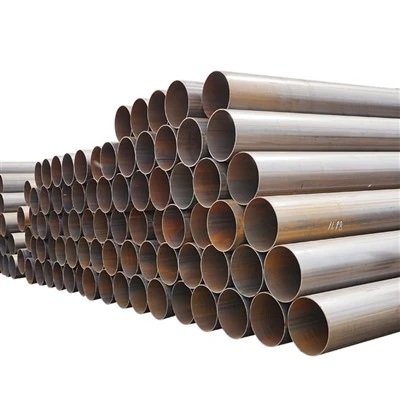
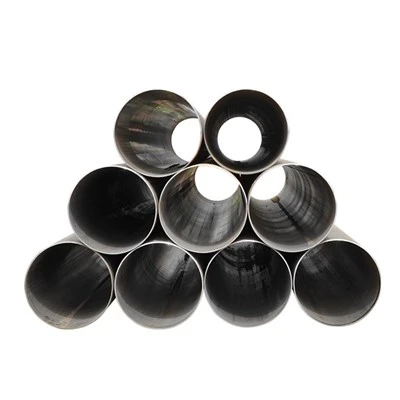
HFW steel pipe, or High Frequency Welded steel pipe, is widely used in modern pipeline engineering because it combines efficient manufacturing, consistent weld quality, dimensional accuracy, and strong production flexibility. The HFW process uses high-frequency electrical energy to heat the edges of a continuously formed steel strip or coil and create a longitudinal welded seam. With appropriate process control and inspection, HFW steel pipe can provide reliable performance for water transmission, oil and gas pipelines, industrial services, and other engineering applications.
For pipeline owners and contractors, choosing HFW steel pipe is not simply a matter of selecting a diameter and wall thickness. Material grade, welding parameters, heat treatment, dimensional tolerances, hydrostatic performance, non-destructive testing, and applicable standards all influence the final product. From a manufacturer's perspective, stable raw materials and precise production control are essential for producing HFW steel pipe that can meet demanding international project specifications.
| Item | Typical HFW Steel Pipe Consideration | Engineering Importance |
|---|---|---|
| Manufacturing Method | High Frequency Welding | Efficient longitudinal seam welding |
| Diameter Range | Approx. Φ48–Φ660.4 mm | Suitable for various pipeline systems |
| Wall Thickness | Approx. 2.0–22 mm | Selected according to design requirements |
| Steel Grades | API 5L, ASTM and other grades | Determines mechanical performance |
| Applications | Oil, gas, water and industrial pipelines | Depends on operating conditions |
| Testing | Hydrostatic, UT, dimensional and visual inspection | Confirms pipe integrity |
| Surface Protection | FBE, 3PE, 3PP and other systems | Improves corrosion resistance |
How Is HFW Steel Pipe Manufactured?
The HFW manufacturing process begins with qualified steel coil or strip. The raw material is uncoiled, leveled, inspected, and formed progressively into a cylindrical shape. During forming, the edges of the strip are brought together and heated by high-frequency electrical current.
How Does High Frequency Welding Create the Longitudinal Seam?
High-frequency current concentrates electrical energy around the edges of the formed strip. The localized heating raises the steel to the required welding temperature, after which pressure is applied to forge the heated edges together.
This process produces a longitudinal weld without requiring conventional welding consumables. Stable control of forming speed, electrical power, edge condition, welding temperature, and squeeze pressure is essential to achieving consistent weld performance.
Why Is Process Stability Important?
A small change in welding parameters can influence the quality of the seam. Excessive or insufficient heat input, poor edge alignment, contamination, or unstable forming conditions may affect the weld zone.
For this reason, an experienced HFW steel pipe manufacturer continuously monitors the production line and adjusts process parameters according to pipe size, wall thickness, steel grade, and production requirements.
How Does Raw Material Quality Affect HFW Steel Pipe Performance?
The quality of the finished HFW steel pipe begins with the quality of the incoming steel coil. Chemical composition, mechanical properties, surface condition, thickness uniformity, and dimensional consistency all influence subsequent forming and welding.
Why Is Steel Coil Selection Important?
A suitable steel grade provides the mechanical properties required by the applicable standard and project. For pipeline applications, grades such as API 5L Grade B and higher-strength grades may be selected according to pressure, transportation medium, and design conditions.
The coil must also have consistent thickness and good surface quality. Significant variations can complicate forming and may affect dimensional accuracy and weld stability.
How Does Edge Quality Affect Welding?
The edges of the strip directly participate in the HFW process. Proper edge trimming and preparation help ensure consistent contact and heating along the longitudinal seam.
Manufacturers therefore need to control edge geometry, cleanliness, alignment, and forming conditions throughout production.
Why Is HFW Steel Pipe Suitable for Oil and Gas Pipelines?
HFW steel pipe is widely used in pipeline systems where reliable longitudinal weld performance and consistent dimensions are required.
What Makes HFW Pipe Suitable for Energy Transportation?
Oil and gas pipelines require stable mechanical properties and reliable resistance to internal pressure. HFW production can provide a highly controlled welding process suitable for standardized pipe dimensions and large-volume production.
For applications manufactured to API 5L requirements, the steel grade, PSL level, dimensions, testing, and acceptance criteria can be specified according to the pipeline design.
How Does Pipe Consistency Help Pipeline Installation?
Consistent outside diameter, wall thickness, roundness, and straightness are important during field welding and pipeline assembly. Dimensional consistency helps reduce alignment difficulties and supports efficient construction.
This becomes particularly important in projects involving thousands of pipe sections, where small dimensional variations can accumulate during installation.
Where Is HFW Steel Pipe Used in Water and Industrial Projects?
Beyond oil and gas, HFW steel pipe is widely used in water transmission, industrial water systems, construction services, and other fluid transportation applications.
Why Is HFW Pipe Suitable for Water Transmission?
Water pipelines require reliable pressure resistance and long-term durability. HFW steel pipe can be supplied with external or internal corrosion protection when required.
For buried water pipelines, external coatings such as FBE, 3PE, or other specified systems can reduce direct contact between the steel surface and the surrounding soil. Internal coatings may also be considered depending on water quality and project requirements.
What Industrial Applications Use HFW Pipe?
Industrial facilities can use HFW steel pipe for cooling water, process water, compressed fluids, utility pipelines, and other services. The appropriate pipe specification depends on the operating pressure, temperature, transported medium, installation environment, and applicable standard.


How Do Manufacturers Control HFW Steel Pipe Quality?
Quality control extends from raw material inspection to final pipe testing. A professional manufacturer does not rely on a single inspection point because pipe performance depends on multiple stages of production.
What Tests Are Commonly Performed?
Depending on the product standard and customer specification, HFW steel pipe may undergo dimensional inspection, visual inspection, hydrostatic testing, ultrasonic testing, mechanical testing, chemical analysis, and weld inspection.
Non-destructive testing is particularly important for evaluating the longitudinal welded area. Automated inspection systems can help identify potential discontinuities that may not be visible during a conventional visual inspection.
Why Is Hydrostatic Testing Important?
Hydrostatic testing verifies the pipe's ability to withstand the specified internal pressure without leakage or unacceptable deformation. For pressure pipeline applications, this provides an important final verification of product integrity.
Testing requirements should always follow the applicable standard and project specification rather than applying identical test parameters to every HFW pipe.
How Can HFW Steel Pipe Be Customized for Different Projects?
Different pipeline projects have different requirements, so manufacturers need to coordinate product design with the customer's technical specification.
Which Parameters Can Be Customized?
Depending on production capability, HFW steel pipe can be supplied in different diameters, wall thicknesses, lengths, steel grades, standards, end conditions, and surface protection systems.
At Huayang Steel Pipe, HFW steel pipe production covers approximately Φ48–Φ660.4 mm, with wall thicknesses from approximately 2.0–22 mm and lengths from 6 to 27 m. This range allows the product to be used across different oil, gas, water, and industrial pipeline applications.
Why Does Project Coordination Matter?
International projects may require specific inspection plans, marking requirements, packing methods, certificates, third-party inspection, or special coating systems. Early communication between the manufacturer, engineering contractor, and project owner helps ensure that the final product meets the complete technical specification.
Project Reference: HFW Steel Pipe for the TITAS Natural Gas Transmission Project
A practical example is the TITAS natural gas transmission project in Bangladesh, where approximately 1,700 tons of ERW steel pipe were supplied in API 5L PSL1 Grade B, DN200–DN400 specifications. As a high-frequency welded longitudinal pipe product, this type of ERW/HFW steel pipe is well suited to natural gas transmission systems requiring consistent dimensions, reliable weld performance, and compliance with pipeline standards.
The project demonstrates how welded steel pipe manufactured to API 5L requirements can support large-scale energy infrastructure. For gas transmission projects, the combination of appropriate steel grade, controlled welding, dimensional inspection, pressure testing, and project-specific quality documentation is essential to reliable field performance.
Read More:
Where Is LSAW Steel Pipe Used in Modern Pipeline And Infrastructure Projects?
How Is LSAW Steel Pipe Manufactured And Where Is It Used in Modern Engineering?