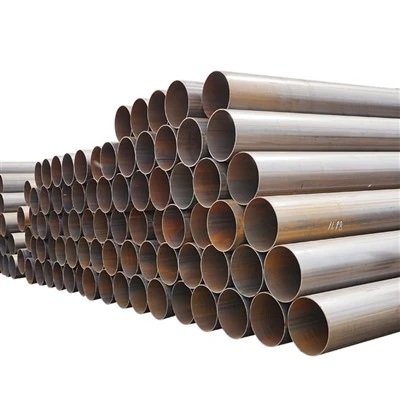
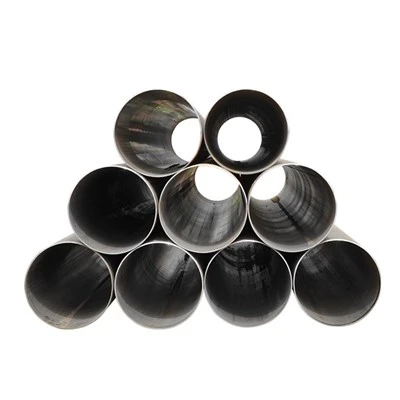
LSAW steel pipe is increasingly used in structural engineering where conventional steel sections may not provide the required combination of load-bearing capacity, dimensional flexibility, and tubular geometry. Manufactured from steel plate through longitudinal submerged arc welding, LSAW steel pipe can be produced in large diameters and substantial wall thicknesses, making it suitable for heavy structural members in infrastructure, transportation, industrial, and architectural projects.
In structural engineering, the application of LSAW steel pipe is different from its use as a pressure pipeline. The primary considerations are usually axial load, bending resistance, buckling stability, lateral loading, fatigue, connection performance, and corrosion protection. The circular cross-section can provide favorable structural characteristics under multidirectional loading, while the plate-forming production process allows manufacturers to supply large tubular members according to project-specific engineering calculations.
| Structural Application | Typical LSAW Steel Pipe Role | Main Design Considerations |
|---|---|---|
| Bridge Piers | Vertical load-bearing members | Compression, bending, fatigue |
| Steel Bridges | Truss and support members | Dynamic loads, connections |
| Pipe Piles | Deep foundation members | Axial and lateral capacity |
| Industrial Plants | Equipment and structural supports | Heavy loads, fabrication |
| Port Structures | Piles and marine supports | Corrosion, impact |
| Stadium Structures | Roof and space-frame members | Long-span stability |
| Architectural Structures | Columns and exposed tubular members | Strength, appearance |
Why Is LSAW Steel Pipe Effective for Heavy Structural Members?
Large structural projects often require members capable of carrying considerable loads without creating unnecessarily complex structural arrangements. LSAW steel pipe can provide a closed tubular section with material distributed around the center of the member.
How Does the Tubular Section Handle Different Loads?
The symmetrical circular cross-section gives LSAW steel pipe similar geometric properties in different directions. This can be advantageous for columns and supports that may experience combinations of axial compression and bending.
For structural design, engineers evaluate the relationship between outside diameter, wall thickness, member length, steel grade, and boundary conditions. A larger diameter can increase the section's resistance to bending and improve its radius of gyration, while wall thickness contributes to local strength and resistance to deformation.
How Does Buckling Affect Structural Pipe Selection?
Buckling is an important consideration for slender compression members. The stability of a structural pipe depends on its effective length, cross-sectional properties, material strength, and end conditions.
Therefore, LSAW steel pipe should be selected according to structural calculations rather than simply choosing the largest available diameter. Proper coordination between pipe dimensions and structural design can help achieve an efficient balance between strength, stability, and material consumption.
How Is LSAW Steel Pipe Applied in Transportation Infrastructure?
Transportation infrastructure includes bridges, railway facilities, highway structures, terminals, and other large-scale construction projects where steel members are exposed to repeated or dynamic loading.
What Roles Can LSAW Pipe Play in Bridge Construction?
LSAW steel pipe can be used as bridge piers, columns, tubular truss members, arch components, and structural supports. Large diameters allow designers to create robust structural members for bridges with significant spans or heavy traffic loads.
The circular section is also suitable for structures where wind loads act from multiple directions. Its aerodynamic profile can be useful in certain exposed structural applications, although the final design must be based on project-specific engineering analysis.
Why Are Fatigue and Weld Quality Important?
Bridge components can experience millions of loading cycles during their service life. Welded structural members must therefore be designed and manufactured with fatigue behavior in mind.
The longitudinal weld of LSAW steel pipe requires appropriate welding parameters and inspection procedures. Depending on the project specification, ultrasonic testing, radiographic testing, visual examination, and other inspection methods can be applied.


How Can LSAW Steel Pipe Be Used in Deep Foundation Systems?
Foundation engineering is another area where large-diameter LSAW steel pipe provides practical advantages.
Why Are Large Steel Pipe Piles Used?
Pipe piles transfer loads from structures into deeper soil or rock layers. They can resist vertical compression, tension, and lateral forces depending on the foundation design.
Large-diameter LSAW pipe piles are suitable for heavy buildings, bridges, ports, offshore structures, and other infrastructure where high foundation capacity is required.
What Makes Pipe Dimensions Important During Pile Installation?
A pile must withstand not only its final service load but also stresses generated during handling and installation. Driving or other installation methods can introduce significant local and dynamic stresses.
For this reason, wall thickness, steel grade, weld integrity, straightness, and dimensional accuracy should be evaluated together when selecting LSAW steel pipe for foundation applications.
Can LSAW Steel Pipe Be Used for Industrial Structural Systems?
Industrial plants contain heavy machinery, storage systems, conveyors, platforms, process equipment, and large supporting frameworks. These facilities often require structural members capable of carrying concentrated loads.
Where Are Tubular Members Used in Industrial Facilities?
LSAW steel pipe can serve as equipment supports, columns, structural frames, platforms, and other load-bearing components. The closed cross-section can be particularly useful where torsional resistance and multidirectional loading are important.
The ability to produce different combinations of diameter and wall thickness also allows pipe dimensions to be coordinated with equipment loads and structural calculations.
How Does Dimensional Control Support Fabrication?
Industrial structures often contain numerous welded and bolted connections. Small dimensional deviations can accumulate during fabrication and create alignment problems during installation.
Consistent outside diameter, wall thickness, straightness, and roundness help fabricators achieve more accurate connections and reduce unnecessary modification at the construction site.
How Is LSAW Steel Pipe Used in Port and Marine Structures?
Ports and coastal facilities require structural systems capable of handling vertical loads, lateral forces, vessel impact, waves, and environmental exposure.
What Marine Structures Can Use LSAW Pipe?
Large-diameter LSAW steel pipe can be used for port piles, dolphins, marine supports, trestles, platform structures, and other tubular components.
Its large cross-section can provide the structural capacity required for heavy marine infrastructure, while the closed geometry offers resistance to loads from multiple directions.
How Can Corrosion Protection Improve Structural Service Life?
Marine steel is particularly vulnerable to corrosion because of seawater and salt spray. Appropriate corrosion protection should therefore be incorporated into the structural design.
Depending on the exposure zone and project requirements, external coatings, corrosion allowance, cathodic protection, or combinations of these systems can be used.
How Does LSAW Pipe Support Stadium and Large-Span Structures?
Modern stadiums, exhibition centers, transportation hubs, and other public buildings often use large tubular steel members to create long-span spaces.
Why Are Large Tubular Members Used in Roof Structures?
Large-diameter steel pipes can be used in roof trusses, space frames, arches, columns, and supporting structures. Their circular geometry can combine structural functionality with a clean architectural appearance.
The relatively high torsional resistance of tubular sections can also be useful in complex three-dimensional structures where members experience loads from several directions.
What Should Be Considered in Architectural Applications?
In exposed structural systems, surface quality and dimensional accuracy may be nearly as important as mechanical performance. Pipe ends, weld areas, surface preparation, coating, and connection geometry may all influence the final appearance.
Manufacturers therefore need to coordinate structural requirements with fabrication and architectural requirements before production begins.
What Quality Controls Are Important for Structural LSAW Steel Pipe?
Structural pipe quality begins with qualified steel plate and continues through forming, welding, expansion, inspection, and final preparation.
How Are Material and Weld Properties Verified?
Depending on project requirements, manufacturers may conduct chemical composition analysis, tensile testing, impact testing, ultrasonic testing, radiographic testing, hydrostatic testing, dimensional inspection, and visual examination.
For structural applications, inspection requirements should be determined according to the applicable standard and engineering specification rather than using a uniform testing program for every project.
Why Is Traceability Valuable?
Large infrastructure projects require reliable documentation. Heat numbers, material certificates, inspection reports, non-destructive testing records, and dimensional data can provide traceability from raw steel plate to finished pipe.
This documentation helps project owners, engineers, inspectors, and fabricators verify that the supplied LSAW steel pipe corresponds to the approved technical specification.
Project Reference: LSAW Steel Pipe in a Commercial Structural Project
The Hong Kong Bridge Street Shopping Centre Project demonstrates the application of large-diameter welded steel pipe in a major structural project. The project involved approximately 5,700 tons of steel pipe with a specification of 813 mm × 20 mm × 11.9 m, manufactured from EN 10219 S275JOH material.
The large diameter and 20 mm wall thickness provided the structural characteristics required for the project, while controlled manufacturing and dimensional inspection supported subsequent fabrication and installation. This type of application demonstrates how LSAW steel pipe can function as a substantial structural member rather than only as a conventional pipeline product.
Read More:
How Can LSAW Steel Pipe Support Modern Structural Engineering Projects?
What Makes LSAW Steel Pipe Suitable For Large-Diameter Pipeline Projects?