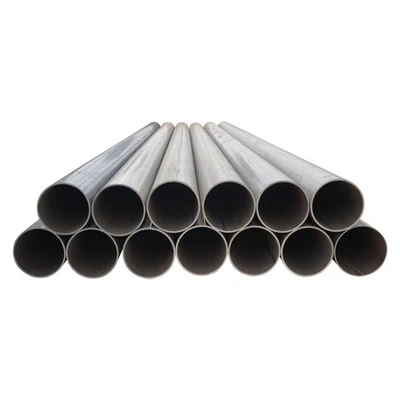
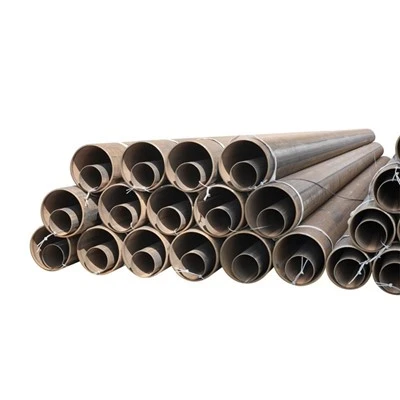
LSAW steel pipe, short for Longitudinal Submerged Arc Welded steel pipe, is widely used in large diameter pipeline projects where high strength, controlled dimensions, reliable weld quality, and customized specifications are required. Unlike small diameter welded pipe produced from continuous strip, LSAW steel pipe is manufactured from steel plate that is formed into a cylindrical shape and welded along its longitudinal seam.
For oil and gas transmission, water infrastructure, industrial pipelines, marine facilities, and other large-scale engineering projects, pipe selection needs to consider much more than nominal diameter. Steel grade, wall thickness, pipe length, manufacturing process, weld inspection, hydrostatic testing, surface protection, and applicable standards all contribute to the long-term performance of the finished pipeline. For project owners and contractors, choosing an experienced LSAW steel pipe manufacturer can therefore help reduce technical and supply risks.
| Item | Typical LSAW Steel Pipe Consideration | Project Importance |
|---|---|---|
| Manufacturing Method | Longitudinal Submerged Arc Welding | Provides controlled longitudinal welding |
| Outside Diameter | Approx. Φ406.4–Φ1422.4 mm | Suitable for large diameter pipelines |
| Wall Thickness | Approx. 7–50 mm | Selected according to design conditions |
| Steel Grades | API 5L, ASTM, EN, GB/T and others | Determines mechanical performance |
| Main Applications | Oil, gas, water and industrial pipelines | Depends on service conditions |
| Testing | UT, RT, hydrostatic and mechanical testing | Verifies pipe integrity |
| Coating Options | FBE, 3PE, 3PP and internal epoxy | Improves corrosion resistance |


What Is LSAW Steel Pipe and How Is It Manufactured?
LSAW steel pipe is produced from steel plate rather than continuously rolled strip. The plate is first inspected and prepared before being formed into a cylindrical shape. Depending on the forming technology, the plate can be shaped through processes such as JCOE forming.
What Happens During LSAW Pipe Production?
After plate preparation, the edges are processed to achieve the required geometry. The plate is then gradually formed into a pipe body. Once the edges are aligned, the longitudinal seam is welded using submerged arc welding technology.
Submerged arc welding provides a controlled welding environment in which the arc is protected by granular flux. This helps stabilize the welding process and allows manufacturers to produce substantial weld penetration and consistent seam quality.
Why Is Mechanical Expansion Used?
After welding, mechanical expansion can be used to improve dimensional accuracy and achieve the required roundness. This stage is particularly important for large-diameter LSAW steel pipe because consistent geometry supports transportation, field welding, and installation.
The finished pipe is then subjected to inspection and testing according to the applicable standard and project specification.
What Makes LSAW Steel Pipe Suitable for Large Diameter Pipelines?
One of the most important advantages of LSAW steel pipe is its suitability for large diameters and relatively heavy wall thicknesses.
Why Do Large Pipeline Projects Need Large Diameter Pipe?
Large diameter pipelines can transport significant volumes of oil, natural gas, water, or other fluids. Increasing the pipe diameter can help meet required flow capacity while allowing engineers to optimize the pipeline system according to operating conditions.
LSAW technology provides manufacturers with considerable flexibility in producing large-diameter pipe from steel plate. This makes it suitable for transmission pipelines where diameter and wall thickness are determined by engineering calculations.
How Does Wall Thickness Affect Pipe Performance?
Wall thickness contributes to resistance against internal pressure, external loads, handling stresses, and other operating conditions. However, thicker does not automatically mean better. The appropriate wall thickness should be determined according to design pressure, material grade, installation conditions, corrosion allowance, and applicable standards.
What Standards Can LSAW Steel Pipe Meet?
International pipeline projects frequently require LSAW steel pipe to comply with recognized standards. The selected standard establishes requirements for material, manufacturing, dimensions, testing, and acceptance.
Why Is API 5L Important for Pipeline Applications?
API 5L is one of the most widely recognized specifications for line pipe used in oil and gas transportation. LSAW steel pipe can be manufactured to API 5L requirements in different steel grades and product specification levels.
For example, projects may specify grades such as Grade B, X52, X60, or X65 depending on the required mechanical properties and design conditions.
How Should PSL1 and PSL2 Be Selected?
PSL1 and PSL2 represent different levels of product specification requirements. PSL2 generally involves more detailed controls relating to chemical composition, mechanical properties, toughness, testing, and traceability.
The appropriate level should be specified by the project rather than selected only according to pipe price.
What Applications Does LSAW Steel Pipe Support?
LSAW steel pipe is used across multiple industries because its large diameter and wall thickness can be customized according to project requirements.
How Is LSAW Pipe Used in Oil and Gas Pipelines?
Oil and gas transmission is one of the major applications of LSAW steel pipe. Large-diameter line pipe can transport crude oil, refined products, and natural gas over long distances.
Pipeline operators require reliable weld performance because the longitudinal seam forms an important part of the pipe structure. This makes welding control, non-destructive testing, and hydrostatic testing important stages of manufacturing.
Can LSAW Pipe Also Be Used for Water Projects?
Yes. Large-diameter LSAW steel pipe is widely applicable to water transmission, municipal water systems, irrigation projects, industrial water systems, and other fluid transportation infrastructure.
Water pipelines may require external or internal corrosion protection depending on installation conditions and water characteristics.
What Quality Controls Are Important for LSAW Steel Pipe?
Quality control begins with steel plate inspection and continues through forming, welding, expansion, testing, and final inspection.
How Is the Longitudinal Weld Inspected?
Non-destructive testing methods such as ultrasonic testing and radiographic testing can be used to evaluate the longitudinal weld. These methods help identify internal or surface discontinuities that may not be detected through visual inspection alone.
Mechanical testing may also be performed to verify tensile strength, yield strength, elongation, and impact properties according to the applicable standard.
Why Is Hydrostatic Testing Necessary?
Hydrostatic testing verifies the pressure resistance of the finished pipe. The pipe is filled with water and subjected to a specified test pressure for the required period.
For pressure pipeline applications, this test provides an important verification that the pipe can withstand the specified internal pressure without leakage.
What Corrosion Protection Can Be Applied to LSAW Steel Pipe?
Steel pipelines installed underground, underwater, or in aggressive environments may require additional corrosion protection.
Which Coating Systems Are Commonly Used?
Depending on project requirements, LSAW steel pipe can be supplied with external FBE, 3PE, 3PP, or other specified coating systems. Internal epoxy coatings can also be applied where internal corrosion protection is required.
The appropriate coating depends on soil conditions, operating temperature, transported medium, installation method, and expected service life.
How Does Coating Extend Pipeline Service Life?
A properly applied coating creates a protective barrier between the steel surface and the surrounding environment. Effective surface preparation, controlled coating thickness, adhesion, holiday detection, and repair procedures are therefore essential.
For major pipeline projects, coating quality should be controlled as carefully as the steel pipe itself.
What Should Buyers Consider When Sourcing LSAW Steel Pipe?
When purchasing LSAW steel pipe, buyers should evaluate the complete technical specification rather than focusing only on diameter and price.
Steel grade, PSL level, outside diameter, wall thickness, length, end preparation, testing requirements, coating system, marking, packing, and inspection documentation should all be confirmed before production.
An experienced manufacturer should also be able to coordinate production schedules with inspection and delivery requirements, especially for large international projects involving thousands of tons of pipe.
What Does a Large LSAW Steel Pipe Project Reveal About Manufacturing Capability?
A practical example is the Algeria pipeline engineering project for Sonatrach, which involved approximately 8,000 tons of LSAW steel pipe manufactured to API 5L PSL2 X60M, 508 × 16 mm specifications.
For a project of this scale, stable steel plate sourcing, controlled forming and longitudinal welding, dimensional inspection, non-destructive testing, documentation, and delivery coordination are all essential. The project demonstrates how LSAW steel pipe manufactured to API 5L PSL2 requirements can support major energy infrastructure and large-volume international pipeline supply.
Read More:
How Does HFW Steel Pipe Deliver Reliable Performance in High-Pressure Pipeline Applications?
What Makes LSAW Steel Pipe Suitable For Large-Diameter Pipeline Projects?