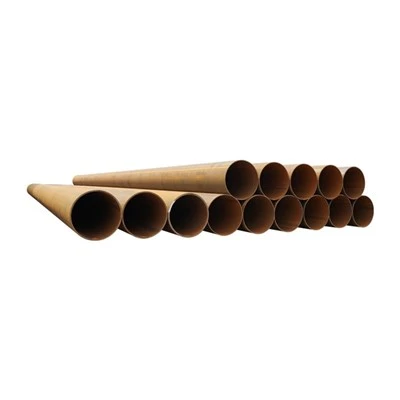
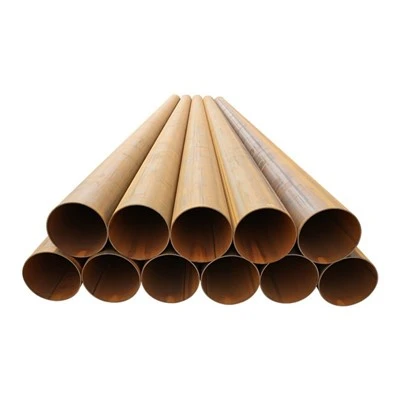
Electric Resistance Welded pipe, commonly known as ERW pipe, is widely used in oil and gas transmission, water supply, construction, structural engineering, and industrial applications. Unlike seamless pipe, ERW pipe is manufactured from steel strip or coil and formed into a round shape before the longitudinal edges are joined by electrical resistance or high-frequency welding.
Understanding how ERW pipe is made helps buyers evaluate manufacturing capabilities, production quality, and the suitability of a pipe for a specific application. So, how is ERW steel pipe manufactured from steel coil to finished pipe?
What Is ERW Pipe and How Is It Made?
ERW pipe is a welded steel pipe produced by forming a flat steel strip into a cylindrical shape and welding the adjoining edges along the longitudinal seam. In modern steel pipe mills, high-frequency welding is commonly used because it provides stable welding conditions and high production efficiency.
The basic ERW pipe manufacturing process can be summarized as coil preparation, uncoiling, leveling, strip forming, high-frequency welding, sizing, cutting, inspection, and finishing. Each stage affects the dimensional accuracy and final quality of the finished pipe.
ERW Pipe vs. Seamless Pipe
The main difference is the manufacturing method. Seamless pipe is produced from a solid steel billet, while ERW pipe starts from flat steel strip or coil. ERW manufacturing allows precise control of outside diameter, wall thickness, and length while maintaining high production efficiency.
What Materials Are Used for ERW Pipe?
The raw material is generally hot-rolled steel coil manufactured according to the required steel grade and applicable standard. Depending on the application, ERW pipe can be supplied in carbon steel and different grades specified by standards such as API, ASTM, EN, JIS, or other applicable specifications.
What Are the Main Steps in the ERW Pipe Manufacturing Process?
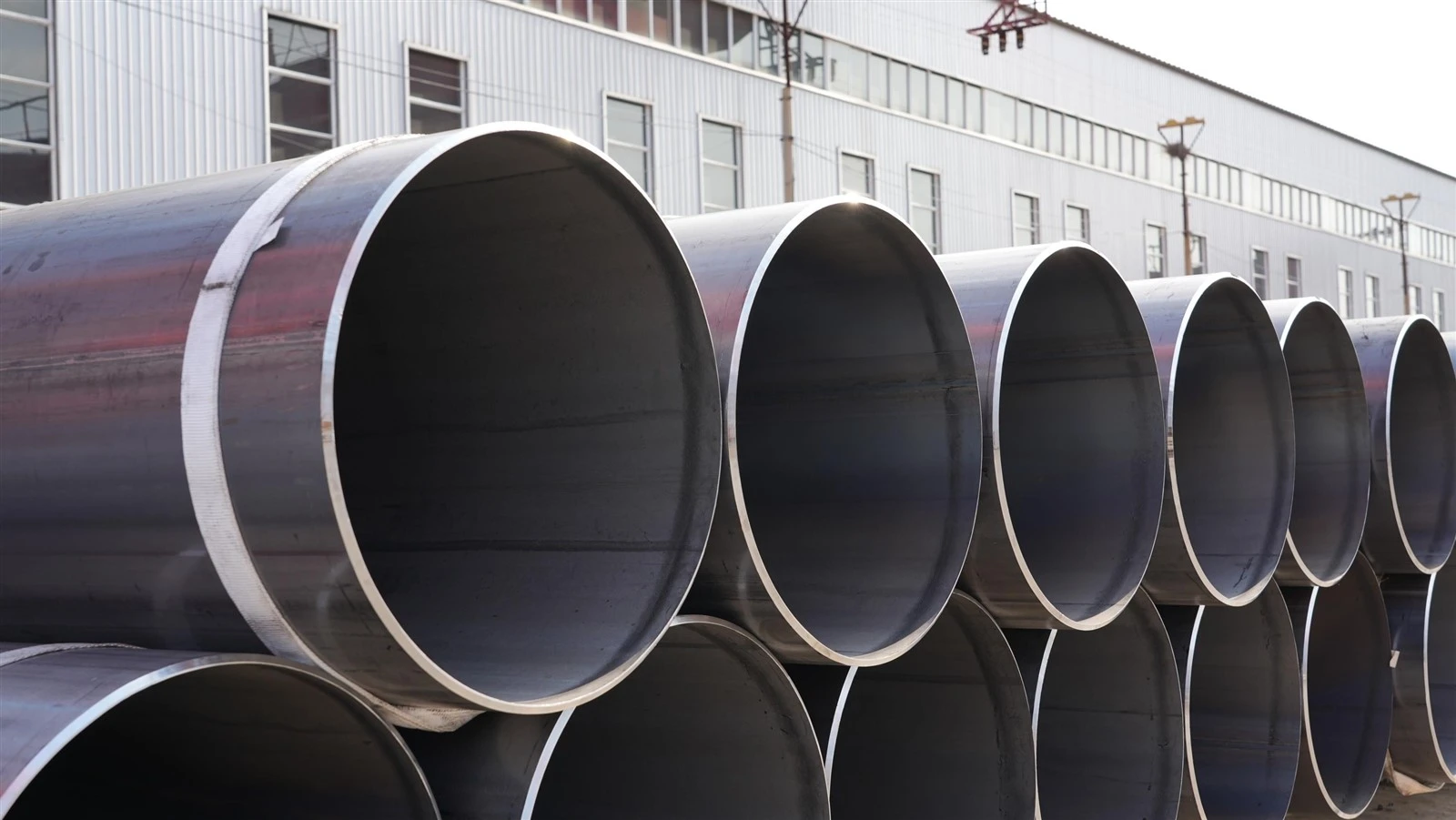
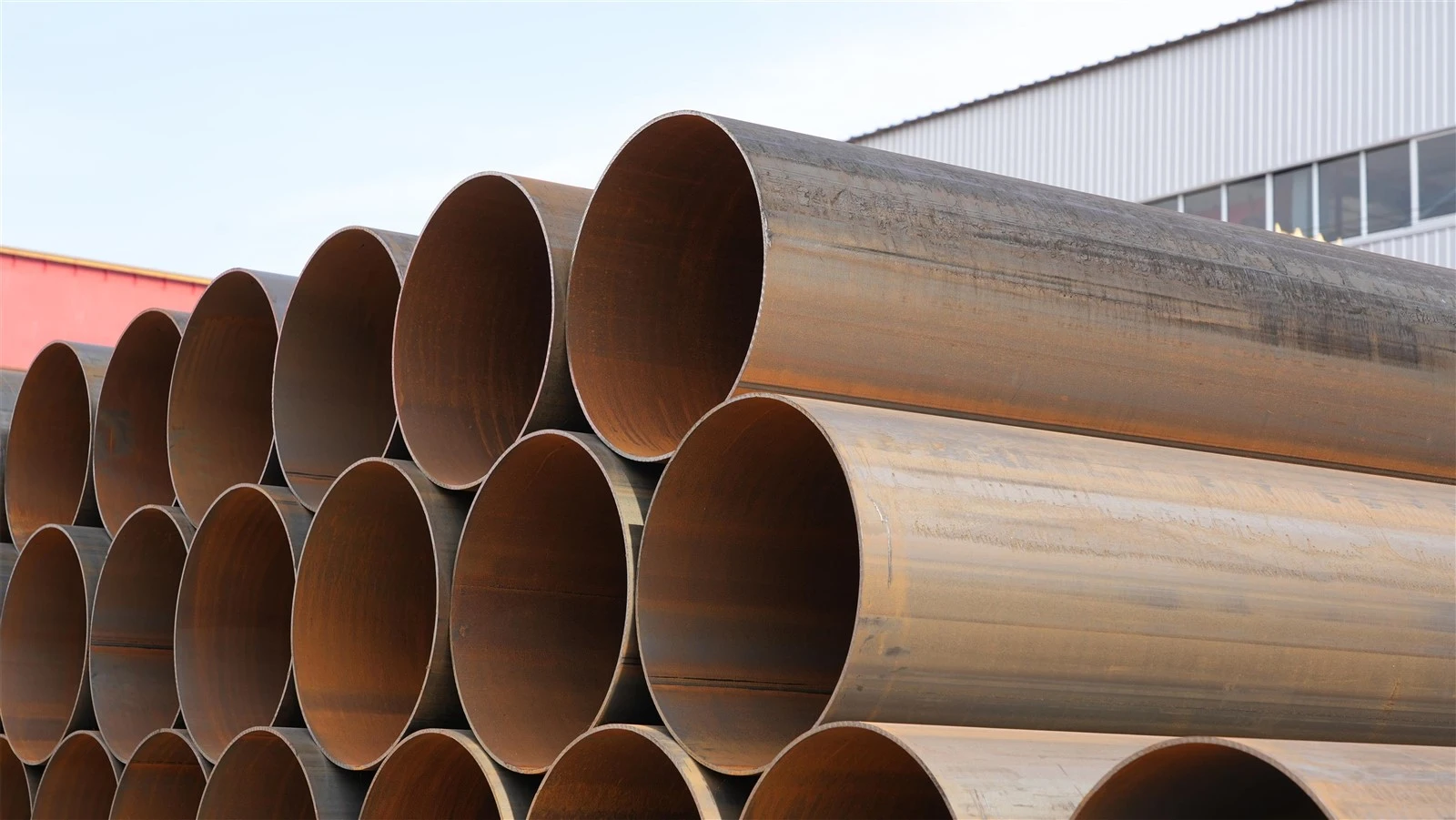
The manufacturing process begins with carefully selected steel coils and continues through a series of controlled forming and welding operations. At Huayang Steel Pipe, ERW/HFW production covers a wide range of sizes and specifications for different industrial applications.
1. Coil Preparation and Uncoiling
Steel coils are inspected and prepared before entering the production line. The coil is then loaded onto the uncoiler, where the strip is continuously released into the mill.
The incoming steel strip must have suitable width, thickness, surface condition, and mechanical properties according to the pipe specification. Proper coil preparation provides a stable foundation for subsequent forming and welding.
2. Leveling, Joining and Edge Preparation
After uncoiling, the strip passes through leveling equipment to correct excessive curvature and improve flatness. When continuous production requires connecting the end of one coil to the beginning of another, automatic or controlled coil joining equipment can be used.
The strip edges are also prepared to achieve consistent geometry before forming and welding. Edge condition is particularly important because the two edges will ultimately form the longitudinal weld seam.
3. Strip Forming
The flat steel strip gradually passes through a series of forming stands. These rolls progressively bend the strip from a flat shape into an open cylindrical section.
The forming process requires accurate roll alignment and controlled deformation. Excessive forming stress or poor alignment can affect pipe roundness, dimensions, and the quality of the subsequent weld.
4. High-Frequency Resistance Welding
Once the strip edges are brought together, high-frequency electrical current heats the adjoining edges to the required welding temperature. Pressure is then applied through the welding rolls to join the edges and form a continuous longitudinal weld.
The welding parameters, including frequency, power, line speed, and pressure, must be controlled according to the material and pipe size. Stable high-frequency welding is essential for producing a consistent weld seam.
Typical ERW Pipe Manufacturing Parameters
| Manufacturing Stage | Main Process Control | Purpose |
|---|---|---|
| Coil preparation | Steel grade, width, thickness, surface | Ensure suitable raw material |
| Leveling | Strip flatness | Improve forming stability |
| Forming | Roll alignment and deformation | Achieve required pipe shape |
| HFW welding | Frequency, power, speed, pressure | Produce a sound longitudinal weld |
| Sizing | Roll adjustment and diameter control | Meet dimensional requirements |
| Cutting | Length and cutting accuracy | Produce specified pipe lengths |
| Inspection | NDT and dimensional inspection | Verify pipe quality |
5. Sizing and Straightening
After welding, the pipe passes through sizing stands to achieve the specified outside diameter and roundness. Depending on the production line and pipe specification, straightening equipment can also be used to improve the finished pipe's geometry.
Dimensional control at this stage is important because pipe diameter, wall thickness, ovality, and straightness may be subject to strict requirements in the applicable standard or purchase specification.
How Is Finished ERW Pipe Cut and Inspected?
Once the pipe reaches the required dimensions, it is cut into individual lengths. Flying saws or other automatic cutting systems can be used for continuous production, allowing the pipe to be cut according to the specified length.
End Finishing and Surface Inspection
After cutting, pipe ends may undergo deburring, beveling, threading, or other end finishing operations depending on the application. The pipe surface and weld area are also checked for visible defects.
Non-Destructive Testing of ERW Pipe
Nondestructive testing is an important part of ERW pipe quality control. Depending on the applicable standard and customer requirements, weld inspection may include ultrasonic testing, eddy current testing, or other appropriate NDT methods.
Hydrostatic testing may also be conducted when required. Dimensional inspection verifies outside diameter, wall thickness, length, straightness, and other specified parameters.
How Does Huayang Steel Pipe Manufacture ERW Pipe?
Huayang Steel Pipe produces HFW/ERW steel pipes using controlled forming, high-frequency welding, sizing, inspection, and finishing processes. The current production range for HFW/ERW steel pipe is Φ48–660.4 mm in outside diameter, 2.0–22 mm in wall thickness, and 6–27 m in length.
The manufacturing process can be adapted to different steel grades, standards, dimensions, and application requirements. Quality control is implemented throughout raw material inspection, production, welding, NDT, dimensional inspection, and final delivery.
For projects requiring additional processing, Huayang Steel Pipe can also provide services such as pipe end finishing and anti-corrosion treatment according to project specifications.
What Are the Advantages of ERW Steel Pipe?
ERW steel pipe offers several practical advantages for industrial and structural applications. Its manufacturing process provides high production efficiency and consistent dimensional control, making it suitable for large-volume orders.
The longitudinal weld is produced under controlled conditions, while modern inspection technology allows manufacturers to monitor weld quality and finished pipe dimensions. ERW pipe can also be manufactured in a broad range of steel grades, sizes, and lengths according to applicable standards.
For buyers, the combination of manufacturing efficiency, dimensional accuracy, and specification flexibility makes ERW pipe a common choice for many pipeline and structural applications.
Where Is ERW Pipe Used?
ERW steel pipe is used across a wide range of industries. Common applications include oil and gas pipelines, water transmission, structural construction, mechanical engineering, industrial piping, and infrastructure projects.
The appropriate pipe grade, wall thickness, diameter, and applicable standard depend on the service conditions. For example, pipeline projects may require API specifications, while structural applications may follow ASTM, EN, JIS, or other structural standards.
Selecting the correct ERW pipe therefore requires consideration of operating pressure, temperature, medium, mechanical requirements, corrosion conditions, and applicable project standards.
What Should Buyers Check When Purchasing ERW Pipe?
When sourcing ERW steel pipe, buyers should look beyond pipe dimensions and confirm the complete technical specification. The steel grade, manufacturing standard, outside diameter, wall thickness, length, weld inspection requirements, testing requirements, end finish, and surface treatment should all be clearly defined.
The manufacturer's production range and quality-control capabilities should also match the project requirements. For international projects, relevant certifications and inspection documentation can provide additional evidence that the supplied pipe conforms to the specified requirements.
Summary
ERW pipe manufacturing is a continuous process that transforms steel coil into finished welded steel pipe through uncoiling, leveling, forming, high-frequency welding, sizing, cutting, inspection, and finishing. Among these stages, accurate forming and stable high-frequency welding are particularly important for achieving consistent weld quality and dimensional accuracy.
For global buyers, understanding the ERW pipe manufacturing process makes it easier to evaluate suppliers and select pipes suitable for specific applications. Huayang Steel Pipe provides HFW/ERW steel pipe in Φ48–660.4 mm outside diameter, 2.0–22 mm wall thickness, and 6–27 m length, with production and inspection processes designed for different international standards and project requirements.
Read More:
Huayang No.4 LSAW Workshop Is Officially Put Into Production.
How Does The LSAW Steel Pipe Manufacturing Process Guarantee Quality For Your Project?