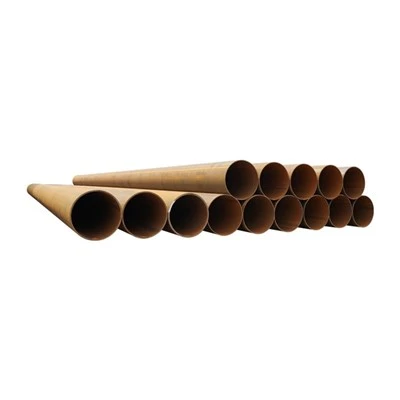
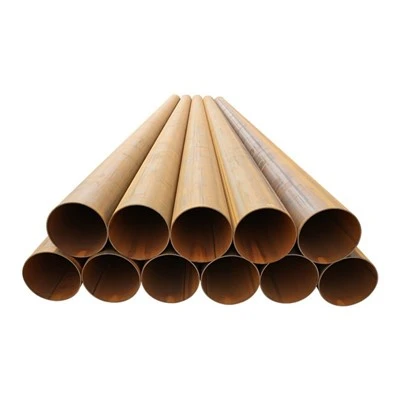
When sourcing steel pipe for a pipeline, structural project, or industrial system, buyers often need to compare ERW vs seamless steel pipe. Although both are widely used steel pipe products, they are manufactured differently and may be selected for different service conditions.
ERW steel pipe is manufactured from steel strip or coil and joined along the longitudinal seam by high-frequency welding. Seamless steel pipe, in contrast, is produced from a solid steel billet and does not have a welded seam.
The difference in manufacturing method affects production efficiency, cost, dimensional characteristics, and suitable applications. Therefore, choosing between ERW and seamless pipe should be based on the pipe standard, material grade, dimensions, operating conditions, and project requirements.
What Is ERW Steel Pipe?
ERW stands for Electric Resistance Welded pipe. During production, flat steel strip or coil is gradually formed into a cylindrical shape. The adjoining edges are then heated and joined using electrical resistance, with modern mills commonly using high-frequency welding technology.
The finished ERW steel pipe is subsequently sized, cut, inspected, and finished according to the applicable standard and customer requirements.
How Is ERW Pipe Manufactured?
The typical ERW pipe manufacturing process includes coil preparation, uncoiling, leveling, forming, high-frequency welding, sizing, cutting, inspection, and finishing.
What Makes HFW Welding Important?
In modern ERW production, high-frequency welding provides controlled heating of the strip edges before they are pressed together to form the longitudinal weld. Welding parameters such as frequency, power, line speed, and pressure are controlled according to the material and pipe size.
Non-destructive testing and dimensional inspection can then be used to verify weld integrity and finished pipe quality.
Where Is ERW Pipe Used?
ERW steel pipe is commonly used in water transmission, structural applications, mechanical engineering, industrial piping, fire protection systems, and other applications where the required specifications can be achieved through welded pipe manufacturing.
For projects requiring large quantities of pipe, the continuous production characteristics of ERW manufacturing can also provide efficient production and competitive costs.
What Is Seamless Steel Pipe?
Seamless steel pipe is manufactured without a longitudinal welded seam. Instead of starting with flat steel strip, the manufacturing process begins with a solid round steel billet.
The billet is heated and pierced to create a hollow section, which is then rolled and sized to achieve the required outside diameter and wall thickness. Depending on the grade and standard, additional heat treatment and inspection may also be required.
How Is Seamless Pipe Manufactured?
The general seamless pipe manufacturing process includes billet heating, piercing, rolling, sizing, cooling, heat treatment when required, and final inspection.
Why Does the Manufacturing Method Matter?
Because seamless pipe does not contain a welded longitudinal seam, it is often selected for applications where the specified standard and service conditions require seamless construction.
However, the absence of a weld does not mean that every seamless pipe is automatically suitable for every high-pressure or high-temperature application. The actual performance of a pipe depends on its material grade, dimensions, manufacturing standard, heat treatment, testing, and operating conditions.
Where Is Seamless Pipe Used?
Seamless steel pipe is commonly found in applications such as boilers, power generation, chemical processing, oil and gas equipment, and other systems involving demanding pressure or temperature conditions.
The specific application should always be matched with the relevant material specification and design requirements rather than selected solely according to whether the pipe is welded or seamless.
ERW vs Seamless Steel Pipe: What Are the Main Differences?
The most important difference between ERW and seamless pipe is the manufacturing process. ERW pipe is formed from steel strip and welded along its longitudinal seam, while seamless pipe is produced by piercing and rolling a solid billet.
This fundamental difference influences production efficiency, manufacturing cost, weld configuration, and the applications for which each pipe is commonly specified.
| Feature | ERW Steel Pipe | Seamless Steel Pipe |
|---|---|---|
| Manufacturing method | Formed from steel strip or coil and welded | Produced from solid steel billet |
| Longitudinal weld | Yes | No |
| Production efficiency | Generally high | Generally lower |
| Manufacturing cost | Generally more economical | Generally higher |
| Dimensional control | High with modern forming and sizing | High, depending on process |
| Weld inspection | Required according to applicable standard | No longitudinal weld to inspect |
| Typical applications | Water, structural, industrial and pipeline applications | Pressure, temperature and demanding industrial applications |
| Large-volume production | Well suited | More production-intensive |
| Selection basis | Standard, grade, size and service conditions | Standard, grade, size and service conditions |
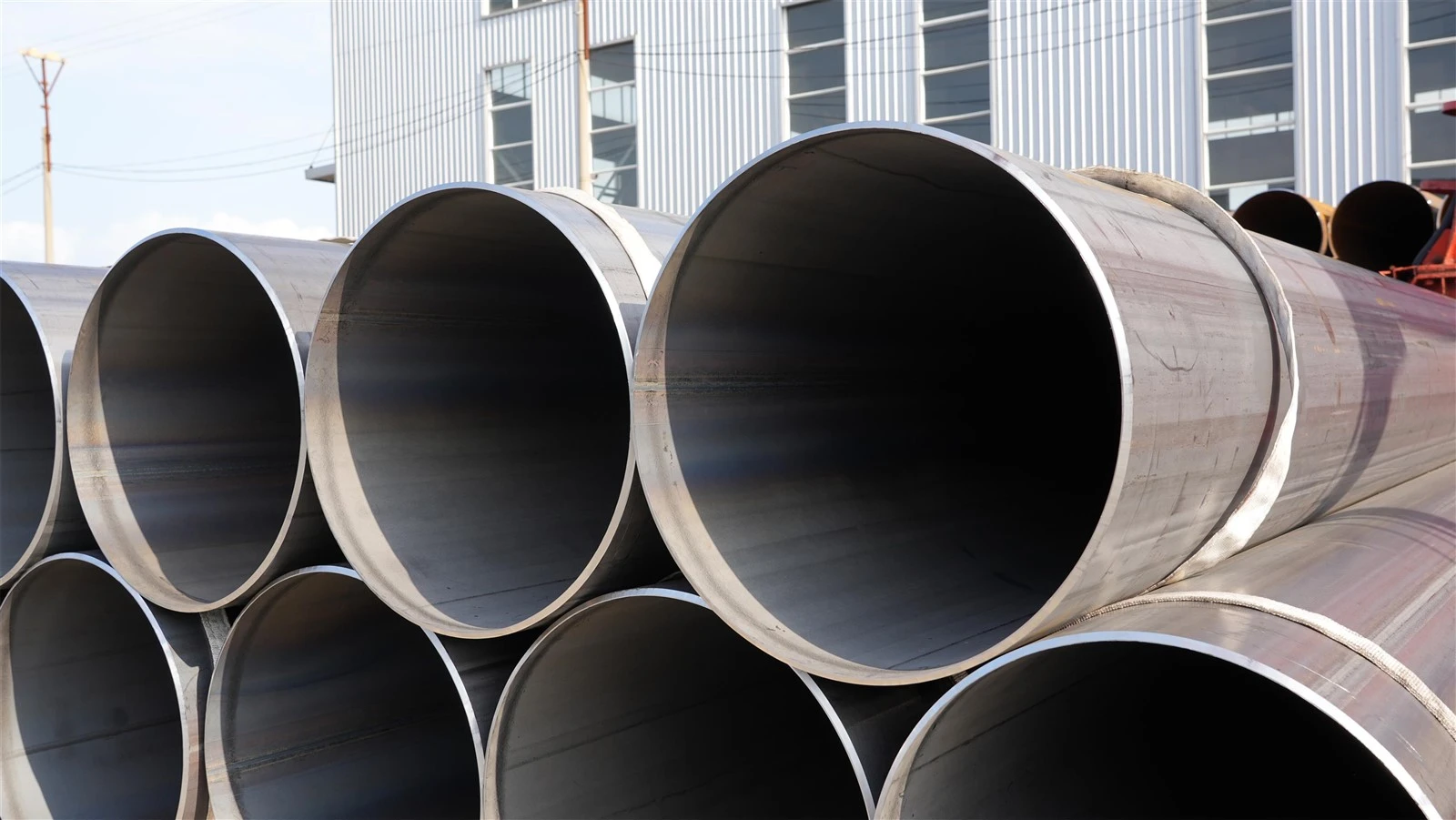

Is Seamless Pipe Always Stronger Than ERW Pipe?
One of the most common misconceptions when comparing ERW vs seamless steel pipe is that seamless pipe is always stronger.
In practice, strength cannot be determined simply by the presence or absence of a weld. The mechanical properties of steel pipe are affected by the material grade, wall thickness, heat treatment, manufacturing process, applicable standard, and inspection requirements.
What Determines Steel Pipe Performance?
For an ERW pipe, the quality of the longitudinal weld is an important part of the manufacturing and inspection process. Modern HFW production can provide consistent welding conditions, while NDT can be used to examine the weld according to the applicable specification.
For seamless pipe, the absence of a welded seam eliminates weld-related considerations, but the pipe still needs to meet the specified mechanical, dimensional, and testing requirements.
Therefore, buyers should compare the complete specification rather than assume that one manufacturing method is universally stronger.
How Do ERW and Seamless Pipe Manufacturing Processes Differ?
The ERW production line starts with steel coil. The strip is uncoiled and leveled before passing through forming stands. The edges are gradually brought together and joined through high-frequency welding. The pipe then passes through sizing equipment before being cut and inspected.
Seamless pipe production starts with a solid billet. The billet is heated and pierced to create a hollow body, followed by rolling and sizing. Depending on the specification, heat treatment and additional inspection may be required.
Why Is ERW Production Highly Efficient?
ERW pipe can be produced continuously from steel coil, which makes the manufacturing process particularly suitable for standardized sizes and large-volume orders. Automated forming, welding, sizing, cutting, and inspection equipment can maintain consistent production conditions.
Why Does Seamless Pipe Cost More?
Seamless manufacturing involves billet heating, piercing, rolling, and other processing stages. These operations require specialized equipment and significant energy input.
As a result, seamless pipe generally has a higher manufacturing cost than comparable ERW pipe. However, price should not be the only factor when selecting a pipe for a project.
ERW vs Seamless Pipe: Which Applications Are Different?
Both ERW and seamless steel pipes serve a wide range of industries, but their applications can differ according to project specifications and operating conditions.
Common ERW Steel Pipe Applications
ERW steel pipe is widely used for water transmission, structural engineering, mechanical applications, industrial piping, fire protection, and other general-purpose systems.
Why Do Buyers Choose ERW Pipe?
ERW pipe can offer a practical combination of dimensional control, production efficiency, specification flexibility, and cost efficiency. It is therefore commonly considered for projects requiring substantial quantities of steel pipe.
Huayang Steel Pipe currently manufactures HFW/ERW steel pipe with outside diameters of Φ48–660.4 mm, wall thicknesses of 2.0–22 mm, and lengths of 6–27 m.
Common Seamless Steel Pipe Applications
Seamless pipe is commonly specified for applications involving demanding pressure, temperature, or mechanical service requirements, including certain power generation, boiler, chemical, and oil and gas applications.
The appropriate seamless pipe should be selected according to the applicable standard and actual operating conditions.
Is ERW Pipe More Economical Than Seamless Pipe?
In many comparable specifications, ERW pipe is more economical because its manufacturing process is highly efficient and suitable for continuous production from steel coil.
Seamless pipe generally requires more processing stages and specialized equipment, which can increase manufacturing costs.
However, a lower purchase price does not necessarily mean a lower overall project cost. Buyers should consider material requirements, testing, coating, transportation, installation, service life, and maintenance requirements when evaluating the total cost.
How Should Buyers Choose Between ERW and Seamless Pipe?
The choice between ERW and seamless steel pipe should start with the project specification rather than the manufacturing method alone.
For general industrial, structural, water transmission, and other applications where the relevant standard permits welded pipe, ERW can be considered based on the required grade, dimensions, pressure, temperature, and testing requirements.
For applications requiring seamless construction or involving demanding pressure and temperature conditions, seamless pipe may be specified by the applicable design code or product standard.
Before placing an order, buyers should confirm the pipe standard, steel grade, outside diameter, wall thickness, length, testing requirements, end finish, and service conditions.
Why Is Manufacturer Capability Important?
The quality of steel pipe depends not only on whether it is ERW or seamless, but also on the manufacturer's raw material control, production equipment, welding or forming technology, inspection system, and ability to meet the specified standard.
For ERW pipe, particular attention should be given to weld quality, dimensional accuracy, NDT, and finished pipe inspection. For seamless pipe, billet quality, piercing and rolling conditions, heat treatment, and dimensional control are important considerations.
A qualified manufacturer should be able to provide relevant inspection records and quality documentation according to the purchase specification.
ERW vs Seamless Steel Pipe: Final Considerations
ERW and seamless steel pipe are both important products in the steel pipe industry, but they are manufactured through fundamentally different processes. ERW pipe is formed from steel strip or coil and joined by high-frequency welding, while seamless pipe is manufactured from solid billet without a longitudinal weld.
The right choice depends on the complete project requirements, including material grade, dimensions, applicable standard, pressure, temperature, service medium, inspection requirements, and budget.
For buyers comparing ERW vs seamless steel pipe, understanding these differences provides a more practical basis for supplier evaluation and product selection. Huayang Steel Pipe manufactures HFW/ERW steel pipe in a broad range of sizes and specifications and can provide steel pipe solutions according to applicable international standards and project requirements.
Read More:
What Does A Steel Pipe Manufacturer Really Do Beyond Production?