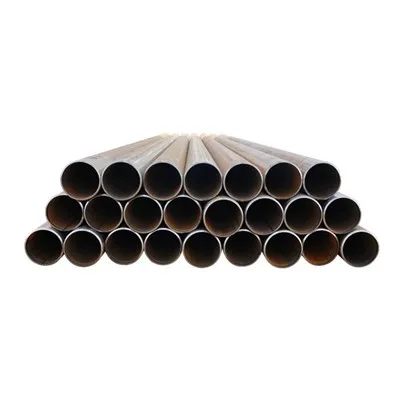
In the manufacturing of Electric Resistance Welded (ERW) steel pipes, every detail matters-starting with the raw material. From the moment steel coils arrive at the facility, a carefully designed process begins to ensure consistent quality, performance, and safety.
Raw Material Inspection and Warehousing
The process starts with the arrival of hot-rolled steel coils, typically made from low or medium carbon steel such as Q195, Q235, or Q345B. Each coil undergoes a thorough incoming inspection to assess:
Surface condition
Mechanical properties
Thickness and width consistency
Manufacturer certifications and traceability
Approved coils are then sent to the dedicated raw material warehouse, where they are classified and stored according to size, grade, and production schedule. Proper storage is key to preventing material deformation and contamination.


Coil Preparation: Getting Ready to Slit
Before entering production, each coil is lifted by overhead cranes and placed onto a loading car, where coil ends are trimmed to remove burrs and ensure a clean, straight edge. This ensures smooth feeding into the slitting machine and avoids potential defects in subsequent stages.
Longitudinal Slitting (Slitter Line)
The first core operation is longitudinal slitting, where wide steel coils are transformed into narrow strips, or "skelp."
- Key steps in the slitting process:
- Decoiling: The steel coil is unrolled and leveled.
- Slitting: Rotary slitting knives make multiple longitudinal cuts.
- Recoiling: The narrow strips are rewound into smaller coils for further use.
Precision matters here: the slit width directly determines the final diameter of the ERW pipe. Huayang's slitting lines use computerized control systems to ensure high tolerance accuracy, minimize edge waviness, and reduce burr formation.
Each slit coil is labeled with a unique tracking code, including heat number, dimensions, and production batch. This supports full traceability throughout the manufacturing chain.