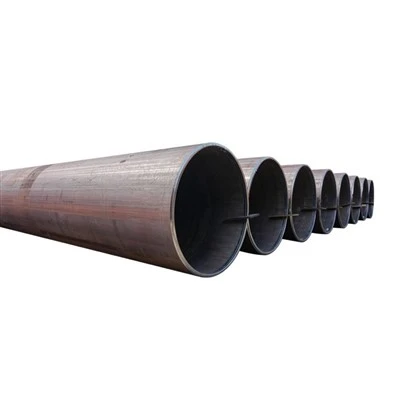
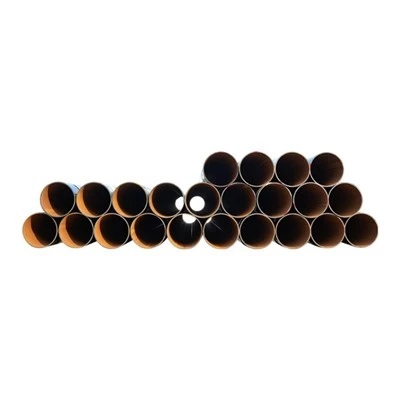
Large-diameter steel pipes are widely used in oil and gas transmission, water pipelines, piling, structural engineering, and other demanding applications. For these projects, pipe quality depends not only on the selected steel grade and final dimensions, but also on how the pipe is formed, welded, tested, and inspected during manufacturing.
The LSAW steel pipe manufacturing process starts with steel plate and typically includes plate inspection, edge preparation, forming, longitudinal submerged arc welding, mechanical expansion, non-destructive testing, hydrostatic testing, dimensional inspection, and final verification. Each stage contributes to the strength, weld integrity, dimensional accuracy, and service performance of the finished pipe.
At Huayang Steel Pipe, quality control is incorporated throughout the manufacturing process rather than being limited to final inspection. By controlling raw materials, forming parameters, welding conditions, dimensions, and testing procedures, the manufacturing process provides multiple quality checkpoints before the pipes are delivered to the project site.
What Is the Difference Between UOE and JCOE Forming Methods?
UOE and JCOE are two important forming methods used to manufacture large-diameter LSAW steel pipe. Both methods start with flat steel plate and progressively form it into a cylindrical shape before the longitudinal seam is welded by submerged arc welding. The main difference is the forming sequence and the way the plate is progressively shaped.
For project buyers, understanding the difference between UOE and JCOE is useful when evaluating an LSAW steel pipe manufacturer. The forming method can influence production flexibility, available specifications, manufacturing efficiency, and suitability for different project requirements. However, both UOE and JCOE can produce high-quality LSAW steel pipes when the forming, welding, expansion, and inspection processes are properly controlled.

How Does the UOE Forming Method Work?
The UOE process forms the steel plate through a sequence of edge crimping, U-forming, and O-forming operations. The plate edges are first prepared and pressed. The plate is then formed into a U shape, followed by another forming operation that closes it into an O-shaped pipe.
After O-forming, the longitudinal edges are aligned and prepared for welding. The seam is then welded using submerged arc welding, followed by mechanical expansion and inspection according to the applicable specification.
UOE forming is associated with efficient production of large-diameter LSAW steel pipe. Its defined forming sequence can provide good repeatability for projects involving relatively standardized pipe specifications and larger production quantities.
What Are the Characteristics of UOE Forming?
The main characteristic of UOE forming is its structured multi-stage forming sequence. Dedicated forming operations allow manufacturers to control the geometry of the pipe throughout production.
The suitability of UOE depends on factors such as pipe diameter, wall thickness, steel grade, order quantity, production equipment, and project requirements. It should therefore be evaluated as part of the complete manufacturing system rather than considered independently.
How Does the JCOE Forming Method Work?
JCOE uses a different forming principle. Instead of forming the plate into a U shape first, the steel plate is progressively pressed along its width to create a J shape, followed by a C shape and finally an O shape.
This progressive forming process gradually transforms the flat plate into the required cylindrical geometry. After O-forming, the longitudinal seam is prepared for welding. Internal and external submerged arc welding is then performed, followed by mechanical expansion and inspection.
JCOE is widely used for large-diameter LSAW steel pipe because of its flexibility in producing different diameters and specifications. This makes it suitable for project orders involving different outside diameters, wall thicknesses, steel grades, and production quantities.
Why Is JCOE Flexibility Important for Project Orders?
Large engineering projects do not always require a single standard pipe size. Pipeline, water transmission, piling, structural, and offshore projects may involve different diameters, wall thicknesses, lengths, material grades, and inspection requirements.
The progressive nature of JCOE forming allows manufacturers to adjust forming parameters for different specifications. At Huayang Steel Pipe, JCOE production supports large-diameter LSAW steel pipe manufacturing, with current LSAW capability covering approximately Φ406.4–Φ2800 mm, wall thicknesses of 7–50 mm, and lengths of approximately 6–12.5 m, depending on the production line and project requirements.
| Feature | UOE Forming | JCOE Forming |
|---|---|---|
| Forming sequence | Edge crimping → U forming → O forming | J forming → C forming → O forming |
| Forming principle | Multi-stage dedicated forming | Progressive plate pressing |
| Production flexibility | Suited to relatively standardized production | High flexibility for different specifications |
| Large-diameter production | Suitable | Suitable |
| Specification adjustment | Relatively structured | More flexible |
| Typical use | Larger-volume standardized orders | Large-diameter and customized project orders |
| Subsequent processes | Welding, expansion, inspection | Welding, expansion, inspection |
The choice between UOE and JCOE should not be determined by the forming method alone. Steel grade, pipe diameter, wall thickness, production quantity, applicable standard, inspection requirements, delivery schedule, and the manufacturer's equipment all need to be considered together.


How Do Welding and Mechanical Expansion Improve LSAW Steel Pipe Quality?
After forming, the longitudinal edges of the pipe are brought together and prepared for welding. Welding is one of the most critical stages in the LSAW steel pipe manufacturing process because the longitudinal seam must provide reliable structural and pressure performance.
At Huayang Steel Pipe, longitudinal seams are welded using submerged arc welding. The welding process is carried out from both the inside and outside of the pipe. Submerged arc welding uses granular flux to cover the welding area, helping protect the molten weld pool from atmospheric contamination and providing stable welding conditions.
Why Is Double-Sided Submerged Arc Welding Important?
Double-sided welding allows the longitudinal seam to be welded from both sides of the pipe. Proper control of welding current, voltage, travel speed, heat input, and other parameters helps maintain consistent weld quality.
Before welding, edge alignment and joint preparation are also important. Poor alignment can affect weld formation and penetration, while inconsistent welding parameters can increase the possibility of imperfections.
After welding, the seam is inspected using appropriate non-destructive testing methods according to the applicable product standard and project requirements. This provides an additional means of verifying weld integrity beyond visual inspection.
How Does Mechanical Expansion Improve Dimensional Accuracy?
Forming and welding can introduce dimensional deviations and residual stresses into the pipe. Mechanical expansion is therefore used to improve the final geometry of the finished LSAW steel pipe.
During mechanical expansion, an internal expanding head applies controlled force to the pipe wall. This process helps improve outside diameter, roundness, and dimensional consistency while reducing certain residual stresses generated during forming and welding.
Dimensional accuracy is especially important for large-diameter pipeline projects. Pipes need to be properly aligned during installation and field welding. Excessive deviations in diameter or roundness can make pipe alignment more difficult and affect construction efficiency.
Mechanical expansion therefore provides an important connection between the forming and final inspection stages. It helps transform the welded pipe into a product with more controlled final dimensions.
How Does Quality Testing Verify the Finished LSAW Steel Pipe?
Manufacturing quality cannot be confirmed through appearance alone. Internal weld conditions, material properties, pressure tightness, and dimensional accuracy require specific inspection and testing procedures.
A complete LSAW steel pipe manufacturing process therefore combines material verification, process control, non-destructive testing, hydrostatic testing, mechanical testing where required, and final dimensional inspection.
What Non-Destructive Testing Is Used for LSAW Pipe?
Non-destructive testing, or NDT, allows inspectors to examine the pipe without damaging the finished product. Ultrasonic testing can be used to inspect the longitudinal weld and identify discontinuities within the weld area.
Other NDT methods may also be applied according to the applicable standard and project specification. The required inspection scope depends on the steel grade, intended application, product standard, and contractual requirements.
NDT is particularly important for oil and gas transmission pipelines and other critical applications because some imperfections cannot be identified through ordinary visual inspection.

Why Is Hydrostatic Testing Important?
Hydrostatic testing is commonly required for pressure-service steel pipe. During the test, the pipe is filled with water and subjected to the specified test pressure for the required holding period.
The purpose is to verify the pressure tightness of the finished pipe under controlled test conditions. The pipe is inspected for leakage or other unacceptable behavior during the test.
Mechanical and material testing may also be required depending on the product standard. Such testing can include tensile properties, impact toughness, bending, flattening, chemical composition, and other specified requirements.
How Is Final Inspection Completed Before Shipment?
After manufacturing and testing, finished pipes undergo final inspection. Inspectors verify outside diameter, wall thickness, length, straightness, roundness, bevel dimensions, surface condition, weld appearance, marking, and other requirements specified in the purchase order.
Quality documentation is also an important part of project delivery. Depending on the order, documentation may include material certificates, inspection records, test results, dimensional reports, and other quality documents required by the customer or third-party inspection agency.
At Huayang Steel Pipe, the objective is to maintain quality control from steel plate selection through final shipment. The combination of controlled forming, double-sided submerged arc welding, mechanical expansion, NDT, hydrostatic testing, dimensional inspection, and documentation provides multiple checkpoints throughout the manufacturing process.
For oil and gas pipelines, water transmission systems, piling, structural engineering, and other large-scale projects, choosing an experienced LSAW steel pipe manufacturer is therefore not only about selecting the required diameter and steel grade. It also means evaluating how the manufacturer controls each stage of production and verifies the finished product.
Huayang Steel Pipe provides large-diameter LSAW steel pipes in different specifications, grades, lengths, and standards according to project requirements. With production capability covering approximately Φ406.4–Φ2800 mm, Huayang focuses on process control and inspection throughout manufacturing to provide steel pipe solutions suitable for demanding engineering applications.