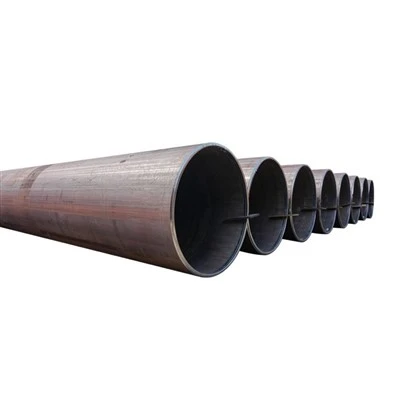
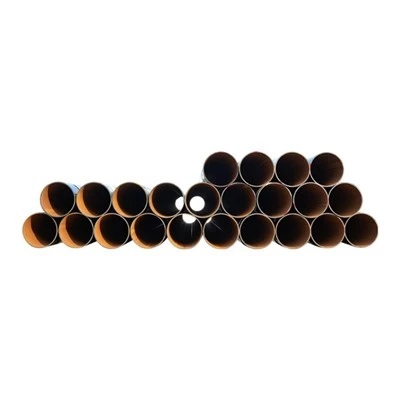
For large diameter and thick wall steel pipe projects, manufacturing capability and process control are critical factors when selecting a supplier. At Huayang Steel Pipe, the LSAW workshop integrates raw material preparation, automatic feeding, precision forming, submerged arc welding, weld inspection, standard marking, and finished pipe processing into a coordinated production process. This allows customers to see not only the scale of the workshop, but also how large diameter LSAW steel pipes are manufactured and inspected at each important stage.
What Makes LSAW Steel Pipe Suitable for Large Diameter Applications?
LSAW, or Longitudinal Submerged Arc Welding, is an important manufacturing process for large diameter steel pipe. Unlike smaller diameter welded pipe production, large diameter LSAW steel pipe manufacturing involves heavy steel plates, controlled forming, and longitudinal submerged arc welding. The production process therefore requires appropriate equipment, accurate forming, and stable welding conditions.
How Does the LSAW Production Process Begin?
Raw Materials for Submerged Arc Welding
The production process starts with steel plates selected according to the required grade and technical specification. Proper raw material management is important because the chemical composition, mechanical properties, dimensions, and material traceability of the steel plate provide the foundation for subsequent pipe forming and welding.
At the Huayang LSAW workshop, raw materials are organized before entering the production line. This provides a controlled starting point for large diameter steel pipe manufacturing and helps connect material information with the subsequent production process.
Automatic Feeding and Material Handling
Large steel plates require appropriate handling equipment to move safely and accurately into the production line. Automated feeding supports a stable material flow and helps position the plate for the forming operation. For large-volume engineering orders, stable material handling is an important part of maintaining production efficiency.
How Is a Large Diameter LSAW Pipe Formed?
Precision Forming
Before welding, the flat steel plate is gradually formed into the required pipe shape. For large diameter steel pipe, forming accuracy is particularly important because the longitudinal edges must be brought into the correct position before welding.
The forming process directly influences seam alignment and the geometry of the finished pipe. Controlled forming therefore provides an important foundation for subsequent submerged arc welding.
How Does Huayang Control LSAW Steel Pipe Welding and Inspection?
The welding stage is one of the most important parts of LSAW steel pipe production. After forming and seam preparation, submerged arc welding is used to join the longitudinal edges. The welding process needs to maintain stable parameters and accurate positioning along the entire seam.


What Happens During Submerged Arc Welding?
Controlled Longitudinal Welding
In submerged arc welding, the welding arc is covered by granular flux during operation. This provides a controlled welding environment while the welding equipment continuously follows the prepared longitudinal seam.
For large diameter and thick wall steel pipe, stable welding conditions are important for maintaining consistent weld formation. Welding speed, heat input, alignment, and equipment operation all need to be controlled according to the applicable production requirements.
Why Is Weld Inspection Important?
A reliable LSAW steel pipe cannot be evaluated only by its external appearance. The longitudinal weld needs to be inspected according to the applicable product standard and customer requirements. Non-destructive testing and other inspection methods can be used to identify potential imperfections and verify weld quality.
What Are the Main LSAW Production and Inspection Stages?
| Production Stage | Main Process | Key Quality Focus |
|---|---|---|
| Raw material preparation | Steel plate selection and handling | Grade, dimensions and traceability |
| Automatic feeding | Plate transportation and positioning | Stable material handling |
| Precision forming | Plate formed into pipe shape | Diameter, geometry and seam alignment |
| Submerged arc welding | Longitudinal seam welding | Weld stability and consistency |
| Weld inspection | Non-destructive and other required testing | Weld quality and conformity |
| Product marking | Standard pipe marking | Identification and traceability |
| Finished pipe processing | Finishing and final inspection | Dimensions and product condition |
| Finished pipe offline | Product collection and storage | Order organization and delivery preparation |
Why Is Inspection Essential for Large Diameter LSAW Pipe?
Large diameter steel pipes are often supplied for projects where product dimensions, weld quality, and material documentation must meet clearly defined technical requirements. Inspection is therefore an integral part of manufacturing rather than an activity performed only at the end of production.
How Is LSAW Weld Quality Verified?
Non-Destructive Testing
Depending on the applicable standard, specification, and customer requirements, LSAW steel pipes may undergo non-destructive testing such as ultrasonic testing and other examinations. Dimensional inspection and hydrostatic testing may also be required for specific products or projects.
These inspection procedures provide additional verification of the finished pipe and help ensure that the product conforms to the specified technical requirements before shipment.
Standard Product Marking
After production and inspection, steel pipes are marked with the required identification information. Clear marking is particularly useful for large engineering orders containing different steel grades, dimensions, standards, or production batches. It helps customers identify and manage the pipes during storage, transportation, and installation.
Why Choose Huayang for Large Diameter LSAW Steel Pipe?
For buyers of large diameter steel pipe, supplier selection involves more than checking whether a manufacturer can produce a particular diameter. Production equipment, forming capability, welding control, inspection procedures, production capacity, and delivery coordination all influence the reliability of an order.
What LSAW Capabilities Does Huayang Provide?
Large Diameter and Thick Wall Production
Huayang Steel Pipe's LSAW production covers diameters from Φ406.4 mm to Φ2800 mm, with wall thicknesses from 7 mm to 50 mm and lengths from 6 m to 12.5 m. This range allows the workshop to support a variety of large diameter steel pipe requirements for infrastructure, energy, water transmission, structural, and other engineering applications.
Manufacturing and Quality Control Working Together
At Huayang, forming, submerged arc welding, weld inspection, dimensional inspection, marking, and finished product handling are coordinated as part of the manufacturing process. The objective is to maintain stable product quality from the beginning of production through final delivery.
For customers sourcing large diameter LSAW steel pipes, the value of a capable workshop is ultimately reflected in the finished product. Huayang Steel Pipe focuses on controlled forming, stable submerged arc welding, systematic weld inspection, and clear product identification to provide customers with consistent steel pipes that meet specified dimensions, grades, standards, and project requirements. From raw material preparation to finished LSAW pipe offline, every stage contributes to the reliability of the final product.
Read More:
Thailand Exhibition in Full Swing, Huayang Booth Continues To Welcome Industry Visitors!