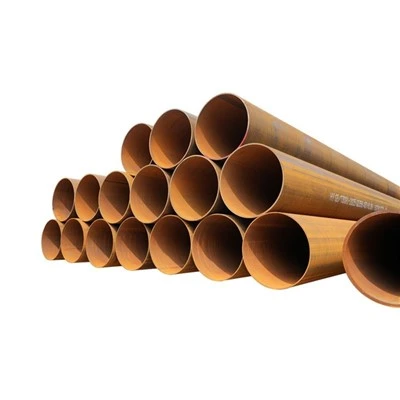
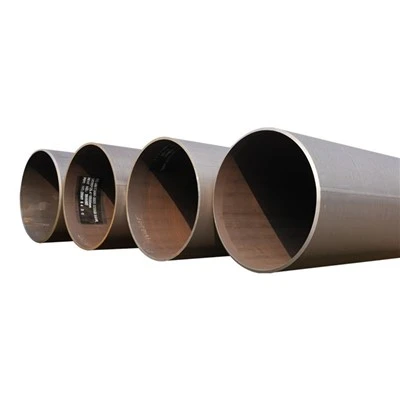
API 5L LSAW steel pipe is widely used in oil and gas transmission, water transportation, offshore engineering, and other pipeline projects where large diameters, high strength, and reliable weld performance are required. LSAW stands for Longitudinal Submerged Arc Welding, referring to the longitudinal seam produced by submerged arc welding during pipe manufacturing.
Unlike seamless steel pipe, LSAW steel pipe is manufactured from steel plate. The plate is formed into a cylindrical shape and then welded along its longitudinal seam. This manufacturing method allows LSAW pipes to achieve large outside diameters and heavy wall thicknesses, making them suitable for large-scale pipeline engineering.
For buyers, understanding the API 5L LSAW steel pipe standard is important when selecting the appropriate grade, PSL level, size, manufacturing process, and inspection requirements. This guide explains the main API 5L requirements and how they relate to LSAW steel pipe for engineering projects.
What Does the API 5L Standard Mean for LSAW Steel Pipe?
API 5L is a widely recognized specification developed by the American Petroleum Institute for line pipe used in pipeline transportation systems. It defines requirements related to materials, chemical composition, mechanical properties, manufacturing, testing, dimensions, and product quality.
API 5L applies to both seamless and welded line pipe. For LSAW production, the standard provides the technical requirements used to control the steel material, pipe manufacturing process, weld quality, mechanical properties, and inspection results.
API 5L is also technically aligned with ISO 3183, which supports its application in international pipeline projects. The specific requirements applicable to a pipe order depend on the selected grade, PSL, dimensions, service conditions, and purchase specification.
What Is the Difference Between API 5L PSL1 and PSL2?
API 5L products are generally supplied according to two product specification levels: PSL1 and PSL2. They represent different levels of technical and quality requirements rather than simply two different steel grades.
PSL1 provides the basic requirements for API 5L line pipe and can be used for applications with standard service conditions. PSL2 introduces additional requirements and controls, including more stringent chemical composition and mechanical property requirements and additional testing requirements.
For demanding pipeline applications, the required PSL level should be determined by the project design and service environment rather than selected only according to material strength.
When Is PSL2 LSAW Steel Pipe Required?
PSL2 may be specified for projects involving demanding operating conditions, higher levels of quality control, low-temperature service, or other special requirements. Additional requirements can include impact testing and more stringent control of chemical composition and mechanical properties.
For sour-service or other specialized applications, buyers should also check whether additional requirements are specified by the project, because PSL2 alone does not automatically define every requirement for a particular service environment.
What Are the Main API 5L LSAW Steel Pipe Grades?
API 5L includes a range of line pipe grades designed for different strength requirements. Common grades include Grade B, X42, X52, X60, X65, and X70, with additional grades available depending on the applicable product specification and project requirements.
The numerical designation of an X-grade is related to the specified minimum yield strength of the pipe in ksi. As the grade increases, the required strength level also increases. However, selecting a higher grade does not automatically make a pipe suitable for every project. Weldability, toughness, operating conditions, wall thickness, and other design requirements must also be considered.
For LSAW steel pipe, grades such as X60, X65, and X70 are commonly associated with demanding oil and gas pipeline applications where high strength and large-diameter pipe are required.
How Should Buyers Select an API 5L Grade?
Grade selection should begin with the engineering requirements of the pipeline. Operating pressure, pipe diameter, wall thickness, temperature, transportation medium, installation conditions, and applicable PSL all affect the final material selection.
| API 5L Grade | General Strength Level | Typical Project Application |
|---|---|---|
| Grade B | Standard line pipe grade | General pipeline transportation |
| X42 | Higher than Grade B | Pipeline and utility systems |
| X52 | Medium-high strength | Oil and gas transmission |
| X60 | High strength | Long-distance pipeline projects |
| X65 | Higher strength | High-pressure transmission systems |
| X70 | High-strength line pipe | Large-scale oil and gas infrastructure |
The table provides a general reference rather than a substitute for project specifications. The actual grade should always be confirmed against the design standard, operating conditions, and purchaser's technical requirements.
Why Are X65 and X70 Used in Large Pipeline Projects?
Higher-strength grades can provide increased yield strength while allowing engineers to consider the relationship between pressure requirements, pipe diameter, and wall thickness. This is particularly relevant to long-distance oil and gas pipelines.
However, high-strength steel also places greater emphasis on manufacturing and welding control. Steel plate quality, forming, welding parameters, heat input, NDT, and mechanical properties must all be controlled according to the applicable requirements.
What Sizes Are Available for API 5L LSAW Steel Pipe?
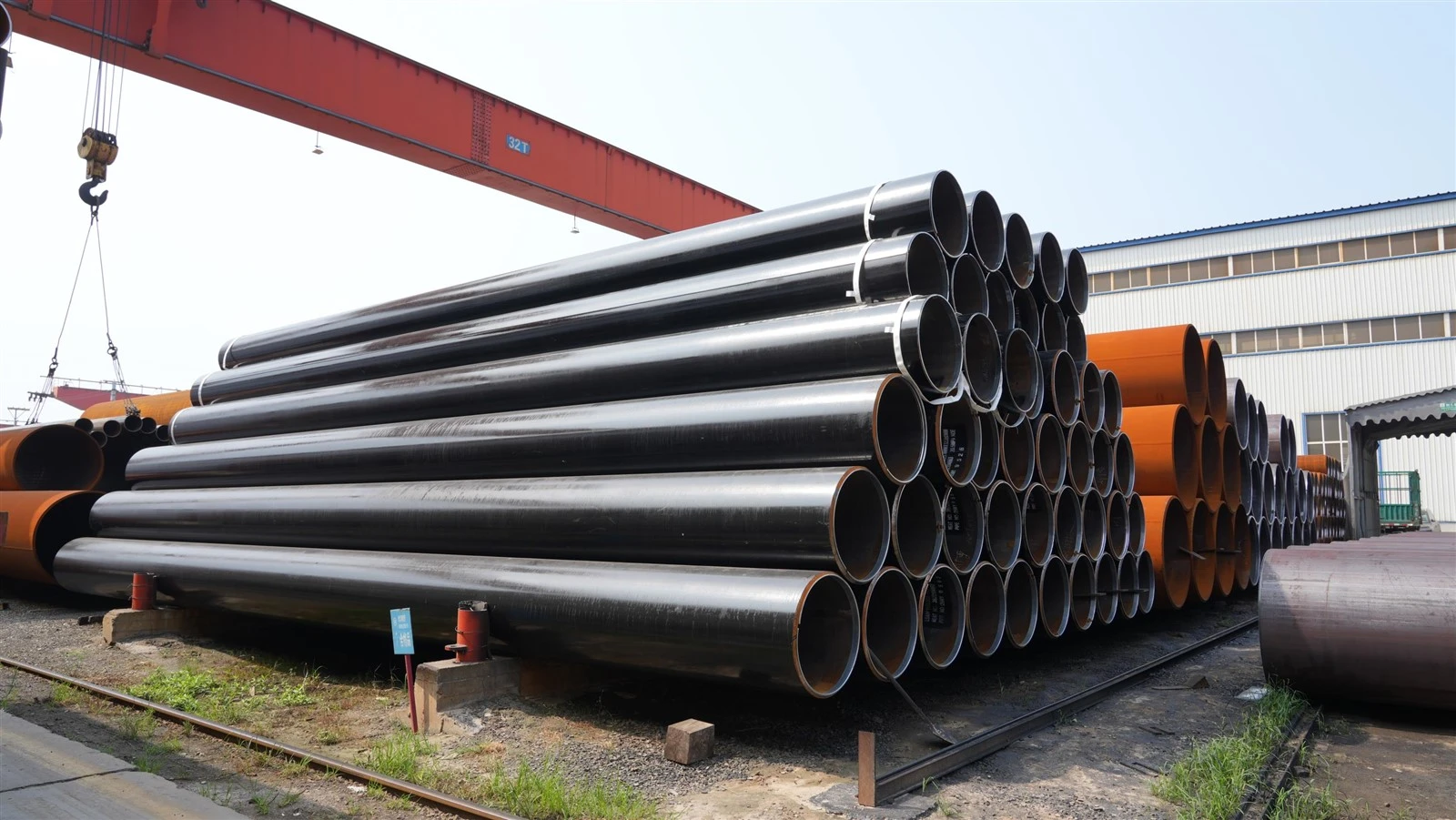
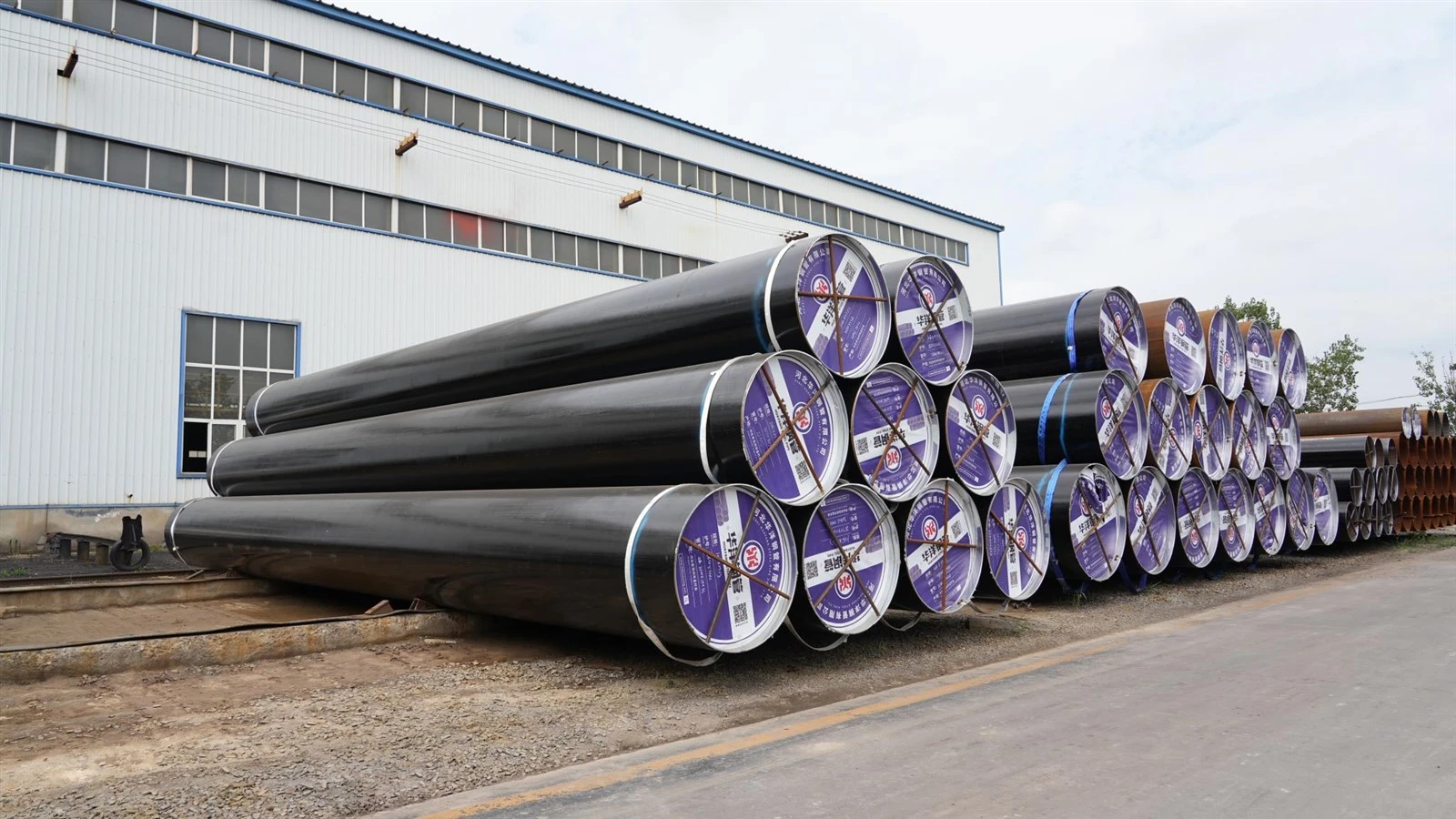
One of the major advantages of LSAW manufacturing is its ability to produce large-diameter steel pipe from heavy steel plate. This makes LSAW particularly suitable for trunk pipelines, water transmission systems, piling, and large structural applications.
API 5L covers a broad range of pipe sizes, while the practical size range of LSAW production depends on the manufacturer's forming equipment and production lines. At Huayang Steel Pipe, LSAW steel pipe production currently covers approximately Φ406.4–Φ2800 mm in outside diameter, with wall thicknesses of approximately 7–50 mm and lengths of 6–12.5 m, depending on the production line and project requirements.
What Are the Common API 5L LSAW Pipe Dimensions?
For large-diameter projects, buyers normally specify outside diameter, wall thickness, length, steel grade, PSL, and applicable standard together. A typical order may therefore be described by a combination such as API 5L X65 PSL2, a specified outside diameter, wall thickness, and required pipe length.
The following dimensions provide a practical reference for Huayang's LSAW production capability:
| Parameter | Huayang LSAW Steel Pipe Capability |
|---|---|
| Outside Diameter | Φ406.4–Φ2800 mm |
| Wall Thickness | 7–50 mm |
| Pipe Length | 6–12.5 m |
| Forming Process | JCOE and other applicable forming processes |
| Product Level | API 5L PSL1 / PSL2 according to order |
| Main Applications | Oil & gas, water transmission, piling, structural engineering |
Actual production availability depends on the required combination of diameter, wall thickness, steel grade, length, standard, and order quantity.
How Does the LSAW Manufacturing Process Affect Pipe Quality?
LSAW pipe production starts with steel plate inspection and preparation. The plate is then formed into a cylindrical shape using an appropriate forming process such as JCOE. The longitudinal seam is welded using submerged arc welding, followed by mechanical expansion and dimensional correction where required.
Double-sided submerged arc welding is an important feature of the process. Welding from the internal and external sides helps achieve controlled penetration and a reliable longitudinal weld seam. After welding, mechanical expansion can improve diameter accuracy, roundness, and dimensional consistency.
The manufacturing process is followed by NDT, hydrostatic testing, dimensional inspection, and other tests required by API 5L and the project specification.
How Are API 5L LSAW Steel Pipes Tested Before Delivery?
Testing is a critical part of API 5L LSAW steel pipe production because visual inspection alone cannot verify all aspects of pipe quality. Inspection is carried out at different stages to evaluate material properties, weld integrity, pressure resistance, and final dimensions.
Non-destructive testing is particularly important for the longitudinal weld. Ultrasonic testing can identify internal discontinuities, while radiographic testing may be applied where required by the applicable specification or inspection plan.
What NDT Methods Are Used for API 5L LSAW Pipe?
The specific NDT program depends on the applicable standard and purchase requirements. Common methods include ultrasonic testing and radiographic testing for weld examination, while magnetic particle or liquid penetrant testing may be used for specific surface inspection requirements.
| Inspection Method | Main Purpose |
|---|---|
| Ultrasonic Testing | Detect internal discontinuities in welds or steel |
| Radiographic Testing | Examine weld integrity through radiographic imaging |
| Magnetic Particle Testing | Detect surface and near-surface discontinuities |
| Liquid Penetrant Testing | Detect fine surface discontinuities where applicable |
| Hydrostatic Testing | Verify pressure tightness |
Hydrostatic testing is another important inspection procedure for pressure-service pipe. The finished pipe is filled with water and subjected to the specified test pressure for the required holding period. This provides a controlled verification of pressure tightness before shipment.
What Other Properties Need to Be Verified?
Chemical composition and mechanical properties are checked against the requirements of the specified API 5L grade. Depending on the grade and PSL, testing can include tensile properties, yield strength, elongation, impact toughness, and other specified requirements.
For projects operating in low-temperature environments or other demanding conditions, toughness requirements can be particularly important. Buyers should therefore provide the complete technical specification rather than specifying only the nominal steel grade.
Where Are API 5L LSAW Steel Pipes Used?
API 5L LSAW steel pipes are primarily associated with pipeline transportation and other applications requiring large-diameter welded steel pipe. Their combination of large size capability, controlled longitudinal welding, and high-strength line pipe grades makes them suitable for a variety of engineering projects.
Typical applications include long-distance crude oil pipelines, natural gas transmission pipelines, water transmission systems, offshore pipeline projects, petrochemical infrastructure, and large-scale energy facilities.
LSAW pipes can also be used in piling and structural engineering where large diameter and heavy wall thickness are required, although these applications may use standards other than API 5L depending on the engineering design.
How Can You Choose the Right API 5L LSAW Steel Pipe?
Choosing the right API 5L LSAW steel pipe requires more than selecting a diameter and grade. Buyers should confirm the required API 5L edition, PSL, steel grade, outside diameter, wall thickness, pipe length, end preparation, testing requirements, and service conditions.
For oil and gas transmission projects, the operating pressure and transportation medium are particularly important. For offshore or cold-region applications, additional requirements for toughness and environmental conditions may need to be considered. Where corrosion protection is required, the pipe may also need an external or internal coating system according to the project specification.
At Huayang Steel Pipe, LSAW steel pipes can be manufactured in different diameters, wall thicknesses, lengths, grades, and standards according to project requirements. Our production process covers plate preparation, forming, double-sided submerged arc welding, mechanical expansion, NDT, hydrostatic testing, dimensional inspection, and final quality verification.
For buyers sourcing API 5L LSAW steel pipe, understanding the relationship between standards, grades, sizes, manufacturing processes, and inspection requirements helps create a more precise technical specification and supports reliable project procurement. By matching the pipe grade and dimensions with actual operating conditions and applying appropriate quality controls throughout production, LSAW steel pipe can provide a practical solution for large-diameter pipeline and engineering applications.
Read More:
How Does The LSAW Steel Pipe Manufacturing Process Guarantee Quality For Your Project?
Why Choose Huayang LSAW Workshop For Large Diameter Steel Pipes?