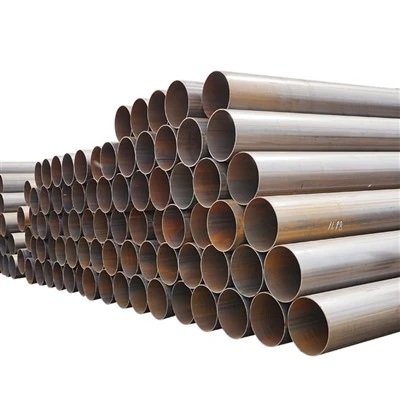
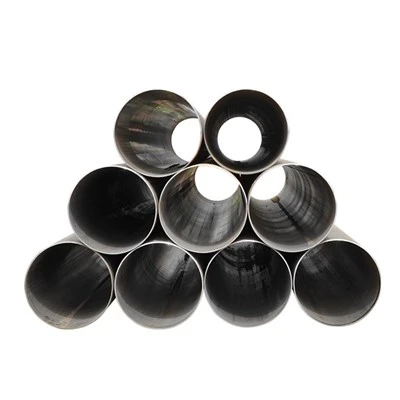
Longitudinal Submerged Arc Welded steel pipe, widely known as LSAW steel pipe, is a large-diameter welded pipe manufactured from steel plate through a controlled forming and welding process. Unlike ERW and HFW steel pipe, which are generally produced from steel coil, LSAW steel pipe starts with individual steel plates. The production process provides manufacturers with greater flexibility in controlling pipe diameter, wall thickness, steel grade, and mechanical properties, making LSAW steel pipe particularly suitable for demanding pipeline and infrastructure projects.
The manufacturing process normally begins with steel plate inspection, edge milling, pre-bending, forming, tack welding, submerged arc welding, mechanical expansion, non-destructive testing, hydrostatic testing, and final dimensional inspection. Depending on the production line and pipe specification, JCOE or other forming methods can be used to gradually transform the flat plate into a cylindrical shape. During submerged arc welding, the longitudinal seam is welded under a layer of flux, helping protect the weld pool and achieve stable penetration. After welding, mechanical expansion and comprehensive inspection help ensure the finished pipe meets the required dimensional and technical specifications.
| Production Stage | Main Operation | Quality Control Focus |
|---|---|---|
| Raw Material | Steel Plate Inspection | Chemical composition and mechanical properties |
| Edge Preparation | Edge Milling | Edge geometry and groove accuracy |
| Forming | JCOE / Other Forming Methods | Diameter, roundness and alignment |
| Tack Welding | Temporary Joint Welding | Edge alignment |
| Main Welding | Submerged Arc Welding | Weld penetration and integrity |
| Expansion | Mechanical Expansion | Diameter and roundness |
| Testing | NDT and Hydrostatic Testing | Weld and pressure performance |
| Final Inspection | Dimensional and Surface Inspection | Tolerance, ends and appearance |
How Does the LSAW Steel Pipe Manufacturing Process Affect Product Performance?
The manufacturing process has a direct influence on the mechanical performance, dimensional accuracy, and weld reliability of LSAW steel pipe. For large-diameter pipeline applications, each stage needs to be controlled carefully because deviations during forming or welding can affect subsequent installation and operation.
Why Is Steel Plate Selection Important?
Steel plate is the primary raw material used to manufacture LSAW steel pipe. Before production, the plate is inspected according to the applicable product standard and project specification. Chemical composition, tensile properties, yield strength, impact performance, surface condition, and dimensions may all be reviewed.
After inspection, the plate edges are milled to achieve accurate geometry. Proper edge preparation is particularly important for longitudinal welding because the two edges must be positioned correctly before the welding process begins.
How Does Forming Influence Pipe Accuracy?
The prepared plate is progressively formed into a cylindrical shape. In JCOE forming, the plate is pressed through several controlled stages to create a J-shaped profile, followed by a C-shaped and finally an O-shaped configuration.
Accurate forming helps establish the required pipe diameter and roundness before welding. Proper control also reduces excessive deformation and supports stable welding conditions along the longitudinal seam.
How Does Submerged Arc Welding Create a Reliable Longitudinal Seam?
After forming and tack welding, the longitudinal seam becomes the key connection that transforms the formed plate into a complete steel pipe.
What Happens During Submerged Arc Welding?
Submerged Arc Welding, or SAW, uses a welding arc beneath a layer of granular flux. The flux protects the molten weld pool from atmospheric contamination and contributes to stable welding conditions.
For LSAW steel pipe, the longitudinal seam is normally welded using controlled internal and external welding operations. Welding parameters such as current, voltage, travel speed, wire selection, flux condition, and edge alignment influence the final weld quality.
How Is Weld Quality Verified?
After welding, the longitudinal seam can be inspected using non-destructive testing methods such as ultrasonic testing or radiographic testing according to the applicable standard.
These inspections help identify internal or surface imperfections that may not be visible during ordinary visual examination. Hydrostatic testing can also be performed to verify pressure resistance where required by the product standard or project specification.
Where Is LSAW Steel Pipe Used in Oil and Gas Transportation?
One of the most important applications of LSAW steel pipe is large-scale oil and gas pipeline construction.
Why Is LSAW Suitable for Energy Pipelines?
Oil and gas transmission pipelines often require large diameters and substantial wall thicknesses to transport large volumes of media efficiently. LSAW manufacturing allows these specifications to be produced from steel plate while maintaining controlled forming and welding quality.
API 5L LSAW steel pipe can be manufactured in different grades according to project requirements. Selection of the appropriate grade, diameter, wall thickness, and PSL should be based on pipeline design, operating pressure, transportation medium, and applicable technical specifications.
How Does Large Diameter Benefit Pipeline Projects?
A larger pipe diameter can increase transportation capacity under suitable hydraulic conditions. LSAW steel pipe therefore plays an important role in long-distance energy transmission projects where high flow capacity is required.
How Is LSAW Steel Pipe Used in Water and Municipal Infrastructure?
Large-scale water transmission projects also require steel pipes capable of handling internal pressure while providing long-term structural reliability.
What Makes LSAW Pipe Suitable for Water Transmission?
LSAW steel pipe can be produced in large diameters and supplied with external or internal corrosion protection according to project requirements.
For buried water pipelines, external coating systems can reduce exposure to soil and groundwater. Internal epoxy coatings can also be considered for applications where additional internal corrosion protection and a smooth internal surface are required.
How Does Anti Corrosion Treatment Extend Service Life?
Steel pipe used in underground or wet environments can be exposed to moisture and corrosive substances. Coating systems such as FBE, 3PE, 3PP, 2PE, and 2PP can provide a protective barrier between the steel surface and the surrounding environment.
Proper surface preparation, coating thickness, adhesion, and holiday inspection are important factors in achieving effective corrosion protection.


What Other Industrial Applications Use LSAW Steel Pipe?
The applications of LSAW steel pipe extend beyond conventional transmission pipelines.
How Is LSAW Pipe Used in Industrial Facilities?
Large-diameter LSAW steel pipe can be used in petrochemical plants, refineries, power stations, LNG facilities, chemical plants, mining infrastructure, and industrial water systems.
These applications often require customized combinations of diameter, wall thickness, steel grade, testing, and coating. The plate-based manufacturing process provides flexibility for producing different specifications according to project requirements.
Why Is Dimensional Accuracy Important in Industrial Projects?
Industrial pipeline systems contain many connected components, including valves, flanges, fittings, supports, and equipment connections. Consistent pipe dimensions help improve alignment and simplify field welding and installation.
This can reduce unnecessary adjustments during construction and support more predictable project execution.
How Does Quality Control Support LSAW Steel Pipe Reliability?
Quality control covers the entire production process rather than only the finished pipe.
Which Tests Are Commonly Performed?
Depending on the applicable standard and customer specification, LSAW steel pipe may undergo chemical analysis, tensile testing, impact testing, ultrasonic testing, radiographic testing, hydrostatic testing, dimensional inspection, and visual examination.
These procedures verify different aspects of product performance and help ensure that the finished pipe satisfies the specified technical requirements.
Why Is Traceability Important?
International engineering projects often require complete material and inspection documentation. Heat numbers, material certificates, production records, non-destructive testing reports, and hydrostatic test records provide traceability from raw material to finished pipe.
This documentation is particularly important for large projects where product quality must be verified during inspection, installation, and project acceptance.
Project Reference: LSAW Steel Pipe for a Chilean Copper Mine Project
The Chilean copper mine project provides a practical example of LSAW steel pipe used in international industrial pipeline engineering. In July 2024, approximately 1,413 tons of LSAW steel pipe were supplied for the project, with the pipe manufactured according to API 5L PSL1 Grade B and a specification of 914 × 15.88 mm.
The large diameter and relatively heavy wall thickness required controlled plate forming, stable longitudinal submerged arc welding, dimensional inspection, and comprehensive quality testing. The project demonstrates how LSAW steel pipe can support demanding pipeline systems in mining and industrial environments where structural strength and manufacturing consistency are essential.
Read More:
How Is LSAW Steel Pipe Manufactured? A Step-by-Step Guide To The Production Process
How Is HFW Steel Pipe Manufactured And Where Is It Used in Modern Pipeline Projects?