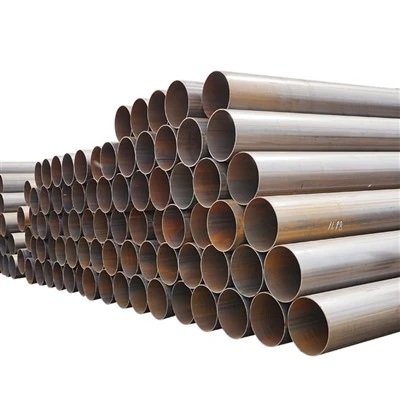
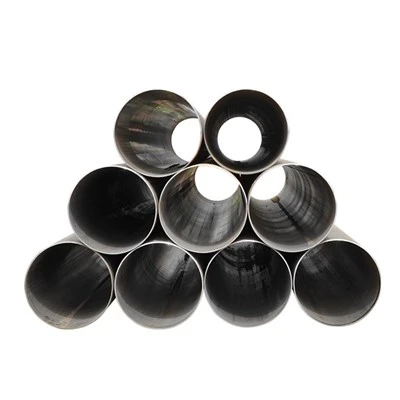
LSAW steel pipe, short for Longitudinal Submerged Arc Welded steel pipe, is widely used in large-diameter pipeline and infrastructure projects where high strength, dimensional accuracy, and reliable weld performance are required. Unlike ERW and HFW steel pipe, LSAW steel pipe is manufactured from steel plate through a controlled forming and submerged arc welding process. This production method allows manufacturers to produce large outside diameters and relatively heavy wall thicknesses for demanding engineering applications.
Because of its structural strength and flexible specification range, LSAW steel pipe is commonly selected for oil and gas transmission, water transportation, mining, petrochemical facilities, power plants, LNG infrastructure, marine terminals, and industrial pipeline systems. The final specification can be adjusted according to operating pressure, transported medium, installation environment, steel grade, corrosion conditions, and applicable international standards.
| Application | Typical Requirements | Common Standards / Grades |
|---|---|---|
| Oil & Gas Transmission | Large diameter, pressure resistance, weld integrity | API 5L X52, X60, X65, X70 |
| Water Transmission | Pressure resistance, corrosion protection | API 5L, GB/T 9711 |
| Mining Pipelines | High strength, abrasion and corrosion considerations | API 5L, project specifications |
| Petrochemical Plants | Reliable welds, controlled dimensions | ASTM A671, ASTM A672 |
| Power Plants | Pressure and temperature considerations | ASTM A671, ASTM A672 |
| LNG Infrastructure | Strength, toughness, dimensional accuracy | API 5L, ASTM standards |
| Marine & Terminal Projects | Structural strength, corrosion protection | API, ASTM, EN standards |
How Is LSAW Steel Pipe Used in Oil and Gas Transmission?
Oil and gas transportation remains one of the most important applications for LSAW steel pipe. Long-distance transmission systems require pipes capable of transporting large volumes of oil or natural gas while maintaining reliable performance under internal pressure and external environmental loads.
Why Is LSAW Suitable for Large-Diameter Energy Pipelines?
LSAW manufacturing is particularly suitable for large-diameter pipelines because the pipe is formed from steel plate rather than continuously rolled strip. This provides flexibility when producing large diameters and heavy wall thicknesses.
For oil and gas projects, engineers may specify API 5L LSAW steel pipe in grades such as X52, X60, X65, or X70 depending on design requirements. The appropriate grade is selected based on operating pressure, pipeline route, temperature, transported medium, fracture toughness requirements, and other project conditions.
How Does Pipe Diameter Affect Pipeline Capacity?
Large-diameter pipelines can transport substantial quantities of fluid over long distances. LSAW steel pipe is therefore frequently used in trunk transmission pipelines where high flow capacity is required.
In addition to diameter, wall thickness is carefully selected according to design pressure and other engineering parameters. Accurate dimensional control during manufacturing helps facilitate field welding and pipeline assembly.
How Is LSAW Steel Pipe Used in Water Transmission Projects?
Large-scale water infrastructure is another major application for LSAW steel pipe. Water transmission systems may extend over long distances and operate continuously for many years, requiring reliable structural performance and effective corrosion protection.
Why Is LSAW Pipe Suitable for Large Water Pipelines?
LSAW steel pipe can be produced in large diameters suitable for municipal water transmission, industrial water supply, irrigation systems, and long-distance water transfer projects.
The steel pipe can also be supplied with external or internal corrosion protection. Depending on the environment, options may include FBE, 3PE, 3PP, 2PE, 2PP, and internal epoxy coating.
How Does Coating Improve Water Pipeline Durability?
Buried pipelines are exposed to moisture, soil chemistry, and groundwater. Without appropriate protection, these conditions can accelerate external corrosion.
A properly selected coating system creates a barrier between the steel surface and the surrounding environment. Internal coatings can also help protect the pipe from the transported water when required by the project specification.
Why Is LSAW Steel Pipe Used in Mining Projects?
Mining operations often require pipelines to transport water, slurry, tailings, process fluids, and other materials over challenging terrain. These systems can place demanding requirements on pipe strength and durability.
How Does LSAW Pipe Support Mining Infrastructure?
Large-diameter LSAW steel pipe provides the structural capacity required for many mining pipeline applications. Its manufacturing flexibility also allows customers to specify different wall thicknesses and steel grades according to project conditions.
For mine water transfer and drainage systems, the pipe may need to withstand internal pressure as well as external loads caused by burial, terrain, or installation conditions.
What About Deep Mine Drainage?
Deep mine drainage systems can require pipes capable of handling substantial hydrostatic pressure. In these applications, steel grade, wall thickness, weld quality, and dimensional accuracy must be evaluated together rather than selecting a pipe based only on diameter.
Appropriate coating and surface protection may also be required when the transported water or surrounding environment creates a corrosion risk.
Where Is LSAW Steel Pipe Used in Petrochemical and Industrial Plants?
LSAW steel pipe is also used extensively in refineries, petrochemical facilities, chemical plants, and other industrial installations.
Why Do Industrial Projects Require Large-Diameter Welded Pipe?
Industrial facilities often contain complex networks for transporting process fluids, cooling water, steam, chemicals, hydrocarbons, and other media. Some systems require large pipe diameters to maintain the necessary flow rate.
LSAW steel pipe can be manufactured according to specifications such as ASTM A671 and ASTM A672, depending on temperature, pressure, material, and service requirements.


How Does Dimensional Accuracy Help Installation?
Industrial pipeline systems contain numerous fittings, valves, flanges, supports, and equipment connections. Consistent outside diameter, wall thickness, roundness, and pipe length can simplify alignment during installation.
Accurate dimensions can also reduce field adjustments and help improve welding efficiency during construction.
How Is LSAW Steel Pipe Applied in Power and LNG Projects?
Power plants and LNG facilities require reliable piping systems to support energy production, storage, processing, and transportation.
What Makes LSAW Pipe Suitable for Energy Facilities?
Power and LNG projects often require steel pipes with controlled mechanical properties, reliable welds, and strict inspection documentation. Depending on the application, LSAW steel pipe can be manufactured to API or ASTM specifications.
For LNG-related infrastructure, project specifications may include additional requirements for toughness, welding quality, inspection, and dimensional control.
Why Is Quality Documentation Important?
Large international energy projects normally require complete traceability from raw material to finished product. Material certificates, inspection reports, non-destructive testing records, hydrostatic test results, and dimensional inspection records can form part of the final project documentation.
How Is LSAW Steel Pipe Used in Marine Terminals and Infrastructure?
Marine terminals, ports, and coastal infrastructure expose steel components to moisture, seawater, salt spray, and other corrosive conditions.
Why Is Corrosion Protection Important for Marine Applications?
The structural strength of LSAW steel pipe makes it suitable for demanding marine infrastructure, but corrosion protection becomes particularly important in seawater environments.
External coating systems can be selected according to the marine exposure conditions and project requirements. Surface preparation and coating inspection are also critical to achieving long-term protection.
Can LSAW Pipe Be Used for Terminal Projects?
Yes. Large-diameter LSAW steel pipe can be used in terminal pipeline systems, marine utility networks, water systems, and other supporting infrastructure where structural strength and dimensional accuracy are required.
How Does LSAW Steel Pipe Support International Engineering Projects?
The broad application range of LSAW steel pipe means that manufacturers must be capable of supplying different combinations of steel grades, dimensions, standards, inspection requirements, and surface protection.
Huayang Steel Pipe's LSAW production capabilities cover Φ406.4–Φ1422.4 mm outside diameter and wall thicknesses of approximately 6–50 mm, allowing products to be supplied for different large-scale engineering applications. Depending on the project, LSAW steel pipe can be manufactured according to API 5L, ASTM, EN, GB/T, and other applicable specifications.
Project Reference: LSAW Steel Pipe for a Chilean Copper Mine Project
The Chilean copper mine project is one example of LSAW steel pipe being applied to international mining infrastructure. In July 2024, approximately 1,413 tons of LSAW steel pipe were supplied with a specification of API 5L PSL1 Grade B, 914 × 15.88 mm.
The large-diameter pipe was used in pipeline engineering associated with the copper mining project. The specification required stable plate forming, reliable longitudinal submerged arc welding, dimensional control, and comprehensive inspection. This project demonstrates the suitability of LSAW steel pipe for mining infrastructure where high structural strength and dependable pipeline performance are important.
Read More:
How Is LSAW Steel Pipe Manufactured And Where Is It Used in Modern Engineering?
How Does HFW Steel Pipe Improve Efficiency in Oil And Gas Pipeline Construction?