


High-frequency welded steel pipes are often associated with heavy-duty infrastructure, but their manufacturing capabilities extend far beyond large-scale construction. Dimensional accuracy, including pipe roundness, outside diameter tolerance, and wall thickness uniformity, plays an equally important role in determining product quality. With three new production lines, Hebei Huayang Steel Pipe Co., Ltd. has expanded its high-frequency welded pipe production range down to a minimum outside diameter of 48 mm. As pipe diameters become smaller, controlling forming springback and maintaining consistent roundness become increasingly demanding, making precision forming an important indicator of manufacturing capability.
Why Does Dimensional Accuracy Matter in HFW Steel Pipe Manufacturing?
Steel pipe performance depends on more than steel grade, tensile strength, or nominal wall thickness. The actual dimensions of a finished pipe affect how it fits with other components, how loads are distributed, and how efficiently it can be processed during fabrication and installation.
For HFW steel pipes, dimensional control begins with strip preparation and continues through forming, high-frequency welding, sizing, and final inspection. Each stage can influence the final geometry. If the strip width, forming conditions, or sizing parameters are not properly controlled, dimensional deviations may develop even when the material itself meets the required chemical and mechanical specifications.
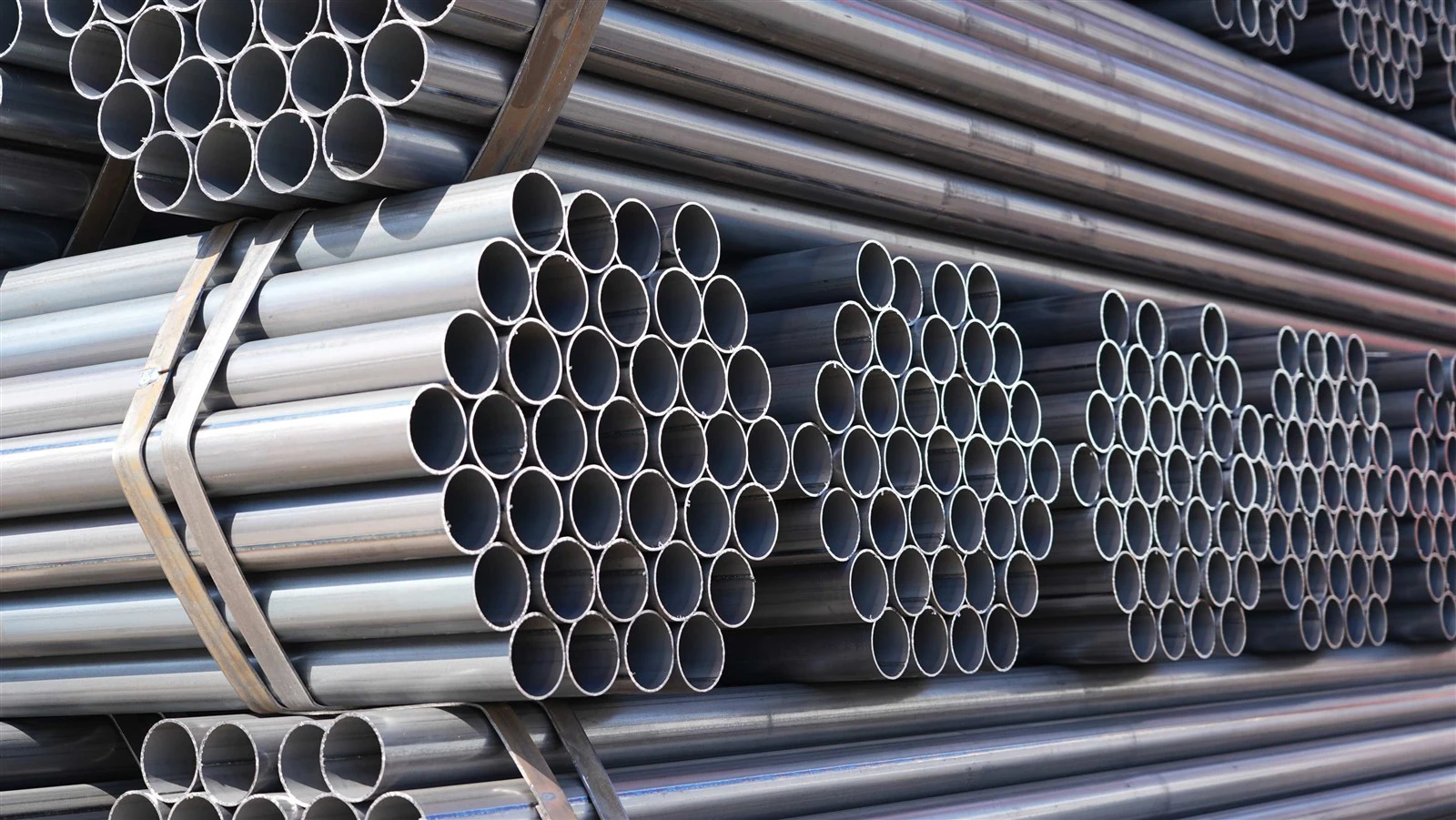
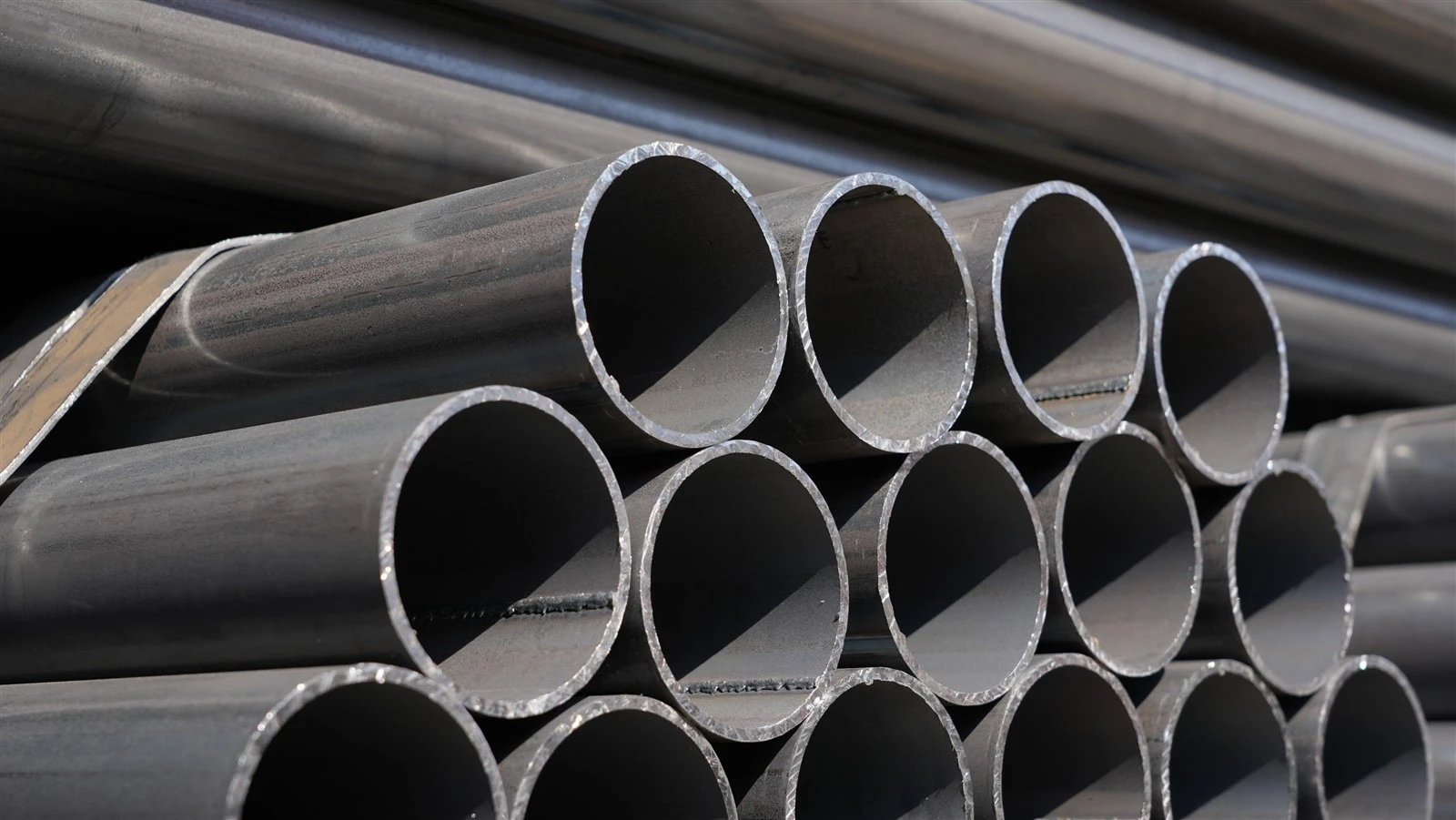
Outside Diameter and Roundness: Two Essential Measurements
Outside diameter determines whether a pipe fits the specified design dimensions, while roundness describes how closely its cross-section approaches a true circle. These characteristics are closely related but are not interchangeable.
A pipe may have an average outside diameter within the specified range while still exhibiting excessive ovality. This can create difficulties during fit-up, welding, clamping, or connection to other components. For applications involving multiple pipe sections, consistent dimensions can reduce the need for corrective work and help maintain a more predictable assembly process.
Roundness control becomes particularly important for smaller-diameter HFW pipes. Changes in forming pressure, material behavior, and elastic recovery can affect the final cross-section. Manufacturers must therefore coordinate forming and sizing parameters to achieve the required geometry rather than relying on nominal dimensions alone.
Wall Thickness Uniformity and Its Practical Value
Wall thickness is another important factor in steel pipe quality. The specified nominal thickness determines the intended design basis, but the actual thickness can vary within the limits permitted by the applicable standard and purchase specification.
Uneven thickness may affect local stiffness, machining allowance, and the consistency of fabricated components. In pressure-related applications, thickness verification is also part of confirming that the pipe meets the relevant design and manufacturing requirements. Dimensional inspection should therefore consider both the nominal specification and the permitted variation.
For buyers, the key question is not simply whether a manufacturer can produce a pipe with a particular diameter and thickness. It is whether the manufacturer can maintain those dimensions consistently across the required production quantity.
What Makes Precision Forming More Challenging for Small-Diameter HFW Pipes?
High-frequency welded pipe production involves continuously forming steel strip into a tubular shape and welding the longitudinal seam using high-frequency electrical energy. After welding, sizing equipment helps bring the pipe to its specified final dimensions.
Although this is a continuous process, dimensional accuracy is not automatic. The forming rolls, strip characteristics, welding conditions, and sizing equipment must work together. Variations at one stage can influence the geometry of the finished pipe.
Managing Forming Springback and Cross-Section Stability
Steel does not always retain its exact shape after forming pressure is released. Elastic recovery, commonly referred to as springback, can cause the material to move away from the intended geometry. The extent of this behavior depends on factors such as material properties, forming conditions, and pipe dimensions.
Smaller-diameter pipes can require more careful coordination of forming and sizing because the available geometry and process settings differ from those used for larger products. The forming system must establish the required circular profile while maintaining stable conditions for longitudinal seam welding.
Why Sizing Calibration Matters
Sizing is not simply a final adjustment to the pipe diameter. Proper calibration helps control the finished cross-section and reduce dimensional variation. Roll condition, equipment alignment, and suitable process parameters all contribute to repeatable results.
A stable production process also requires attention to changes between product specifications. When outside diameter or wall thickness changes, the relevant equipment settings and inspection requirements must be matched to the new order. This is particularly important when producing several small-diameter sizes on the same manufacturing line.
How New Production Lines Expand Manufacturing Capability
Huayang Steel Pipe's three new high-frequency longitudinal welded pipe production lines extend its HFW product range down to 48 mm in outside diameter. This expansion gives customers additional options when sourcing smaller-diameter welded steel pipes for industrial and structural applications.
The significance of a smaller minimum diameter is not limited to the range shown in a product catalogue. It also places greater emphasis on suitable forming control, sizing accuracy, and process consistency. Actual dimensional tolerances, available wall thicknesses, lengths, steel grades, and inspection requirements should always be confirmed against the specific order.
Which Dimensional Factors Should Buyers Check When Sourcing HFW Steel Pipes?
When evaluating HFW steel pipes, buyers should consider several related dimensions rather than focusing only on outside diameter. The following table summarizes common inspection points and explains why each one matters.
| Dimensional factor | What it indicates | Why it matters |
|---|---|---|
| Outside diameter | The external size of the finished pipe | Supports dimensional compatibility and installation |
| Ovality or roundness | Variation in the pipe's cross-sectional shape | Helps with fit-up, clamping, and connection consistency |
| Wall thickness | Actual thickness compared with the specified value | Supports design compliance and fabrication requirements |
| Length | Finished pipe length and permitted variation | Helps with cutting plans, transportation, and installation |
| Straightness | Deviation from the intended longitudinal axis | Supports handling, alignment, and assembly |
| End condition | Geometry and preparation of the pipe ends | Influences connection, welding, and fabrication work |
Match Inspection Requirements to the Applicable Standard
Dimensional acceptance criteria should be based on the applicable product standard, steel grade, pipe size, wall thickness, and purchase specification. Different standards may define different tolerances, measurement methods, and acceptance requirements. A single universal tolerance should not be applied to every HFW steel pipe.
Buyers should identify the governing standard and specify any additional project requirements before production begins. Where tighter tolerances are necessary for a particular application, these should be clearly agreed with the manufacturer rather than assumed from the nominal pipe dimensions.
Ask for Verifiable Inspection Information
A useful quality record should connect the supplied product with its actual order requirements. Depending on the contract and applicable standard, this may include dimensional inspection results, material traceability records, mechanical test results, and other required quality documentation.
For critical dimensions, buyers can clarify how measurements are taken, how frequently inspections are performed, and how nonconforming products are handled. This makes it easier to evaluate manufacturing consistency instead of relying solely on general claims about precision.
Where Can Dimensionally Consistent HFW Steel Pipes Be Used?
Consistent dimensions are valuable across a wide range of applications. In steel structures, they help fabrication teams align and connect tubular members. In industrial equipment and mechanical assemblies, predictable outside diameters and wall thicknesses can simplify component integration and downstream processing.
Smaller-diameter HFW pipes can also be considered for scaffolding, temporary support structures, automotive components, and general industrial structures, subject to the required material grade, mechanical properties, dimensions, and applicable product specifications. Not every HFW pipe is suitable for every application; the final selection must reflect the actual service conditions and design requirements.
For procurement teams, dimensional consistency can influence costs beyond the purchase price. Significant deviations may lead to additional sorting, rework, cutting adjustments, or installation delays. Choosing a manufacturer with suitable production equipment and a defined inspection process can help reduce these avoidable risks.
How Does Huayang Steel Pipe Approach HFW Pipe Quality?
At Hebei Huayang Steel Pipe Co., Ltd., expanding the available size range is one part of manufacturing development. The three new high-frequency production lines extend the minimum HFW outside diameter to 48 mm, giving customers a wider selection of products for different project needs.
For buyers, the most useful next step is to provide the required standard, steel grade, outside diameter, wall thickness, length, order quantity, and intended application. Huayang's team can then review the specification and confirm the available production options and applicable quality requirements.
Looking for HFW steel pipes with defined dimensional requirements? Contact Huayang Steel Pipe to discuss your specifications, available sizes, and inspection needs. Clear requirements at the quotation stage help align manufacturing, quality verification, and delivery expectations.
Dimensional accuracy is an essential part of steel pipe performance. From outside diameter and roundness to wall thickness and straightness, each measurement contributes to the pipe's suitability for fabrication and service. As Huayang expands its HFW production range to smaller diameters, process control and verifiable inspection remain important considerations when selecting a steel pipe manufacturer.
Read More:
How Do Anti-Corrosion Coatings Protect Steel Pipes in Pipeline Projects?
How Is A Steel Pipe Transformed From A Raw Pipe Into A Custom Engineering Product?


