


Steel pipes used in buried pipelines, marine environments, and industrial fluid transportation systems may face long-term exposure to moisture, salts, chemicals, and other corrosive conditions. As Episode 3 of the Huayang Steel Pipe Product Series, Huayang's pipe anti-corrosion coating solutions include external coatings for pipes with diameters from 159 mm to 1626 mm, using systems such as FBE, 2FBE, 3LPE, and 3LPP. Internal coating options are available for pipe diameters from 406 mm to 1626 mm, including liquid epoxy drag-reducing coatings and epoxy powder coatings. Through surface pretreatment and controlled coating processes, Huayang supports pipeline projects in Kuwait, Africa, and other international markets, helping customers select suitable protection systems for demanding service environments.
Why Do Steel Pipes Need Anti-Corrosion Coatings?
Steel is widely used in pipeline construction because of its strength, versatility, and suitability for many engineering applications. However, when exposed to water, oxygen, dissolved salts, or certain chemicals, unprotected steel can corrode. Over time, corrosion may reduce wall thickness, damage the pipe surface, increase maintenance requirements, and affect the service life of pipeline assets.
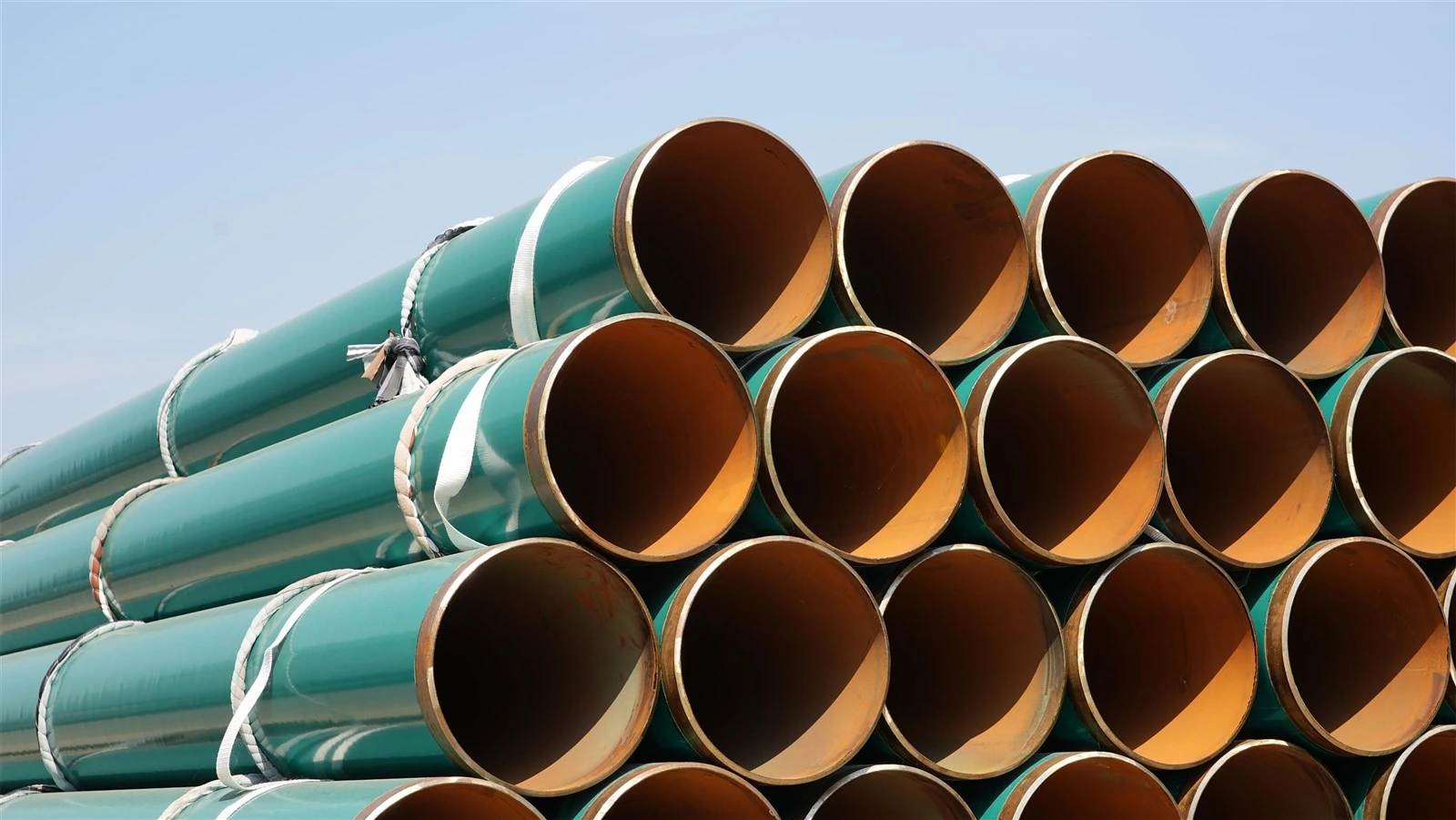
Anti-corrosion coatings create a protective barrier between the steel substrate and its surrounding environment. Depending on the coating system, this barrier may also provide additional resistance to mechanical damage, moisture penetration, or chemical exposure. For buried pipelines, external coatings are commonly selected to reduce contact between the steel surface and the surrounding soil environment. Internal coatings may be used to protect the pipe's inner surface or reduce flow resistance in suitable fluid transportation applications.
The right coating depends on more than the general category of the project. Soil characteristics, seawater exposure, transported medium, operating temperature, installation methods, and design life all influence coating selection. A coating suitable for one pipeline may not be appropriate for another operating under different conditions.
How Does Surface Pretreatment Affect Coating Performance?
Before a coating is applied, the steel pipe surface must be prepared according to the requirements of the selected coating system. Surface pretreatment commonly includes removing rust, scale, oil, and other contaminants. Abrasive blasting is often used to clean the steel surface and create a suitable surface profile for coating application.
If contaminants remain on the pipe, or the surface profile is unsuitable, the coating may not adhere as intended. Poor surface preparation can contribute to defects such as peeling, blistering, or premature coating failure. This is why surface pretreatment is a critical stage in the anti-corrosion production process rather than simply a preliminary cleaning operation.
What Happens During Steel Pipe Surface Preparation?
The process begins with evaluating the condition of the incoming pipe surface and selecting the required cleaning method. Abrasive blasting removes surface contaminants and helps establish the profile needed by the specified coating system. After preparation, the surface condition should be checked before coating begins.
Environmental conditions can also matter. Humidity, surface temperature, and the presence of condensation may affect coating application, depending on the product and process requirements. The prepared surface should therefore be handled and coated under suitable controlled conditions.
Why Is Coating Adhesion Important?
A coating must remain properly bonded to the steel to provide effective protection. Good adhesion helps the coating function as a continuous barrier, while weak adhesion may allow moisture or corrosive agents to reach the substrate through damaged or separated areas.
Surface cleanliness, profile, coating material, application parameters, and curing conditions all influence the final result. Appropriate inspection at each stage helps identify potential problems before the finished pipe is released for delivery.
Which Anti-Corrosion Coating Is Suitable for Your Pipeline?
Different coating systems provide different combinations of barrier protection, mechanical resistance, and application characteristics. The selection should be based on the project specification and actual operating conditions rather than assuming that one coating is universally superior.
Huayang provides several external and internal coating options for suitable pipe sizes and applications. The following table summarizes their general characteristics and key selection considerations.
| Coating System | Typical Application or Function | Key Selection Considerations |
|---|---|---|
| FBE - Fusion-Bonded Epoxy | External corrosion protection for suitable pipeline applications | Surface preparation, coating thickness, operating temperature, and specified performance requirements |
| 2FBE - Two-Layer Fusion-Bonded Epoxy | External protection using a specified two-layer epoxy system | System design, layer requirements, adhesion, and project specification |
| 3LPE - Three-Layer Polyethylene | External protection for many buried pipeline applications | Soil conditions, mechanical protection, temperature limits, and installation requirements |
| 3LPP - Three-Layer Polypropylene | External protection where the specified system's properties suit the service conditions | Temperature range, mechanical demands, and project requirements |
| Liquid Epoxy Internal Coating | Internal protection and, for specified systems, flow-resistance reduction | Fluid compatibility, operating conditions, application method, and curing |
| Epoxy Powder Internal Coating | Internal surface protection for suitable pipeline applications | Pipe dimensions, coating specification, service medium, and inspection requirements |
How Should Buyers Compare External Coating Systems?
External coating selection depends on the environment surrounding the pipeline and the demands imposed during transportation, installation, and operation. For example, buried pipelines may require resistance to soil-related corrosion and damage during handling or backfilling. Marine projects may involve moisture and salt exposure, while operating temperature and installation conditions can impose additional constraints.
Is a Thicker Coating Always Better?
Not necessarily. Coating thickness must comply with the specified system and application requirements. Performance also depends on adhesion, surface preparation, uniformity, curing, and resistance to the expected service conditions. Increasing thickness without considering the coating design does not automatically improve overall performance.
Buyers should confirm the required coating system, thickness, inspection methods, repair criteria, and acceptance standards before production. Where a project has special operating conditions, the coating manufacturer's technical guidance and the project engineer's requirements should inform the final selection.
What Quality Checks Are Important for Coated Steel Pipes?
A finished coating should be evaluated against the relevant specification. Depending on the system and project requirements, quality checks may include visual examination, coating thickness measurement, adhesion testing, holiday detection, and inspection of surface preparation. Not every test applies to every coating system, so the inspection plan should be agreed upon before production.
Holiday detection is used in specified applications to identify discontinuities in a coating that may expose the underlying substrate. Thickness measurements help verify that the coating meets the specified range, while adhesion testing assesses how well the coating is bonded to the surface. Inspection methods and acceptance criteria must be appropriate for the selected system and the governing standard.
Pipe ends and other areas excluded from coating also require attention. Their treatment should follow the project specification, particularly when the pipes will be welded or connected at the construction site. If coating damage occurs during handling or installation, repairs should use an approved method compatible with the original coating system.
For international procurement, buyers should confirm which inspection records and quality documents are required for acceptance. Clear documentation helps connect the finished product with the agreed coating specification and inspection results.
How Does Internal Coating Support Pipeline Operation?
While external coatings protect the pipe from its surrounding environment, internal coatings serve a different purpose. Depending on the application, they may protect the inner steel surface against compatible corrosive conditions or help reduce frictional resistance for specified fluid transportation systems.
Liquid epoxy drag-reducing coatings may be selected for applications where the coating system is designed to provide a smoother internal surface. Epoxy powder coatings can also be used for internal protection where the product and operating conditions are suitable. However, the correct choice depends on the transported fluid, temperature, pressure, chemical compatibility, and applicable project requirements.
Internal coating is not a universal solution for every fluid. Buyers should evaluate the composition of the transported medium and any relevant operating limits before specifying a coating. For acidic or chemically aggressive service, the compatibility of the pipe material and coating system must be assessed against the actual conditions; no coating should be assumed to resist every chemical environment.
Why Choose Huayang Steel Pipe for Anti-Corrosion Solutions?
Reliable corrosion protection requires coordination between the base pipe, surface preparation, coating application, inspection, and delivery. A coating system that is suitable in principle may still fail to meet project requirements if the surface is improperly prepared or the specified application and inspection procedures are not followed.
Huayang Steel Pipe provides external coating options including FBE, 2FBE, 3LPE, and 3LPP for applicable pipe diameters from 159 mm to 1626 mm. Internal coating options for diameters from 406 mm to 1626 mm include liquid epoxy drag-reducing coatings and epoxy powder coatings, subject to the order specification and product suitability.
For customers managing overseas pipeline projects, discussing coating requirements early helps align the selected system with the service environment, pipe dimensions, inspection scope, and installation plan. Huayang has supplied products for projects in Kuwait, Africa, and other international markets, supporting customers with steel pipe and anti-corrosion solutions for infrastructure and industrial applications.
Planning a buried pipeline, marine project, or industrial fluid transportation system? Contact Huayang Steel Pipe with your pipe dimensions, operating conditions, required coating system, and project specification. The team can help review suitable options and clarify the processing and inspection requirements for your order.
The long-term performance of a coated steel pipe depends on selecting the right protection system and applying it under controlled conditions. By considering surface pretreatment, coating compatibility, quality inspection, and installation requirements together, project buyers can make more informed decisions about pipeline corrosion protection.
Read More:
How Is A Steel Pipe Transformed From A Raw Pipe Into A Custom Engineering Product?
Why Does The Steel Pipe Delivery Schedule Matter For Your Pipeline Project?


