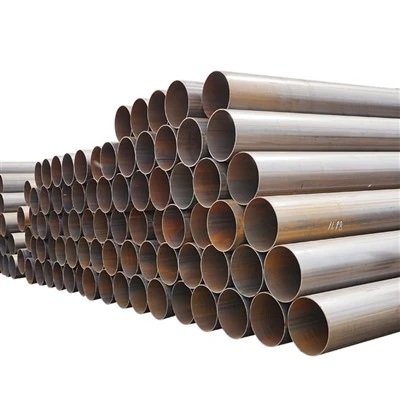
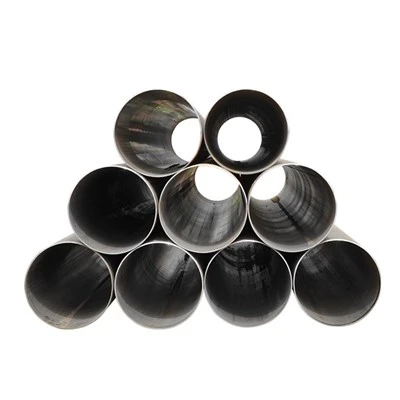
High Frequency Welded, or HFW steel pipe, is widely used in modern pipeline engineering because it combines efficient manufacturing, consistent weld quality, accurate dimensions, and reliable mechanical performance. As oil, gas, water, and industrial pipeline networks continue to expand, project owners increasingly require steel pipes that can meet demanding technical specifications while also supporting efficient construction and controlled procurement costs.
HFW steel pipe is manufactured from hot-rolled steel strip that is continuously formed into a cylindrical shape. The edges of the formed strip are heated by high-frequency electrical current and then joined under pressure. This process creates a longitudinal welded joint without the use of conventional filler metal. Because the heating area and welding parameters can be precisely controlled, modern HFW production can achieve stable weld quality and consistent pipe dimensions across large production volumes.
For pipeline manufacturers, HFW technology is particularly valuable for medium-diameter steel pipe production. Huayang Steel Pipe manufactures HFW steel pipe in a wide range of specifications and according to international standards such as API 5L, ASTM A53, ASTM A500, EN 10219, EN 10217, and GB/T standards. Its HFW production range covers approximately Φ48–Φ660.4 mm, wall thicknesses of 2.0–22 mm, and pipe lengths from 6 m to 27 m, supporting applications in oil and gas transmission, water systems, structural engineering, and industrial pipelines.
| Item | HFW Steel Pipe Details |
|---|---|
| Manufacturing Process | High Frequency Welding |
| Outside Diameter | Φ48–Φ660.4 mm |
| Wall Thickness | 2.0–22 mm |
| Standard Length | 6–12 m, customized up to 27 m |
| Common Standards | API 5L, ASTM A53, ASTM A500, EN 10219, GB/T |
| Common Grades | GR.B, X42, X52, X60, S235, S355 |
| Main Applications | Oil & Gas, Water, Construction, Industrial Pipelines |
Why Is HFW Steel Pipe Suitable for Modern Pipeline Engineering?
Pipeline systems require a combination of mechanical strength, dimensional accuracy, weld integrity, and production consistency. HFW steel pipe addresses these requirements through a continuous and highly controlled manufacturing process.
How Does Continuous Production Improve Efficiency?
One of the main advantages of HFW technology is its continuous production capability. Steel strip can be continuously uncoiled, formed, welded, sized, cut, and inspected, allowing manufacturers to produce large quantities of steel pipe efficiently.
This production method is particularly suitable for projects requiring substantial quantities of medium-diameter pipe. Consistent production parameters also help reduce variations between individual pipes, which is important when large batches are delivered to the same project.
Why Does Production Efficiency Matter?
For large pipeline projects, procurement costs are influenced not only by the steel price but also by production time, inspection requirements, transportation, and installation efficiency. A stable HFW manufacturing process helps manufacturers maintain predictable production schedules while providing consistent product quality.
How Does High Frequency Welding Affect Pipe Quality?
The longitudinal weld is one of the most important characteristics of HFW steel pipe. During production, high-frequency current generates concentrated heat at the edges of the steel strip. The heated edges are then brought together under pressure to form the weld.
What Makes HFW Welding Different?
Unlike welding processes that introduce filler metal, HFW relies on resistance heating and pressure to join the edges. The process can be precisely controlled through welding frequency, electrical power, line speed, and squeeze pressure.
This allows manufacturers to maintain a narrow and controlled heat-affected zone. When properly controlled, the resulting weld can provide reliable mechanical performance and consistent quality along the entire pipe length.


How Is Weld Integrity Verified?
Modern HFW production incorporates continuous monitoring and non-destructive testing. Depending on the applicable standard and project specification, manufacturers may use ultrasonic inspection, hydrostatic testing, dimensional inspection, visual examination, and mechanical testing.
These procedures help identify potential imperfections and verify that the finished steel pipe satisfies the required technical specifications before delivery.
Which Applications Use HFW Steel Pipe?
The versatility of HFW steel pipe allows it to serve a wide range of engineering applications.
How Is HFW Steel Pipe Used in Oil and Gas Pipelines?
HFW steel pipe is widely used in oil and gas gathering systems, transmission pipelines, distribution networks, and industrial pipeline systems. Products manufactured according to API 5L can be supplied for line pipe applications where appropriate grades, dimensions, and testing requirements are specified.
Its accurate dimensions are also beneficial during field installation because consistent pipe geometry can simplify alignment and welding between pipe sections.
Can HFW Steel Pipe Be Used for Water Transportation?
Yes. HFW steel pipe is also used in water transmission and municipal infrastructure. Depending on the application, external coating or internal corrosion protection can be added to improve durability.
For buried water pipelines, external anti-corrosion systems can help protect the steel surface from soil and groundwater exposure. Internal epoxy coating can also be considered where the transported medium and project requirements call for additional internal protection.
How Do Manufacturers Control HFW Steel Pipe Dimensions?
Dimensional accuracy has a direct impact on pipeline installation and long-term performance.
What Dimensions Need to Be Controlled?
Outside diameter, wall thickness, ovality, straightness, pipe length, and end condition are important parameters during production. Automated forming and sizing equipment helps maintain these dimensions within the tolerances required by the applicable standard.
Consistent dimensions are particularly important for projects involving large quantities of pipe because excessive variation can increase field adjustment and welding work.
Why Is End Preparation Important?
Pipe ends must be prepared according to project requirements to facilitate connection and field welding. Proper end finishing helps improve alignment and supports efficient pipeline assembly.
Manufacturers can provide different end conditions depending on the applicable standard and customer specifications.
How Can Surface Protection Extend HFW Steel Pipe Service Life?
Although steel provides excellent structural performance, corrosion protection is an important consideration for pipelines exposed to moisture, soil, chemicals, or other aggressive environments.
Which Coating Options Are Available?
Depending on application requirements, HFW steel pipe can be supplied with external coating systems such as FBE, 3PE, 3PP, and other protective treatments. Internal epoxy coating may also be used for specific water and industrial pipeline applications.
Coating selection should consider operating temperature, transported medium, installation environment, soil conditions, and expected service life. Proper surface preparation before coating is equally important because coating adhesion and long-term corrosion protection depend heavily on surface condition.
How Does Coating Support Pipeline Maintenance?
An appropriate coating system forms a protective barrier between the steel surface and the surrounding environment. By reducing direct exposure to moisture and corrosive substances, coating technology can help extend pipeline service life and reduce corrosion-related maintenance.
Read More:
Why Is LSAW Steel Pipe The Best Solution For Large Diameter Foundation Piling Projects?
How Does LSAW Steel Pipe Improve Safety And Efficiency in High Pressure Industrial Pipeline Systems?