


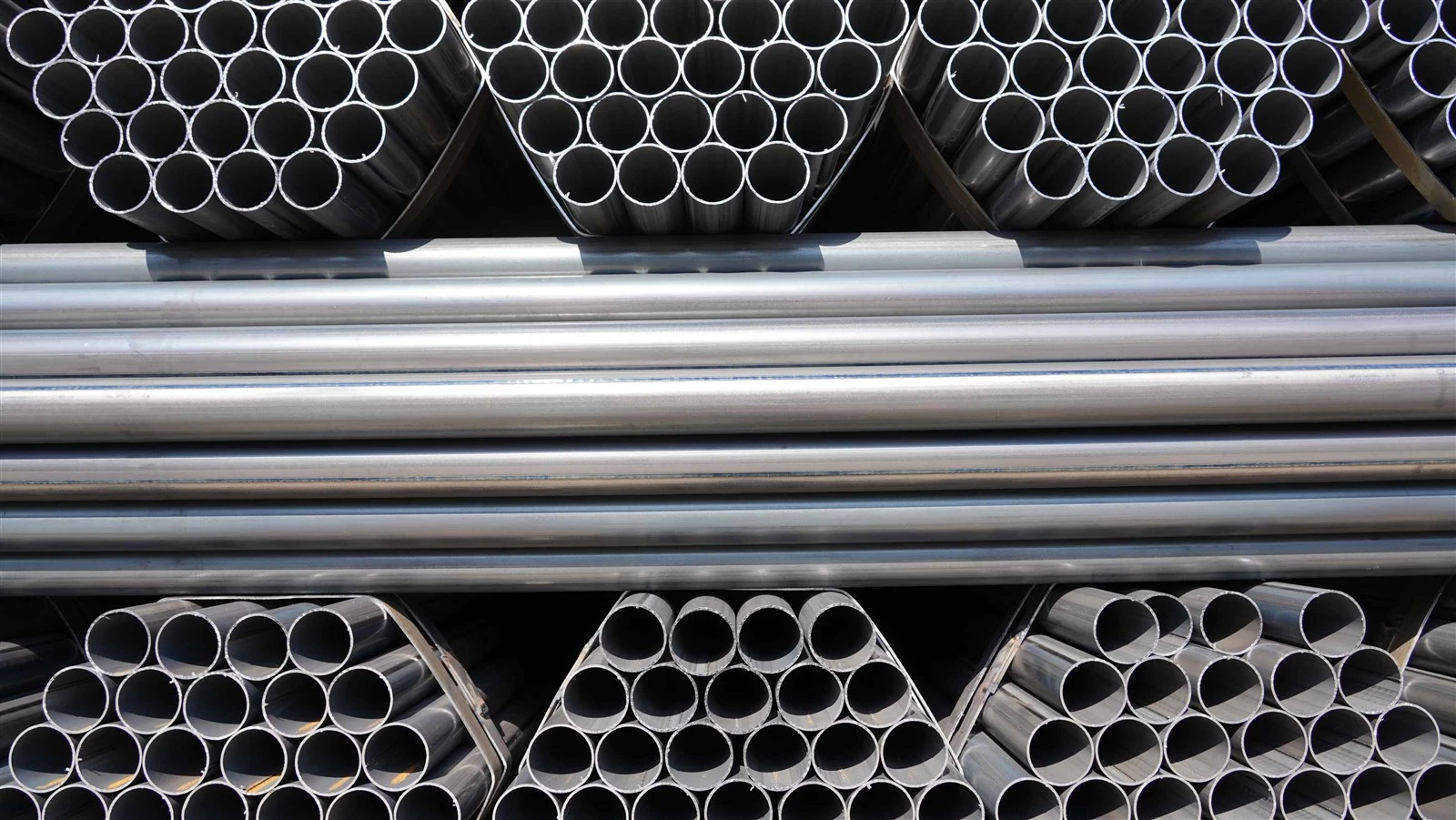
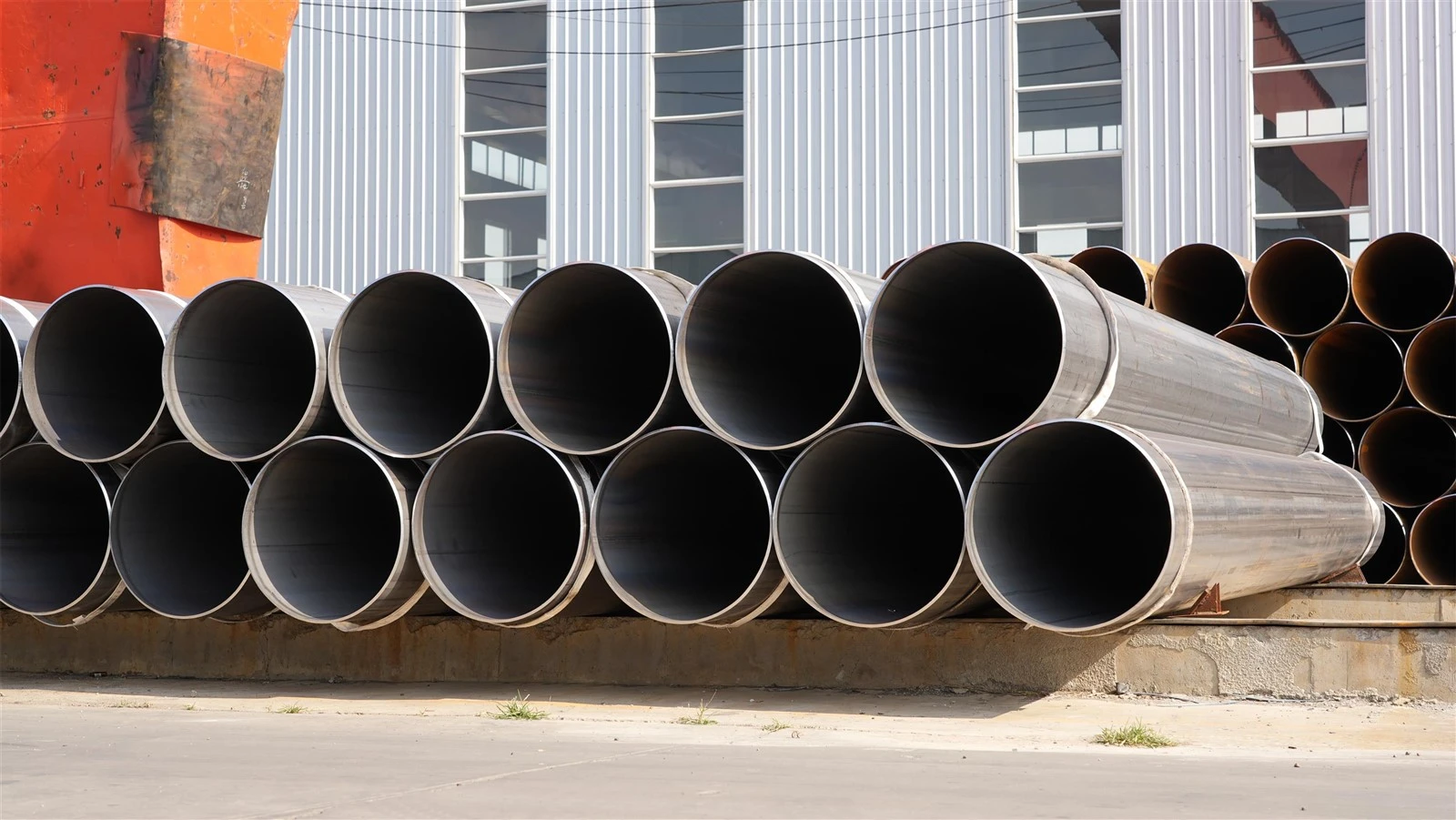
HFW steel pipe, or high-frequency welded steel pipe, is widely used in construction, bridge engineering, and fluid transmission applications when its material, dimensions, and manufacturing requirements match the project specification. As Episode 2 of the Huayang Steel Pipe Product Series, Huayang HFW steel pipes cover outside diameters from 48 mm to 660 mm, providing options for a variety of engineering needs. Non-destructive testing is available according to order requirements, while custom cutting lengths and pipe end beveling can be arranged upon request. With products supplied to overseas markets, Huayang supports customers seeking steel pipe solutions for construction, infrastructure, and industrial projects.
What Is HFW Steel Pipe and How Is It Manufactured?
HFW steel pipe is produced by forming steel strip into a cylindrical shape and joining the edges through high-frequency electrical resistance heating. The process heats the edges of the strip so that they can be pressed together to form a longitudinal weld. Unlike submerged arc welding, HFW does not use a submerged arc and granular flux to create the seam.
The process is suited to continuous production and a wide range of pipe sizes. Its performance depends on factors such as the steel grade, strip quality, forming conditions, welding parameters, seam treatment, and quality inspection. Proper control of these variables helps the manufacturer produce pipes that meet the specified dimensional and mechanical requirements.
HFW steel pipe should not be selected based on its manufacturing process alone. The applicable standard, steel grade, wall thickness, service conditions, and required inspection scope must all be considered. A pipe suitable for a structural application may not automatically meet the requirements of a particular fluid transmission system.
Why Is HFW Steel Pipe Used in Different Engineering Applications?
HFW steel pipe can serve different purposes depending on its dimensions, material properties, and compliance with the relevant standard. Its broad application range makes it a practical option for projects that require manufactured steel pipes in various sizes.
HFW Steel Pipe for Construction and Bridge Engineering
In construction and bridge-related applications, steel pipes may be used as structural members, supports, framework components, or parts of fabricated assemblies. The required pipe dimensions and mechanical properties depend on the structural design, loading conditions, connection details, and applicable building standards.
For these applications, buyers should verify the specified steel grade, outside diameter, wall thickness, dimensional tolerances, and welding or fabrication requirements. Where pipes will be connected to other structural components, consistent dimensions and suitable end preparation can help simplify assembly.
HFW Steel Pipe for Fluid Transmission
HFW steel pipes may also be used in fluid transmission systems when the selected product meets the relevant requirements for the transported medium and operating conditions. Pressure, temperature, fluid characteristics, and installation environment all influence the material and specification that should be selected.
Why Must Application Requirements Be Confirmed Before Ordering?
The same outside diameter can be available in different wall thicknesses, steel grades, and standards. These differences affect whether a particular pipe is suitable for the intended service. Buyers should therefore provide the design specification rather than requesting a diameter alone.
For fluid transmission, requirements may include chemical composition, tensile properties, weld inspection, hydrostatic testing, and traceability, depending on the applicable standard and purchase agreement. For structural applications, the focus may instead include specified yield strength, dimensional tolerances, fabrication compatibility, and structural design requirements.
How Can Buyers Choose the Right HFW Steel Pipe?
Selecting the right HFW steel pipe requires a balance between technical compliance, application suitability, processing requirements, and delivery planning. The table below summarizes the main factors buyers should clarify before requesting a quotation.
| Selection Factor | What Buyers Should Specify | Why It Matters |
|---|---|---|
| Outside diameter | Required diameter within the available product range | Determines compatibility with the design and connected components |
| Wall thickness | Nominal thickness and applicable tolerance | Influences structural or service requirements |
| Steel grade | Grade required by the project | Defines relevant material and mechanical properties |
| Product standard | Applicable API, EN, GOST, or other specified standard | Establishes technical and acceptance requirements |
| Inspection | Required NDT methods and other specified tests | Verifies conformity with the order requirements |
| Pipe length | Standard or customized length | Supports transportation and installation planning |
| Pipe ends | Plain ends, beveling, or other specified preparation | Helps achieve correct fit-up and connection |
| Coating | Internal or external protection, where required | Addresses corrosion risks in the service environment |
Why Are Pipe Dimensions and Tolerances Important?
Outside diameter and wall thickness are fundamental parameters, but nominal dimensions alone do not fully define a pipe. Permitted tolerances, straightness, ovality, length, and end conditions may also affect assembly and performance.
Confirming Specifications Before Production
A clear purchase specification helps reduce misunderstandings between the buyer, manufacturer, inspection agency, and installation contractor. It should identify the applicable standard and edition, steel grade, dimensions, quantity, length requirements, inspection scope, and any special processing or coating needs.
For projects requiring customized lengths or beveled ends, buyers should confirm the cutting dimensions and end-preparation details in advance. This enables the manufacturer to review feasibility and incorporate the requirements into the production and processing plan.
Huayang Steel Pipe offers HFW steel pipes in a range of dimensions and can discuss cutting and beveling requirements according to the order specification. Contact Huayang with your technical requirements to confirm suitable HFW pipe options for your project.
What Quality Inspections Are Important for HFW Steel Pipe?
Quality verification is essential for confirming that HFW steel pipes meet the agreed requirements. Because the longitudinal seam is a key feature of the product, weld quality and process control require particular attention. However, the inspection plan should address the complete pipe, not just the weld.
Depending on the applicable standard and purchase specification, inspection may include dimensional checks, chemical analysis, mechanical testing, ultrasonic testing, radiographic testing, hydrostatic testing, or other specified examinations. Not every order requires every test, so the inspection scope and acceptance criteria should be agreed upon before production.
Non-destructive testing can help identify certain discontinuities without damaging the pipe. The appropriate method depends on the material, dimensions, product standard, and type of defect being assessed. Inspection records and traceability documents can also help buyers verify that the supplied products correspond to the specified order.
For international projects, compliance must be confirmed against the exact standard and product scope. API, CE-related requirements, and GOST standards have different purposes and conditions; they should not be treated as interchangeable approvals. Buyers should confirm which requirements apply to their project and what supporting documentation is needed for acceptance.
How Do Cutting and Beveling Improve HFW Pipe Installation?
Steel pipes may require additional processing before they can be incorporated into a pipeline or fabricated structure. Custom cutting allows pipes to be supplied at specified lengths, while beveling prepares the pipe ends for welding according to the applicable procedure and drawing.
Correct preparation can reduce the amount of cutting and adjustment required at the construction site. This is particularly useful when an order involves multiple pipe lengths or when the pipe ends must align with other components. Nevertheless, final fit-up and field welding must still follow the approved installation procedures.
Huayang can arrange custom cutting lengths and pipe beveling upon request, subject to the agreed specifications and production feasibility. Buyers should provide the required length, bevel geometry, tolerances, and relevant drawings when applicable. Clarifying these details before manufacturing helps align the finished product with the intended installation process.
Why Choose Huayang HFW Steel Pipe for Your Project?
A suitable HFW steel pipe supplier should offer more than a product catalogue. Buyers need clear technical communication, manufacturing capability, appropriate quality controls, and realistic delivery planning. These factors become especially important when an order includes multiple dimensions, customized processing, or project-specific inspection requirements.
Huayang Steel Pipe supplies HFW steel pipes with outside diameters from 48 mm to 660 mm for suitable construction, bridge engineering, fluid transmission, and other industrial applications. Non-destructive testing can be arranged according to order requirements, and customized cutting and beveling services are available upon request. Product compliance and the final scope of supply should be confirmed against the applicable standard and purchase specification.
For overseas customers, confirming technical details early can help coordinate production, inspection, packaging, and delivery. Providing complete specifications also enables the supplier to assess the order more accurately and identify any special requirements before production begins.
If you are sourcing HFW steel pipes for a construction, bridge, or fluid transmission project, contact Huayang Steel Pipe with your required diameter, wall thickness, steel grade, standard, quantity, and processing needs. The team can help review the specification and discuss suitable product options for your application.
Choosing the right HFW steel pipe starts with understanding the project, not simply selecting a pipe size. When manufacturing requirements, inspection, and end preparation are clearly defined, buyers can make better procurement decisions and improve coordination throughout the project.
Read More:
Huayang Steel Pipe Now Accepting Orders For Small-Diameter HFW Pipes!
How Can A Steel Pipe Manufacturer Help Safeguard Long-Term Engineering Projects?


