


What Is Hot Expanded Steel Pipe?
Hot expanded steel pipe is a carbon steel pipe manufactured by enlarging the diameter of an existing seamless steel pipe through a controlled thermal expansion process. Unlike conventional welded pipes, hot expanded steel pipe allows manufacturers to produce larger diameters without the need for thick steel plates or additional welding seams. This manufacturing method offers an efficient solution when large diameter seamless pipes are required but are difficult or uneconomical to produce directly.
During the hot expansion process, a seamless steel pipe is heated to a suitable temperature and expanded using specialized equipment. The process increases the outside diameter while maintaining a relatively uniform wall thickness and preserving the mechanical properties of the steel. Modern expansion technology carefully controls temperature, expansion ratio, and deformation to ensure dimensional accuracy and stable product quality.
Hot expanded steel pipes are widely used in petroleum, natural gas, pressure vessel manufacturing, bridge construction, marine engineering, piling projects, power generation, and heavy industrial facilities. Because they combine the advantages of seamless construction with larger diameters, they have become an important product for demanding engineering applications.
| Item | Description |
|---|---|
| Product | Hot Expanded Steel Pipe |
| Manufacturing Method | Thermal Expansion of Seamless Pipe |
| Base Material | Carbon Steel Seamless Pipe |
| Typical Diameter Range | DN300–DN900 and above |
| Common Standards | API 5L, ASTM A53, ASTM A106, GB/T 8163 |
| Main Applications | Oil & Gas, Construction, Piling, Infrastructure |
As global infrastructure projects continue to require larger pipe diameters, hot expanded steel pipe provides a practical and economical manufacturing solution.
How Is Hot Expanded Steel Pipe Manufactured?
The production of hot expanded steel pipe begins with a qualified seamless steel pipe that has undergone strict material inspection. The pipe is first heated uniformly in a furnace to a carefully controlled temperature that allows plastic deformation without damaging the steel's internal structure.
Once the required temperature is reached, specialized expanding equipment gradually enlarges the pipe diameter through mechanical force. The expansion process must remain stable to avoid excessive wall thinning or uneven deformation. Advanced manufacturing equipment monitors expansion speed, temperature distribution, and dimensional accuracy throughout the operation.
After expansion, the steel pipe is cooled according to controlled procedures to maintain stable mechanical properties. Depending on product specifications, additional heat treatment may be performed to optimize strength and toughness.
The finished pipe then undergoes straightening, dimensional inspection, non-destructive testing, hydrostatic pressure testing, and surface examination before delivery.
Compared with manufacturing oversized seamless pipes directly, thermal expansion offers greater production flexibility while reducing manufacturing costs.
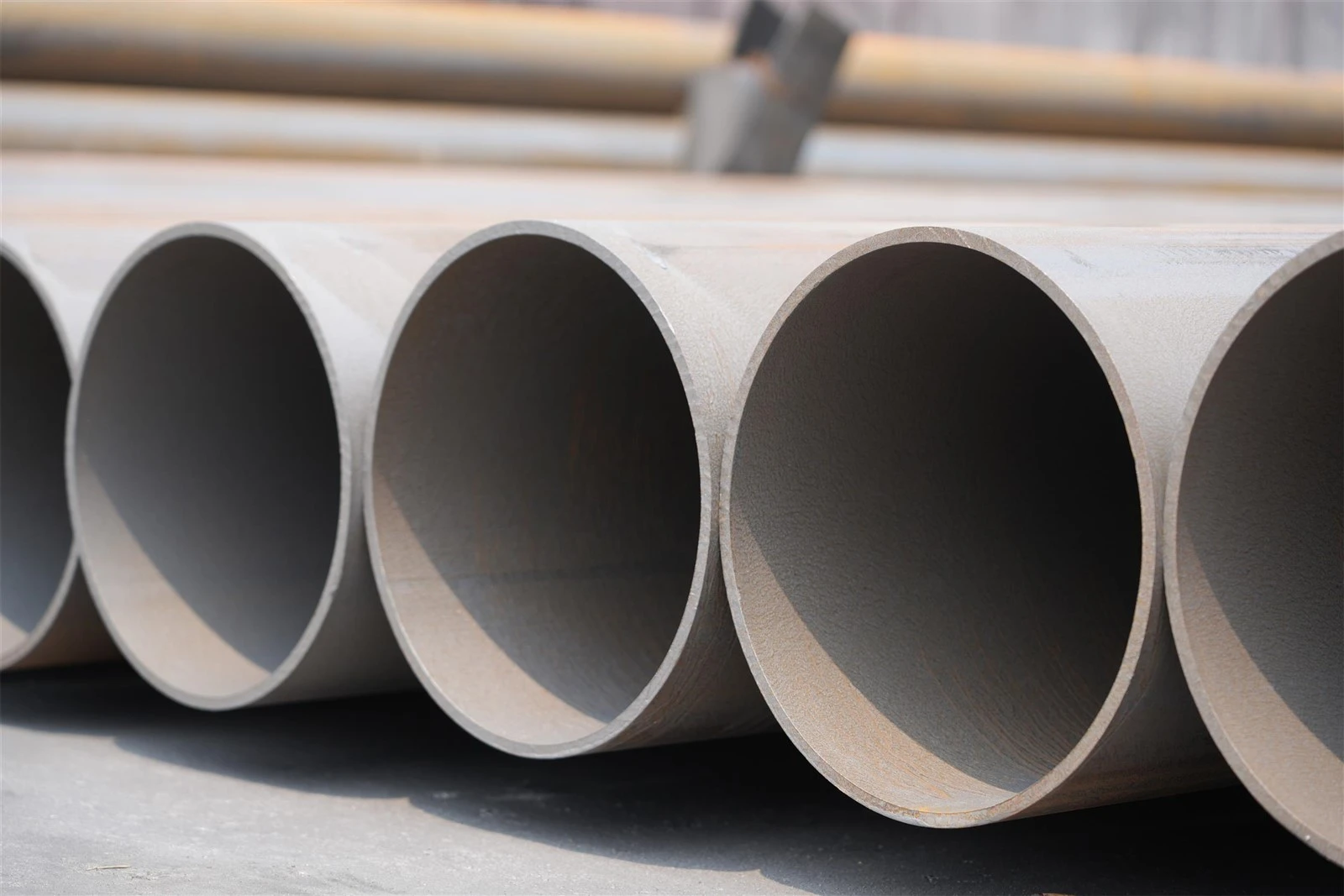

Why Is Hot Expanded Steel Pipe Suitable for Large Diameter Applications?
Large diameter pipelines often transport high volumes of oil, natural gas, water, slurry, or industrial fluids. These systems require pipes with sufficient strength while maintaining reliable pressure resistance over long service periods.
Hot expanded steel pipe provides an effective solution because it combines the structural integrity of seamless steel pipe with the larger diameter needed for high-capacity transportation.
Since the pipe contains no longitudinal weld seam, stress distribution remains more uniform under internal pressure. This characteristic is particularly valuable in applications involving high pressure, elevated temperatures, or cyclic loading.
Large diameter hot expanded pipes are also widely used as structural members in bridges, offshore platforms, port construction, and heavy industrial facilities where excellent load-bearing capacity is required.
The ability to manufacture customized diameters further increases the flexibility of hot expanded steel pipe for specialized engineering projects.
What Are the Advantages of Hot Expanded Steel Pipe Compared with Standard Seamless Pipe?
One of the primary advantages of hot expanded steel pipe is its ability to achieve larger diameters while utilizing existing seamless pipe production resources. This significantly reduces manufacturing complexity for oversized products.
Another important benefit is material efficiency. Instead of producing entirely new large-diameter seamless billets, manufacturers expand smaller seamless pipes into the required dimensions. This process reduces production costs while maintaining the inherent advantages of seamless construction.
Hot expanded steel pipes also offer excellent mechanical performance. When the expansion process is properly controlled, the finished pipe retains good tensile strength, toughness, and pressure resistance suitable for demanding industrial applications.
In addition, customers benefit from greater dimensional flexibility. Manufacturers can produce various outside diameters and wall thickness combinations according to project requirements, helping engineers optimize pipeline design.
| Comparison Item | Hot Expanded Steel Pipe | Standard Seamless Pipe |
|---|---|---|
| Diameter Flexibility | Excellent | Limited |
| Weld Seam | None | None |
| Manufacturing Efficiency | High for Large Sizes | Lower for Large Diameters |
| Cost for Large Diameter | More Economical | Higher |
| Pressure Performance | Excellent | Excellent |
| Custom Sizes | Easily Available | Limited |
These advantages make hot expanded steel pipe an attractive option whenever large diameter seamless products are required.
Where Is Hot Expanded Steel Pipe Commonly Used?
The versatility of hot expanded steel pipe allows it to serve many different industries. In the oil and gas sector, it is widely used for transmission pipelines, refinery facilities, gathering systems, and pressure equipment where large flow capacity is required.
Municipal infrastructure projects also utilize hot expanded steel pipe for water transmission, drainage systems, pumping stations, and hydraulic engineering. The larger internal diameter improves transportation efficiency while reducing pumping resistance.
In bridge construction and heavy steel structures, hot expanded steel pipes function as columns, support members, and foundation components capable of carrying significant structural loads.
Marine engineering projects, including ports, offshore platforms, and coastal infrastructure, frequently specify hot expanded steel pipes because of their high strength and adaptability to protective anti-corrosion coatings.
Power plants, mining operations, and petrochemical facilities also rely on hot expanded steel pipe for high-pressure fluid transportation and structural support.
How Does Quality Control Ensure Reliable Hot Expanded Steel Pipe?
Because hot expansion involves controlled plastic deformation, strict quality management is essential throughout manufacturing.
Manufacturers begin by selecting seamless pipes with qualified chemical composition and mechanical properties. During expansion, advanced monitoring systems control heating temperature, expansion ratio, and dimensional accuracy to ensure uniform deformation.
Following production, ultrasonic testing and other non-destructive examination methods verify the internal integrity of the pipe. Hydrostatic pressure testing confirms pressure resistance, while dimensional inspection ensures compliance with customer specifications.
Mechanical property testing, including tensile strength, yield strength, and impact testing where required, provides additional verification that the finished product satisfies international standards.
Comprehensive quality inspection allows hot expanded steel pipes to perform safely under demanding operating conditions for many years.
How Does Huayang Steel Pipe Supply Hot Expanded Steel Pipe Solutions?
Huayang Steel Pipe manufactures hot expanded steel pipes for customers involved in energy, infrastructure, industrial construction, and engineering projects worldwide. The company combines advanced thermal expansion technology with strict quality management to produce products that meet international standards and customer specifications.
From raw material selection and thermal expansion to dimensional inspection, hydrostatic testing, and non-destructive examination, every manufacturing stage is carefully controlled to ensure stable product quality. Huayang can also provide beveling, anti-corrosion coatings, pipe end protection, and customized processing services to satisfy different project requirements.
With extensive manufacturing experience and comprehensive production capabilities, Huayang supplies dependable hot expanded steel pipe solutions for large-diameter pipeline systems and structural engineering applications.
Conclusion
Hot expanded steel pipe offers an efficient and economical solution for producing large diameter seamless steel pipes without compromising strength or reliability. By combining advanced thermal expansion technology with the inherent advantages of seamless construction, these pipes deliver excellent performance in oil and gas transportation, water transmission, bridge construction, marine engineering, and heavy industrial projects.
As global demand for larger and stronger pipeline systems continues to increase, hot expanded steel pipe will remain an important choice for engineers seeking durable, high-quality, and cost-effective steel pipe solutions. With advanced manufacturing technology and rigorous quality control, Huayang Steel Pipe continues to provide reliable hot expanded steel pipe products that support infrastructure development around the world.


