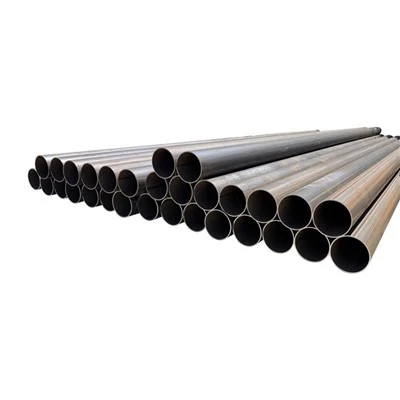
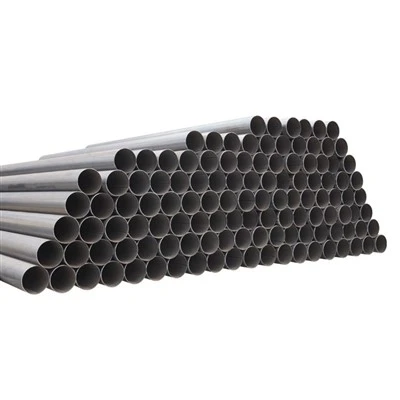
In modern engineering construction, steel pipes are not only channels for transporting media but also important structural components related to the safety and stable operation of projects. With the continuous advancement of urbanization and energy infrastructure construction, the requirements for steel pipe performance are constantly increasing. Among numerous types of welded steel pipes, LSAW (Longitudinal Submerged Arc Welded) steel pipes have gradually become an important choice for high-standard engineering projects due to their stable structure, controllable quality, and wide applicability.
From the perspectives of structural characteristics, performance advantages, and engineering application value, this article provides a systematic and accessible interpretation of LSAW steel pipes.
I. What is LSAW Steel Pipe?
LSAW steel pipe is a type of longitudinal submerged arc welded steel pipe. Its manufacturing process uses medium and thick steel plates as raw materials, which are rolled into tubular shapes through pre-bending, forming, welding, and other processes, with welding completed along the axial direction of the pipe.
Compared with other welded steel pipes, a prominent feature of LSAW steel pipes is that the weld is distributed in a straight line, and the welding process is usually completed by combining internal and external welding. This structural form makes weld quality easier to control and facilitates subsequent inspection and quality evaluation.
II. Structural Advantages of LSAW Steel Pipes
From a structural perspective, LSAW steel pipes have obvious advantages in stress-bearing states. Since the weld is distributed longitudinally along the pipe body, when the steel pipe bears internal pressure, the weld direction is consistent with the main stress direction, which helps reduce the risk of stress concentration in the weld area.
In addition, LSAW steel pipes are usually subjected to mechanical expanding after forming, maintaining high overall roundness, straightness, and dimensional accuracy. This is particularly crucial for large-diameter pipes, as it not only improves pipe body consistency but also creates better conditions for on-site installation and welding.


III. Applicability in Large-Diameter Engineering Projects
With the expansion of project scales, the frequency of using large-diameter steel pipes has increased significantly. Water supply trunk lines, energy transmission pipelines, and some industrial systems have put forward higher requirements for steel pipe diameter and wall thickness.
LSAW steel pipes use steel plates as raw materials, giving them obvious advantages in specification adaptability. Compared with welded pipe forms using steel coils as raw materials, they are more flexible in manufacturing large-diameter and thick-walled pipes, and can meet the customized specification requirements of various projects.
For this reason, LSAW steel pipes are often preferred for key pipe sections or main pipelines in large-scale infrastructure projects.
IV. The Significance of Quality Stability for Project Operation
The quality of engineering pipes not only affects the construction phase but also directly relates to the safety and reliability of long-term operation. LSAW steel pipes are usually equipped with a complete quality control system during production, including raw material inspection, weld non-destructive testing, and finished product performance testing.
Through multiple inspection processes, potential defects can be detected in a timely manner, ensuring that each steel pipe meets the corresponding technical requirements before delivery. This controllable and traceable quality management model is one of the important reasons why many large-scale projects choose LSAW steel pipes.
V. Typical Application Scenarios of LSAW Steel Pipes
In practical engineering, LSAW steel pipes are widely used in multiple fields:
- In urban pipeline network systems, they are often used for main water supply and gas supply pipelines;
- In energy engineering, they are mostly used for long-distance oil and gas transmission projects;
- In some industrial and water conservancy projects, they can also be seen as transmission or structural components.
A common feature of these application scenarios is the high requirements for the pressure-bearing capacity, structural stability, and service life of steel pipes, and LSAW steel pipes can provide reliable guarantees in these aspects.
VI. The Value of LSAW Steel Pipes from the Entire Project Lifecycle Perspective
From a procurement price perspective alone, LSAW steel pipes are not the lowest-cost option for all projects. However, from the perspective of the entire project lifecycle, their stable performance and low failure risk can often significantly reduce long-term maintenance and replacement costs.
For large-scale projects pursuing long-term safe operation, this comprehensive value is often more practical than short-term cost differences.
Conclusion
With the continuous improvement of engineering standards, steel pipe selection is no longer a simple material choice but a systematic decision involving safety, efficiency, and long-term operation. LSAW steel pipes have demonstrated unique value in numerous engineering scenarios due to their reasonable structure, stable performance, and strong adaptability.
About Huayang Steel Pipe
In the field of longitudinal submerged arc welded steel pipes, Huayang Steel Pipe has long focused on the R&D and manufacturing of LSAW steel pipes. Its products cover a variety of engineering specifications and are widely used in different types of infrastructure projects, providing reliable steel pipe solutions for engineering construction.