


For long-distance pipeline construction and offshore engineering projects, anti-corrosion performance is a critical factor in the service life of steel pipes. When hundreds or thousands of pipes are supplied in one order, maintaining consistent coating quality across the entire batch becomes just as important as meeting the required coating specifications. Variations in surface preparation, material properties, application parameters, or coating thickness can affect the final product and create additional challenges during project installation.
A standardized, continuous anti-corrosion production line helps manufacturers control these variables throughout the manufacturing process. At Huayang Steel Pipe, anti-corrosion production integrates surface preparation, coating application, cooling, and online inspection into a coordinated workflow. Through standardized process parameters, raw material verification, and production-stage quality checks, Huayang supports stable coating quality and reliable batch delivery for pipeline and offshore projects.
Why Is Coating Consistency Important for Large-Batch Steel Pipe Orders?
Anti-corrosion coatings protect steel pipes against corrosion caused by moisture, soil conditions, chemicals, and other environmental factors. In buried pipelines, offshore structures, and industrial fluid transportation systems, coating damage or inconsistent application can increase maintenance requirements and affect long-term asset performance.
For large-volume orders, the challenge is not simply to produce one pipe that meets the specification. Every pipe in the batch must be manufactured under controlled conditions. Differences in coating thickness, adhesion, surface cleanliness, or coating appearance may lead to inconsistent product quality, even when the same coating system is specified.
This is particularly important for long-distance pipeline projects, where pipes are manufactured in batches and installed across extensive routes. Consistent coating quality helps reduce variations during field inspection, handling, and installation. It also makes quality documentation and project acceptance more manageable.
A standardized production process provides the foundation for this consistency. Instead of relying only on final inspection, manufacturers need to control the critical parameters at every stage, from incoming materials to finished pipe inspection.
How Does a Continuous Anti-Corrosion Production Line Control Each Manufacturing Stage?
A continuous production line connects multiple processing stages into a coordinated system. Steel pipes move through the line at a controlled speed, while each process follows defined operating parameters. This arrangement helps reduce unnecessary interruptions and limits variations caused by inconsistent manual operations.
Surface Preparation: Building a Reliable Foundation for Coating
Before coating application, the steel pipe surface must be properly prepared. The process generally includes pipe loading, intermediate-frequency heating, shot blasting, dust removal, and surface cleanliness inspection.
Intermediate-frequency heating helps prepare the pipe surface for subsequent treatment. Shot blasting removes rust, mill scale, and other surface contaminants, creating a suitable surface profile for coating adhesion. After blasting, dust removal eliminates loose particles that could interfere with the coating process.
Salt contamination is another factor that requires attention. Soluble salts remaining on the steel surface may contribute to coating degradation under certain service conditions. Therefore, surface salt testing can be incorporated into the inspection process according to project requirements.
Coating Application: Maintaining Controlled Process Parameters
After surface preparation, the pipe enters the coating section. For a three-layer polyethylene coating system, the process typically includes FBE electrostatic spraying, adhesive extrusion, and polyethylene extrusion coating. The applied layers work together to provide corrosion protection and mechanical resistance.
The FBE layer is applied to the heated steel surface to establish the primary bonding and corrosion-resistant layer. The adhesive layer connects the FBE coating with the outer polyethylene layer, while the polyethylene provides additional protection against external mechanical damage and environmental exposure.
The coating materials must be verified before production. Relevant properties may include gel time, Vicat softening point, and melt flow rate, depending on the material type and applicable specifications. Checking these properties helps confirm that incoming materials are suitable for the intended coating process.
Once the coating layers are applied, water cooling and controlled forming help stabilize the finished coating structure. Production parameters such as pipe temperature, line speed, and coating application conditions need to be managed together to support consistent results.
Key Process Stages and Their Quality Control Focus
The following table summarizes the main stages of a continuous anti-corrosion production line and the quality factors that require attention.
| Production Stage | Main Process | Key Quality Control Focus |
|---|---|---|
| Pipe loading and heating | Pipe conveying and intermediate-frequency heating | Stable conveying and temperature control |
| Surface preparation | Shot blasting and dust removal | Surface cleanliness and profile |
| Surface inspection | Salt contamination testing | Compliance with specified cleanliness requirements |
| FBE application | Electrostatic powder spraying | Application conditions and coating coverage |
| Adhesive and PE application | Extrusion and continuous wrapping | Layer bonding and coating formation |
| Cooling and shaping | Water cooling and stabilization | Coating integrity and dimensional condition |
| Online inspection | Coating thickness and surface checks | Thickness compliance and visible defects |
Standardized parameters at each stage help reduce process fluctuations. However, the specific operating limits and acceptance criteria must always follow the applicable coating standard, purchase specification, and project requirements.
How Does Online Inspection Help Maintain Consistent Anti-Corrosion Quality?
Process control is essential, but it must be supported by inspection. A continuous production line allows quality checks to be integrated into manufacturing rather than relying entirely on final inspection after all pipes have been produced.
Monitoring Coating Thickness During Production
Coating thickness is one of the key indicators of anti-corrosion coating quality. If the coating is too thin, it may not provide the protection required by the project specification. Excessive thickness may also affect material consumption, coating formation, and dimensional requirements.
Online thickness measurement allows operators to monitor coating conditions during production. If a deviation is detected, process parameters can be reviewed and adjusted in time. The measurement method, inspection frequency, and acceptance range should be determined according to the applicable coating specification.
Surface Appearance and Pipe-End Inspection
In addition to thickness, the finished coating surface needs to be checked for visible defects such as uneven coverage, damage, bubbles, or other irregularities. Pipe ends also require attention because they are important areas for subsequent welding, joint coating, and installation.
End grinding and finishing help prepare the specified pipe-end areas for delivery and field operations. Inspection records can be maintained to support product traceability and quality verification.
Combining online inspection with final product checks creates a more complete quality control process. It helps identify potential deviations during production and provides additional evidence that finished pipes meet the agreed requirements.
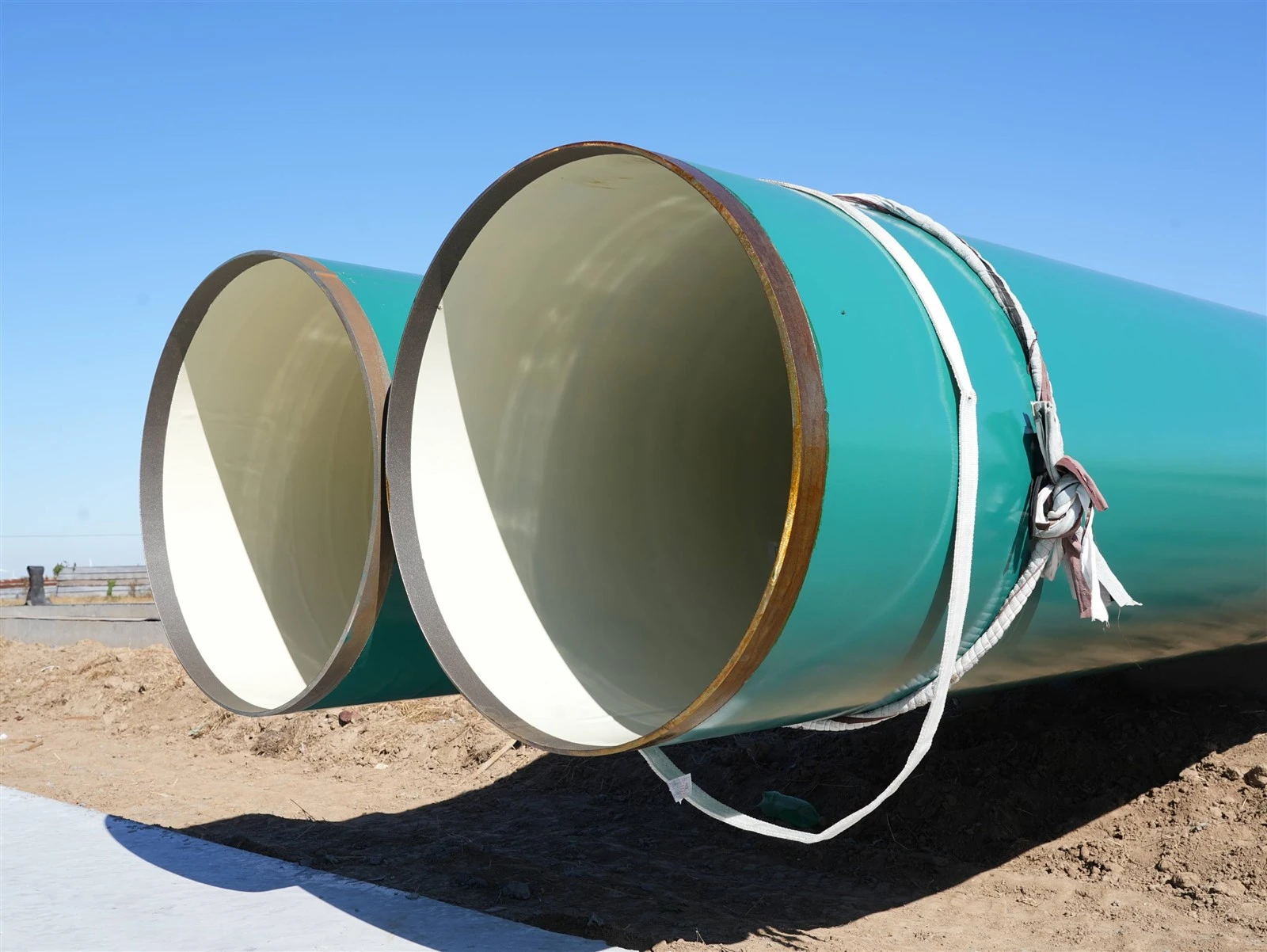
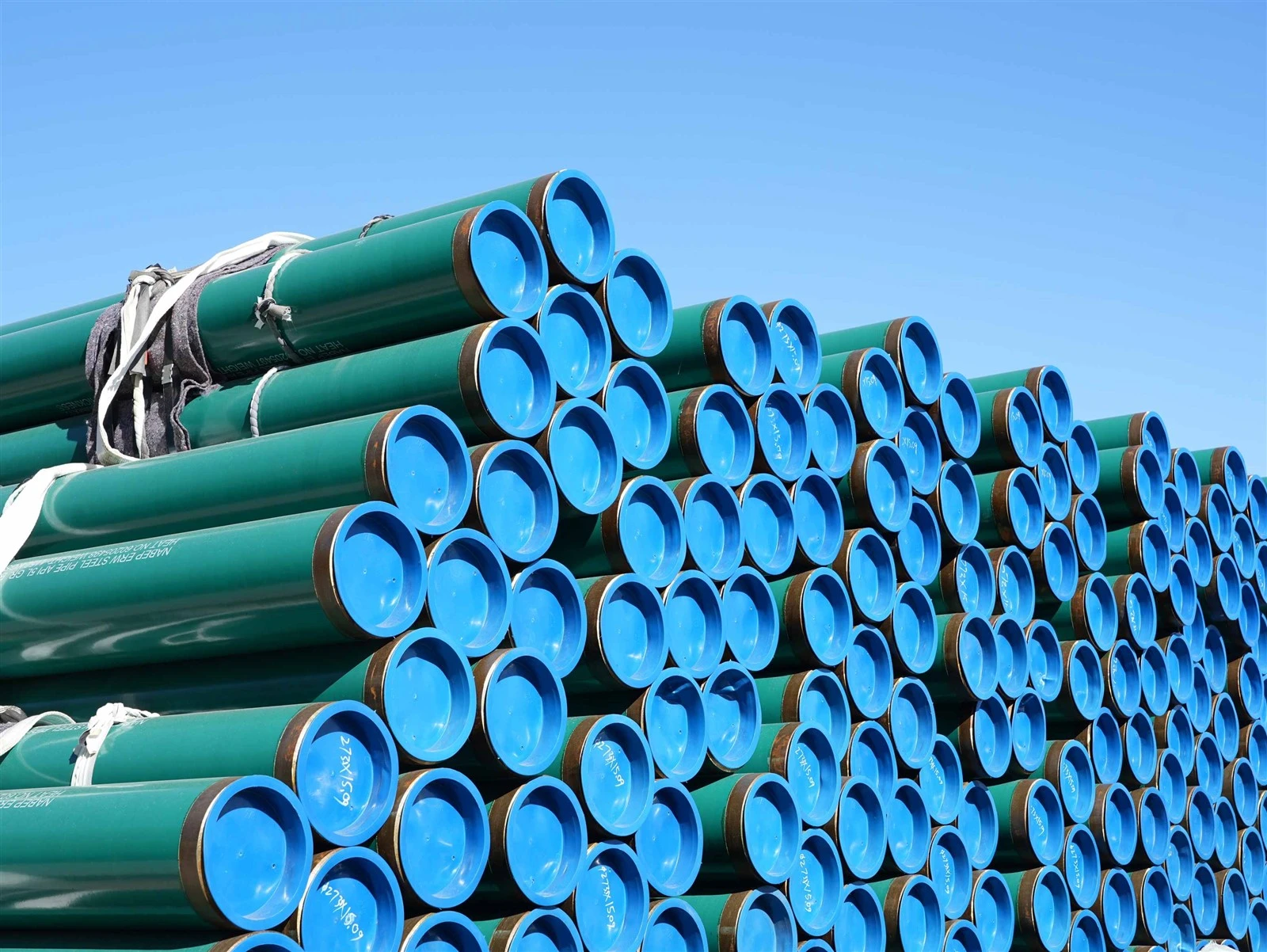
How Does Huayang Steel Pipe Support Stable Large-Volume Anti-Corrosion Pipe Delivery?
Huayang Steel Pipe operates a dedicated anti-corrosion production facility with two production lines, integrating surface treatment, coating application, and inspection into a continuous manufacturing workflow. The facility supports coating systems including FBE, 2PE, 3PE, 2PP, 3PP, internal epoxy powder coating, and liquid epoxy coating.
For 3PE coating operations, the production line can reach a coating speed of up to 300 m/h, subject to pipe dimensions and process conditions. Huayang's anti-corrosion steel pipe range covers outside diameters from 159 mm to 1,626 mm, wall thicknesses from 4 mm to 40 mm, and pipe lengths from 8 m to 16 m.
More importantly, production consistency depends on coordinated control rather than line speed alone. Huayang verifies relevant raw material properties before application, controls key process parameters throughout production, and carries out online coating thickness and surface inspections. These measures help reduce quality variations between pipes produced in the same batch.
For large-volume orders serving long-distance pipeline and offshore engineering projects, a standardized production process makes it easier to maintain consistent manufacturing conditions and organize inspection and delivery. Each finished pipe is subject to the applicable quality requirements, with inspection and documentation arranged according to the order specification.
A reliable anti-corrosion steel pipe supplier must do more than provide the required coating system. Stable raw materials, controlled surface preparation, standardized coating application, and effective inspection all contribute to consistent batch quality. By integrating these stages into a continuous production system, Huayang Steel Pipe provides anti-corrosion steel pipe solutions for projects where coating performance and large-volume delivery both matter.
Read More:
How Does Huayang Steel Pipe Ensure Reliable And On-Time Steel Pipe Delivery?


