


Choosing a reliable steel pipe supplier is an important step in any international procurement project. Before placing an order, buyers need to confirm more than the quoted price. Can the manufacturer produce the required steel pipe according to the specified international standard? Can the supplier provide a realistic delivery schedule based on actual production capacity? Are quality documents, inspection records, and after-sales support clearly defined? These three points can help buyers identify potential risks before ordering and make communication with a steel pipe manufacturer more efficient.
What Should You Check Before Choosing a Steel Pipe Supplier?
A reliable steel pipe supplier should be able to provide clear information about production standards, manufacturing capability, inspection procedures, documentation, and delivery arrangements. For international buyers, checking these details before placing an order can reduce misunderstandings and avoid problems later in the procurement process.
Can the Factory Meet Your Required Steel Pipe Standards?
The first point is to confirm whether the manufacturer can actually produce the required steel pipe according to your project standard. Different projects may require API, ASTM, EN, ISO, GOST, JIS, or other national and international standards. Even when two pipes have similar dimensions, their chemical composition, mechanical properties, testing requirements, and acceptance criteria may be different.
Certification Should Match the Actual Requirement
Buyers should not only ask whether a supplier "has certificates." It is more useful to confirm which standards the factory can manufacture to and whether the relevant certification and inspection documents can be provided for the specific order.
For example, pipeline projects may specify API 5L, while structural applications can involve EN or ASTM standards. A capable manufacturer should be able to review the technical specification and confirm the applicable production and inspection requirements before quotation.
Why Is Real Manufacturing Capability Important?
A supplier's website can provide useful information, but buyers should also verify whether the stated specifications are supported by actual production lines and equipment.
Check Diameter, Wall Thickness, Length and Grade
The manufacturer's production range should match the required outside diameter, wall thickness, length, steel grade, and manufacturing process. For large orders, buyers should also consider whether the factory has sufficient production capacity to complete the order within the required schedule.
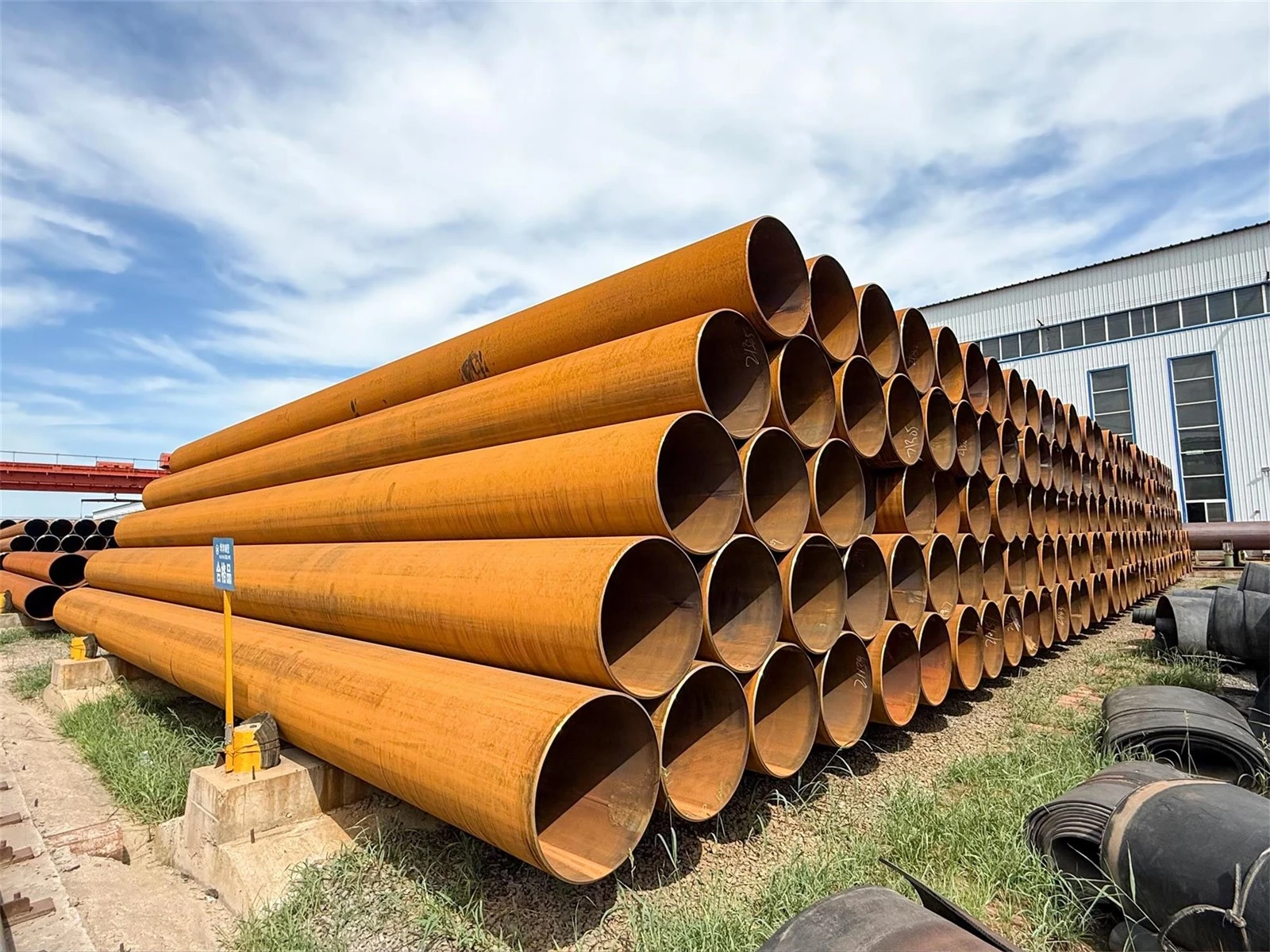
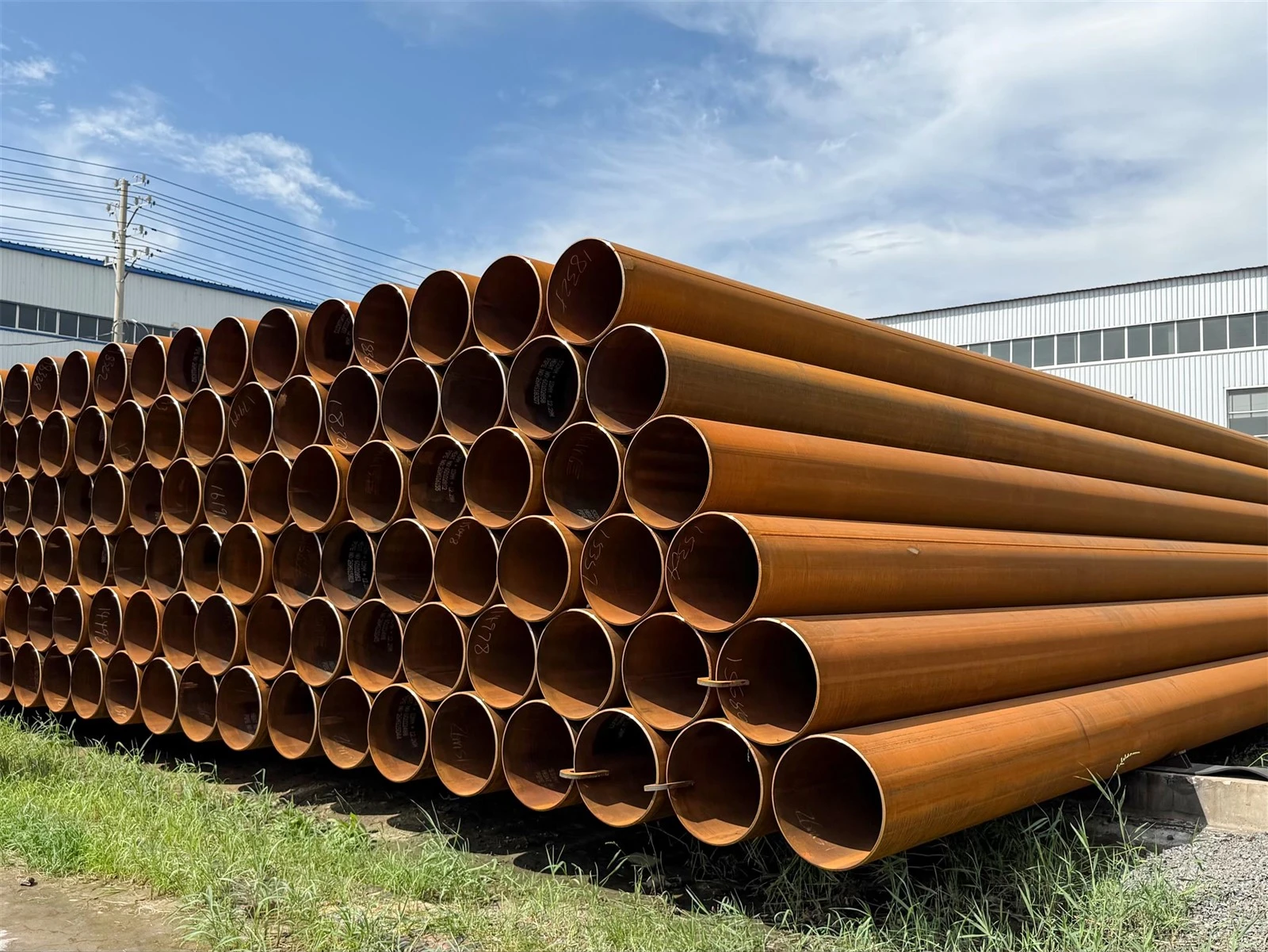
This is particularly important for large-diameter LSAW steel pipe, HFW steel pipe, anti-corrosion steel pipe, and customized products, where production and processing capabilities can vary significantly between suppliers.
How Can You Verify a Steel Pipe Supplier's Delivery Capability?
Price and technical compliance are only part of the purchasing decision. For engineering projects, delivery time can directly affect installation schedules, transportation arrangements, and overall project progress. Therefore, buyers should confirm the supplier's actual production schedule rather than relying only on a promised delivery date.
Does the Supplier Have Stable Production Capacity?
A manufacturer's production capacity is closely related to its ability to handle large or urgent orders. Multiple production lines, standardized processes, sufficient raw materials, finished-product storage, and organized logistics can all contribute to more predictable delivery.
Production Capacity Should Be Supported by Real Operations
When evaluating a steel pipe manufacturer, buyers can ask about the available production lines, normal production cycle, current order schedule, and estimated completion time. For large-volume orders, it is also useful to confirm whether production can be arranged in batches while maintaining consistent specifications and quality requirements.
Huayang Steel Pipe manufactures HFW and LSAW steel pipes across a broad range of sizes. HFW steel pipe production covers Φ48–Φ660.4 mm, with wall thicknesses of 2.0–22 mm and lengths of 6–27 m. LSAW steel pipe production covers Φ406.4–Φ2800 mm, with wall thicknesses of 7–50 mm and lengths of 6–12.5 m.
Why Should Buyers Confirm the Delivery Process?
Delivery is more than the date when production finishes. Steel pipes may require inspection, marking, coating, packing, loading, inland transportation, and export arrangements before they leave the factory.
Clear Scheduling Reduces Procurement Risk
A professional supplier should communicate the expected production schedule and explain the key stages before shipment. When buyers understand when production, inspection, coating, and loading will take place, it becomes easier to coordinate shipping and project planning.
What Quality Documents Should a Steel Pipe Supplier Provide?
The third point is to clarify quality documentation and after-sales support before placing the order. For international steel pipe procurement, documentation is not simply paperwork. It provides evidence that the supplied products meet the agreed technical requirements.
What Quality Documents Should Be Confirmed?
Depending on the standard and project requirements, buyers may need material certificates, inspection reports, dimensional records, nondestructive testing records, hydrostatic test results, coating inspection records, or other quality documents.
Traceability Makes Quality Verification Easier
For many engineering projects, heat numbers, pipe markings, inspection records, and material certificates need to correspond with each other. A clear traceability system allows buyers to connect the finished steel pipe with its production and inspection information.
| What Buyers Should Confirm | Why It Matters | What to Ask the Supplier |
|---|---|---|
| Product standard | Defines technical requirements | Which standard and edition will be followed? |
| Steel grade | Determines required properties | Can the factory produce the specified grade? |
| Inspection | Verifies product quality | Which tests will be performed? |
| Material certificate | Documents material properties | Will MTCs be supplied with the order? |
| NDT records | Helps verify weld and pipe integrity | Which NDT methods are included? |
| Dimensional inspection | Confirms size and tolerance | How are OD and wall thickness checked? |
| Coating records | Verifies anti-corrosion treatment | What coating and inspection records are provided? |
| Traceability | Connects products with production data | Can heat numbers and inspection records be traced? |
| After-sales support | Helps resolve issues after delivery | What is the procedure for quality concerns? |
Why Does After-Sales Support Matter?
Even when a steel pipe order is carefully inspected before shipment, questions can arise during transportation, receiving inspection, or project installation. A supplier should therefore have a clear communication channel for technical questions and quality-related issues.
Clear Responsibilities Prevent Disputes
Important details such as inspection scope, document requirements, packaging, marking, delivery terms, and procedures for handling quality concerns should be confirmed before production starts. Clear agreements give both the buyer and supplier a common reference throughout the order.
How Can Buyers Build a More Reliable Steel Pipe Sourcing Process?
A reliable sourcing process starts before the purchase order is issued. Instead of comparing suppliers only by unit price, buyers can evaluate their manufacturing capability, applicable standards, production capacity, inspection system, documentation, and delivery arrangements together.
Look Beyond the Quotation
A lower initial quotation does not necessarily represent a lower overall procurement cost if additional processing, documentation, transportation, inspection, or schedule risks appear later. A more complete comparison should consider the total requirements of the project.
Communication Is Part of Supplier Evaluation
The way a supplier responds to technical questions can also provide useful information. A professional manufacturer should be able to clarify applicable standards, confirm production ranges, explain inspection requirements, and identify technical points that need to be confirmed before production.
Why Choose a Direct Steel Pipe Manufacturer?
Buying directly from a manufacturer can provide a clearer communication chain between the project and the production team. Buyers can discuss technical specifications, production schedules, quality inspection, coating, packing, and delivery arrangements directly with the manufacturing source.
At Huayang Steel Pipe, we understand that international buyers need more than a competitive quotation. They need a supplier that can clearly explain what it can produce, which standards it can support, how the products will be inspected, when the order can be delivered, and what documents will be provided. From HFW and LSAW steel pipe production to anti-corrosion treatment, inspection, packing, and shipment, Huayang focuses on keeping the procurement process transparent and traceable.
For global pipeline and engineering projects, confirming standards, real delivery capability, and quality documentation before ordering can help buyers reduce unnecessary procurement risks. A reliable steel pipe supplier should be prepared to discuss these points clearly from the beginning, allowing both sides to establish accurate technical requirements and a practical delivery plan before production starts.
Read More:
What Are The Common Problems And Defects Of ERW Steel Pipes?
What Are The Differences Between API 5L LSAW Pipe PSL1 And PSL2?


