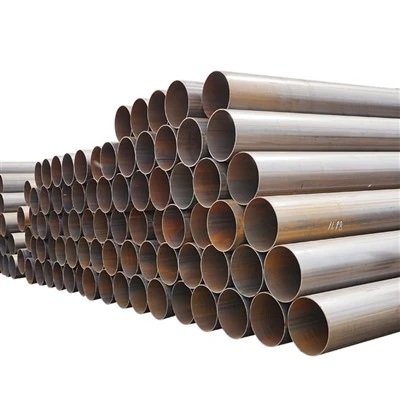
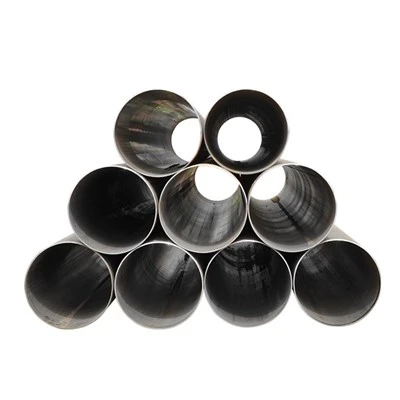
LSAW steel pipe, or Longitudinal Submerged Arc Welded steel pipe, is widely used not only in oil and gas pipelines but also in structural engineering projects that require large-diameter, high-strength tubular members. Its circular cross-section, controlled dimensions, and flexible combination of diameter and wall thickness make it suitable for structures exposed to compression, bending, torsion, lateral loads, and complex environmental conditions.
In structural applications, LSAW steel pipe can be used as building columns, bridge components, foundation piles, marine structures, industrial supports, stadium structures, and other load-bearing members. The manufacturing process starts with steel plate and generally includes edge preparation, forming, longitudinal submerged arc welding, mechanical expansion, non-destructive testing, and dimensional inspection. Compared with standard rolled structural sections, large-diameter LSAW steel pipe provides engineers with greater flexibility when designing tubular structural members.
| Structural Application | Typical Function | Key Performance Considerations |
|---|---|---|
| Building Construction | Columns and load-bearing members | Axial strength, buckling, connections |
| Bridge Engineering | Piers, supports and tubular members | Bending, fatigue, dynamic loads |
| Foundation Projects | Pipe piles | Axial and lateral bearing capacity |
| Marine Structures | Piles and supports | Corrosion, impact and cyclic loads |
| Industrial Facilities | Structural supports and frames | Heavy loads, dimensional accuracy |
| Stadiums | Roof and space-frame members | Long-span stability, appearance |
| Port Infrastructure | Piles and support structures | Seawater exposure, corrosion |
Why Is LSAW Steel Pipe Suitable for Structural Applications?
The structural performance of a steel member depends on its cross-sectional geometry, material properties, dimensions, connection design, and loading conditions. LSAW steel pipe offers a closed circular section that distributes material around the central axis, providing favorable resistance to loads acting from different directions.
How Does the Circular Section Improve Structural Performance?
A circular pipe section has a high degree of symmetry, which can be advantageous when a structural member is subjected to multidirectional loading. It can provide good resistance to bending and torsional forces while maintaining a relatively compact external profile.
For columns and compression members, the pipe's radius of gyration and wall thickness are important factors in evaluating buckling behavior. Engineers therefore select the diameter and wall thickness based on structural calculations rather than choosing dimensions solely according to availability.
What Makes Large Diameter LSAW Pipe Different?
LSAW manufacturing is particularly suitable for large-diameter structural members because the pipe is formed from steel plate. This allows manufacturers to produce combinations of diameter and wall thickness that may not be readily available from conventional small-diameter production methods.
This flexibility is useful for large structures where load requirements, architectural design, and installation conditions demand customized tubular members.


How Is LSAW Steel Pipe Used in Building Structures?
Large-diameter steel pipe can serve as a primary or secondary structural member in commercial buildings, industrial facilities, transportation hubs, exhibition centers, and other large structures.
Why Are LSAW Pipe Columns Used in Large Buildings?
Large tubular columns can support substantial vertical loads while maintaining a relatively clean architectural appearance. Their circular geometry is also suitable for buildings where columns are visible or where space efficiency is important.
LSAW steel pipe can be manufactured with controlled outside diameter and wall thickness, allowing structural engineers to coordinate the pipe dimensions with the building's load requirements and connection details.
How Do Connections Affect Structural Performance?
The performance of a structural pipe depends not only on the pipe itself but also on how it connects to beams, trusses, base plates, and other structural members.
Welded and bolted connections must be designed to transfer axial, shear, bending, and torsional loads safely. Local stresses around the connection area should also be considered during engineering design and fabrication.
Where Is LSAW Steel Pipe Used in Bridge Engineering?
Bridge structures are exposed to combinations of static and dynamic loading, including vehicle loads, wind, vibration, temperature changes, and other environmental effects.
How Can LSAW Pipe Be Used in Bridges?
LSAW steel pipe can be used for bridge piers, columns, tubular trusses, arch structures, support members, and other components requiring large tubular sections.
Its circular geometry provides favorable structural characteristics for members subjected to loads from multiple directions. Large-diameter pipe can also be used where substantial load-bearing capacity is required.
Why Is Weld Quality Important for Bridges?
Bridge structures can experience repeated loading over many years, making fatigue performance an important design consideration.
The longitudinal weld of LSAW steel pipe should therefore be manufactured under controlled conditions and inspected according to the applicable project specification. Dimensional accuracy is also important for fabrication and site assembly.
How Does LSAW Steel Pipe Work in Foundation and Piling Projects?
Steel pipe piles are widely used in building foundations, bridges, ports, marine structures, and other infrastructure projects.
Why Are Large Diameter Pipe Piles Used?
Pipe piles transfer structural loads into deeper soil layers and can resist both axial and lateral forces. Large-diameter LSAW steel pipe can provide the cross-sectional area and structural capacity required for heavy foundation systems.
The manufacturing process also allows the pipe wall thickness to be adjusted according to pile loads, driving conditions, corrosion allowance, and service-life requirements.
What Should Engineers Consider Before Selecting Pipe Piles?
Pile diameter and wall thickness should be determined based on geotechnical conditions, design loads, pile length, installation method, soil resistance, and expected service environment.
The pipe must also withstand stresses during transportation, lifting, handling, and pile driving. These factors make material strength, weld integrity, and dimensional consistency important considerations.
Can LSAW Steel Pipe Be Used in Marine Structures?
Marine and coastal structures create demanding conditions because steel members may be exposed to seawater, salt spray, wave forces, impact, and cyclic loading.
Which Marine Structures Use LSAW Pipe?
Large-diameter LSAW steel pipe can be used for marine piles, port supports, dolphins, offshore structural members, and other tubular components.
The closed section provides structural resistance while the large available diameters allow engineers to design substantial members for heavy vertical and horizontal loads.
How Is Corrosion Controlled in Marine Environments?
Corrosion protection is a major consideration in marine engineering. Depending on the exposure zone and design life, projects may use protective coatings, cathodic protection, corrosion allowance, or a combination of these methods.
External coating systems such as FBE, 3PE, and other specified systems can provide additional protection where required.
How Is LSAW Steel Pipe Used in Industrial Structures?
Industrial facilities often contain heavy equipment, storage systems, conveyors, process units, platforms, and large support structures.
Why Is LSAW Pipe Suitable for Industrial Supports?
Large tubular members can be used as columns, equipment supports, structural frames, and other load-bearing components in industrial facilities.
Because LSAW steel pipe can be produced in different diameters and wall thicknesses, manufacturers can supply products that correspond to specific structural calculations and fabrication requirements.
How Does Dimensional Accuracy Improve Construction?
Consistent outside diameter, wall thickness, straightness, and roundness can simplify fabrication and field installation. Accurate pipe dimensions also help ensure that structural connections align correctly with other components.
For large projects involving many tubular members, dimensional consistency can reduce fabrication adjustments and improve assembly efficiency.
How Does Manufacturing Quality Affect Structural LSAW Steel Pipe?
Structural applications require consistent control throughout the manufacturing process.
What Quality Tests Are Important?
Depending on the project specification, LSAW steel pipe can undergo chemical analysis, tensile testing, impact testing, ultrasonic testing, radiographic testing, hydrostatic testing, dimensional inspection, and visual examination.
Non-destructive testing is particularly important for welded structural pipe because it helps identify potential internal or surface imperfections in the longitudinal seam.
Why Is Traceability Required?
For major structural projects, material certificates, heat numbers, inspection records, and testing reports help establish traceability from raw material to finished product.
Complete documentation also allows project owners, engineers, and inspectors to verify that the supplied pipe conforms to the specified grade, dimensions, standards, and testing requirements.
Project Reference: LSAW Steel Pipe for a Hong Kong Commercial Project
The Hong Kong Bridge Street Shopping Centre Project provides an example of large-diameter welded steel pipe used in structural engineering. The project required approximately 5,700 tons of steel pipe, with a specification of 813 mm × 20 mm × 11.9 m and material grade EN 10219 S275JOH.
The substantial diameter and 20 mm wall thickness provided the structural characteristics required for the project. Manufacturing consistency, dimensional accuracy, material properties, and weld quality were important considerations for fabrication and installation. This project demonstrates the role that large-diameter LSAW steel pipe can play in major commercial and structural infrastructure.
Read More:
How Is LSAW Steel Pipe Manufactured And Where Is It Used in Modern Engineering?
How Is LSAW Steel Pipe Used in Structural Engineering Projects?