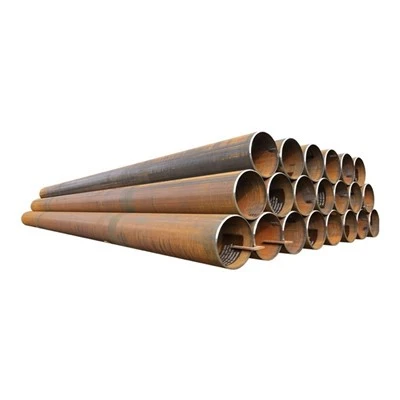

Double-sided longitudinal submerged arc welded (LSAW) steel pipes are selected for large infrastructure projects by matching their diameter, wall thickness, steel grade, manufacturing standard, and inspection requirements to the engineering design. These factors determine whether a pipe is suitable for the loads, internal pressure, connection conditions, and service environment expected during operation. For projects involving long-distance pipelines, bridge foundations, port structures, and heavy industrial facilities, accurate dimensional selection is essential to structural and operational performance.
LSAW pipes are manufactured by forming steel plates into cylindrical sections and welding the longitudinal seam using submerged arc welding. The double-sided welding process produces welds from both the internal and external surfaces, providing a manufacturing route for large-diameter, thick-wall pipes. Their dimensional flexibility makes them suitable for projects requiring specific combinations of outside diameter, wall thickness, and material grade.
Why Do Diameter and Wall Thickness Matter in LSAW Steel Pipe Selection?
Diameter and wall thickness are two fundamental parameters in steel pipe design. The outside diameter determines the pipe's overall geometric dimensions, while wall thickness contributes to its resistance to internal pressure, external loads, and structural deformation. Selecting these dimensions requires consideration of the pipe's actual service conditions rather than simply choosing the largest available size.
For long-distance oil and gas pipelines, internal pressure is a major design consideration. Wall thickness is determined through engineering calculations that account for design pressure, pipe diameter, material strength, design factors, and applicable standards. For structural applications such as bridge foundations and port piling, axial loads, bending moments, soil conditions, and installation methods may have greater influence on the required dimensions.
Large-Diameter Applications and Dimensional Requirements
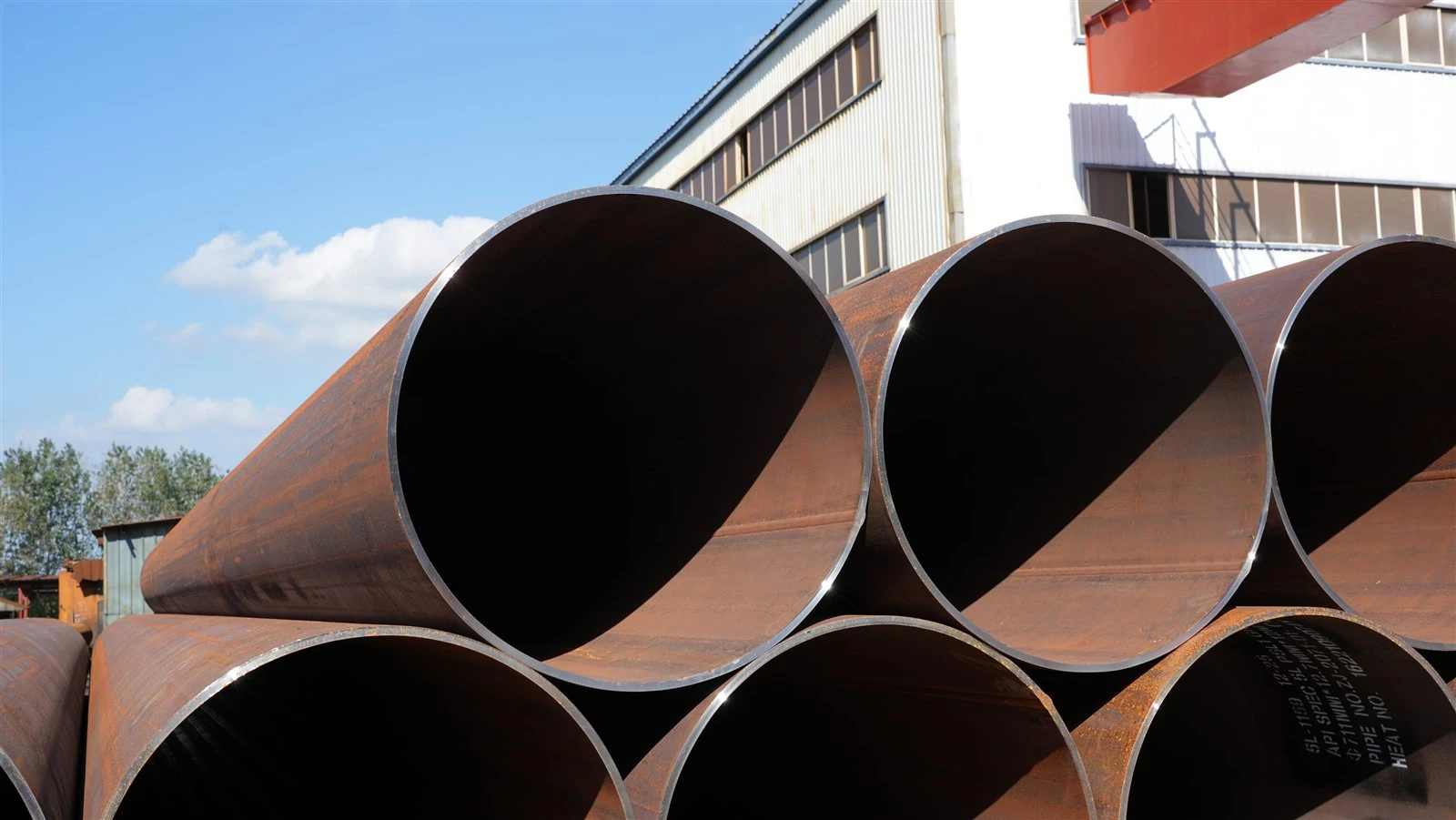
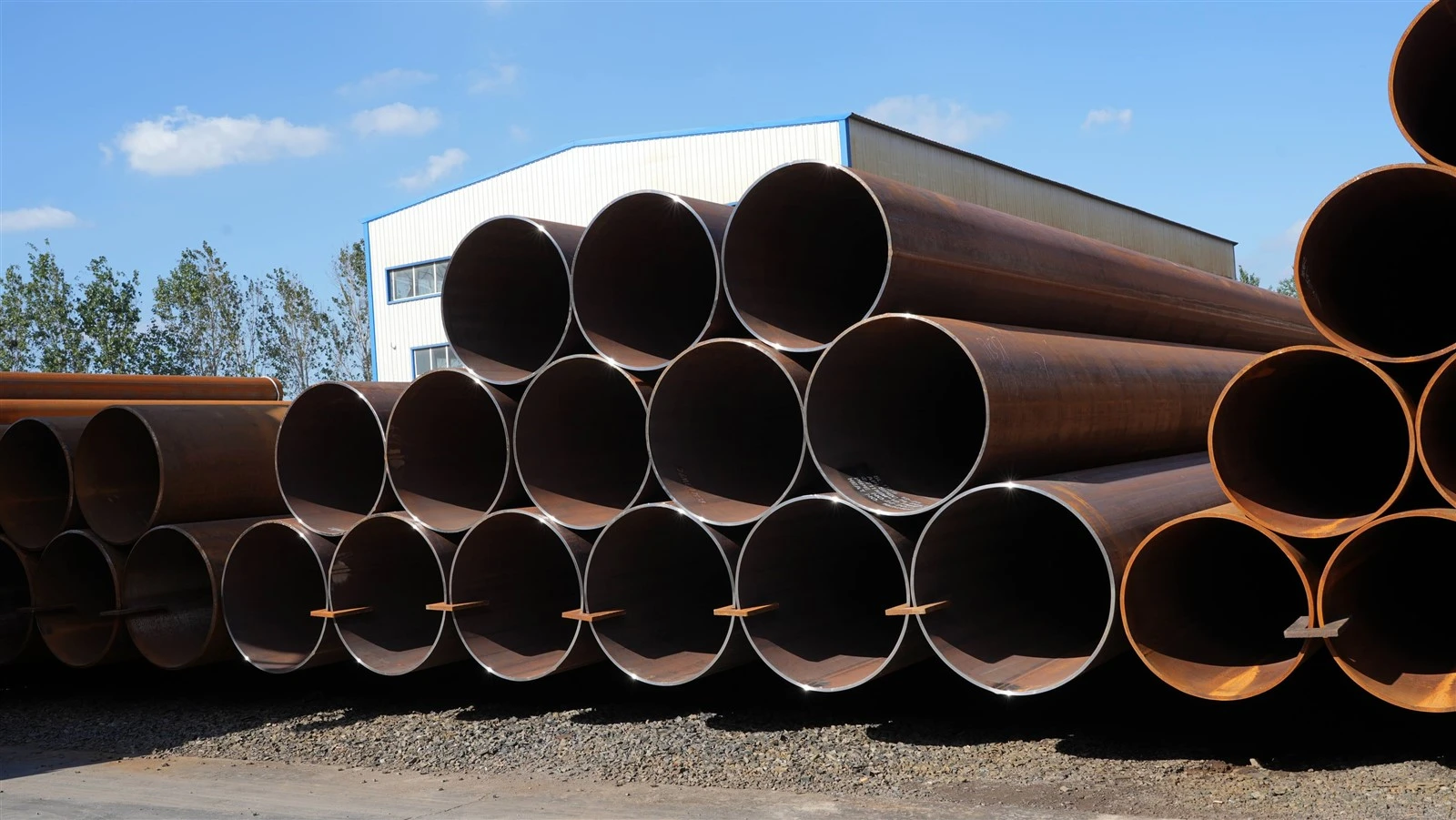
Large-diameter LSAW steel pipes are commonly used in applications where substantial flow capacity or structural dimensions are required. In long-distance pipeline systems, larger diameters can accommodate higher transportation volumes when supported by appropriate hydraulic and engineering design. In marine and civil engineering, large-diameter pipes may serve as foundation piles or structural members.
Wall thickness must also be considered in relation to the manufacturing process. As pipe diameter and wall thickness increase, forming accuracy, welding procedures, dimensional control, and inspection become increasingly important.
Matching Pipe Dimensions to Engineering Loads
A pipe used for fluid transportation is not designed in the same way as a pipe pile or a structural member. Pipeline design focuses on pressure containment, material properties, and operating conditions. Structural applications require evaluation of axial compression, bending, buckling, and other loads.
The following examples illustrate how dimensional and engineering considerations differ across common LSAW applications.
| Application | Main Engineering Considerations | Relevant Pipe Characteristics |
|---|---|---|
| Long-distance oil and gas pipelines | Design pressure, transportation capacity, operating temperature | Diameter, wall thickness, steel grade, weld quality |
| Bridge and port piling | Axial load, bending, soil resistance, installation conditions | Diameter, wall thickness, length, structural properties |
| Offshore structures | Environmental loads, fatigue, marine exposure | Material strength, weld integrity, dimensional accuracy |
| Heavy industrial structures | Static and dynamic loads, connection design | Section dimensions, straightness, fabrication requirements |
The final dimensions should be determined through project calculations and the applicable technical specification. A larger diameter or thicker wall does not automatically make a pipe more suitable if other design and manufacturing requirements are not satisfied.
How Are Double-Sided LSAW Steel Pipes Manufactured?
Double-sided LSAW steel pipes are typically produced through a plate-forming and submerged arc welding process. Steel plates are prepared, formed into cylindrical shapes, and welded along the longitudinal seam. The specific forming route depends on the manufacturing equipment and required pipe dimensions.
Plate Preparation and Pipe Forming
Before forming, steel plates are checked for dimensions, material identification, and surface condition. Plate edges are prepared to achieve the required welding groove geometry. The plate is then gradually formed into a cylindrical shape using the designated forming equipment.
JCOE is one common manufacturing process for large-diameter LSAW pipes. In this process, the plate is progressively formed into a J-shape, then a C-shape, and finally an O-shape before the edges are brought together. After initial forming and seam preparation, the pipe proceeds to welding.
Another manufacturing route is RBE, which uses roll bending and expansion to produce large-diameter pipes from steel coils or plates, depending on the equipment configuration. The appropriate process depends on the required dimensions, material, and production specification.
Internal and External Submerged Arc Welding
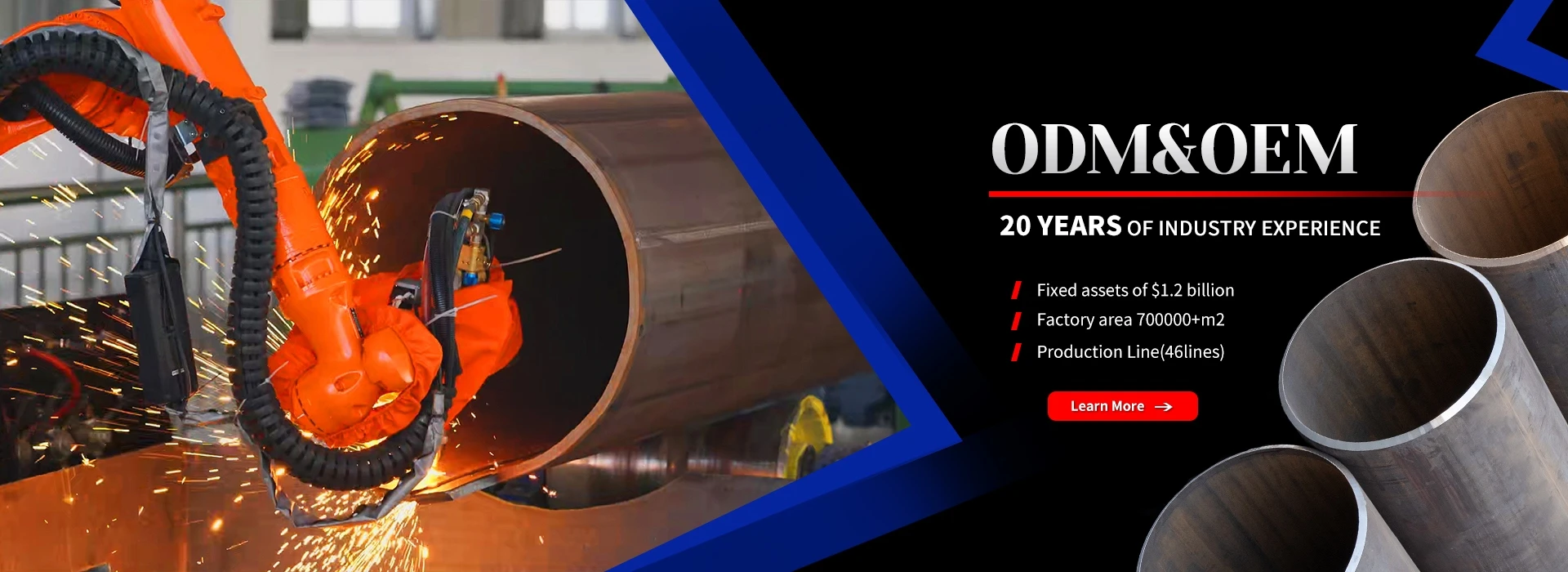
Submerged arc welding uses an electric arc beneath a layer of granular flux. The flux protects the molten weld pool from atmospheric contamination and helps produce a controlled weld. In double-sided LSAW manufacturing, the longitudinal seam is welded from both the internal and external sides.
Welding parameters such as current, voltage, travel speed, heat input, and groove preparation influence weld formation. These parameters must be controlled according to the qualified welding procedure and the material thickness.
Why Is Weld Quality Important for Large-Diameter Pipes?
The longitudinal weld is a critical part of an LSAW pipe. It connects the formed plate edges and must meet the mechanical and quality requirements specified for the product. Inadequate edge preparation, unstable welding conditions, or defects in the weld can affect the pipe's integrity.
For this reason, weld quality is verified through appropriate inspection methods. Depending on the applicable standard and purchase specification, inspection may include ultrasonic testing, radiographic testing, visual examination, and mechanical testing. Hydrostatic testing may also be required for pressure-bearing applications.
The inspection scope should be established before production because different applications and standards specify different acceptance criteria.
Which Standards and Steel Grades Apply to LSAW Steel Pipes?
LSAW steel pipes are manufactured under different international and regional standards according to their intended applications. These standards define requirements for dimensions, material grades, manufacturing processes, mechanical properties, testing, and acceptance criteria.
For oil and gas transportation, API 5L and ISO 3183 are widely used line pipe specifications. They cover requirements for line pipe grades and product delivery conditions. For structural applications, API 2B may apply to fabricated structural steel pipe used in offshore structures, while EN 10219 and EN 10210 cover cold-formed and hot-finished structural hollow sections respectively.
ASTM standards also cover different categories of steel pipe. For example, ASTM A252 is associated with welded and seamless steel pipe piles, while ASTM A671 and ASTM A672 cover electric-fusion-welded steel pipe for atmospheric and lower-temperature service and higher-temperature service, respectively, under their specified conditions.
Selecting the Appropriate Steel Grade
Steel grade selection depends on the required strength, toughness, operating temperature, weldability, and service environment. For pipeline applications, grades under API 5L or ISO 3183 may be selected according to design pressure and project requirements. Structural applications may use grades specified under relevant structural standards.
Material selection should also consider impact toughness where low-temperature service is expected. Chemical composition and carbon equivalent can influence weldability, so material certificates and relevant test results need to be reviewed as part of procurement.
A standard name alone is not sufficient to define a complete pipe order. Buyers should specify the exact grade, delivery condition, dimensions, inspection requirements, and any supplementary technical requirements in the purchase specification.
What Should Buyers Check Before Ordering Large-Diameter LSAW Pipes?
Before placing an order, buyers should confirm that the proposed manufacturing route can meet the required diameter, wall thickness, length, and material grade. They should also review the applicable product standard and establish the required inspection and documentation scope.
For large-diameter pipes, dimensional tolerances deserve particular attention. Outside diameter, ovality, straightness, wall thickness, and pipe-end preparation can affect field fit-up, welding, and installation. Where pipes will be joined into long pipeline sections or incorporated into complex structural assemblies, dimensional consistency between individual pipes is especially important.
Traceability is another essential part of quality management. Material identification, production records, welding records, inspection results, and final product documentation help verify that the supplied pipes correspond to the agreed technical requirements.
The LSAW steel pipe range available for large infrastructure applications can cover outside diameters from 406.4 mm to 2,800 mm, wall thicknesses from 7 mm to 50 mm, and lengths from 6 m to 12.5 m, subject to manufacturing process and specification. For the 2,800 mm RBE-formed coil pipe, the maximum wall thickness is 25 mm. These dimensions provide options for pipeline transportation, piling, and large structural projects, but the actual available combinations must be confirmed against the required material and production conditions.
For projects requiring customized large-diameter steel pipes, it is advisable to confirm the design loads, operating conditions, applicable standard, and inspection scope at the early procurement stage. Huayang Steel Pipe recently expanded its large-diameter manufacturing capabilities through its RBE equipment planning, alongside its existing LSAW production facilities. Customers can contact the company with project dimensions and technical specifications to discuss suitable manufacturing routes and product requirements.
Read More:
How Can Buyers Achieve Greater Certainty in Steel Pipe Procurement?