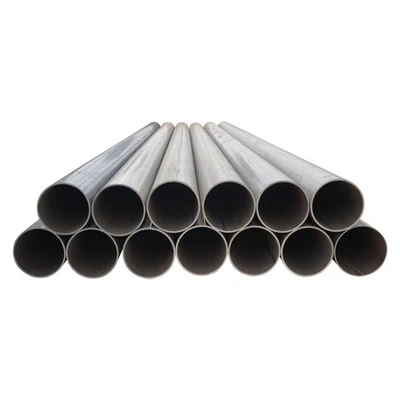
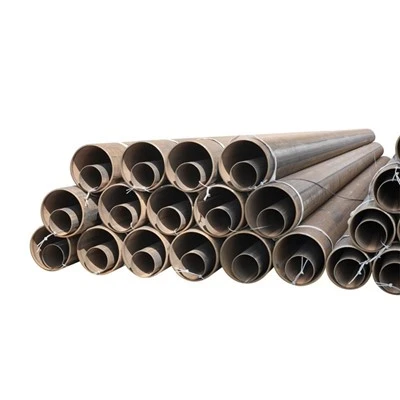
ERW steel pipe is widely used in modern industrial and infrastructure projects because it combines efficient manufacturing, consistent dimensions, reliable longitudinal welding, and flexible material options. ERW stands for Electric Resistance Welded, describing a production process in which steel strip is continuously formed into a cylindrical shape and the edges are joined through high-frequency electrical resistance heating. This manufacturing method allows producers to supply large quantities of steel pipe with stable dimensional characteristics and controlled production efficiency.
For project owners and contractors, the suitability of ERW steel pipe depends on the complete service environment rather than one specification alone. Diameter, wall thickness, steel grade, applicable standard, welding quality, testing requirements, coating system, and delivery conditions all influence the final product. An experienced ERW steel pipe manufacturer should therefore be able to coordinate material selection and production controls with the actual requirements of the pipeline or engineering project.
| Parameter | ERW Steel Pipe | Project Consideration |
|---|---|---|
| Manufacturing Method | Electric Resistance Welding | Efficient longitudinal seam welding |
| Diameter Range | Approx. Φ48–Φ660.4 mm | Suitable for small and medium diameter systems |
| Wall Thickness | Approx. 2.0–22 mm | Selected according to design conditions |
| Length | Approx. 6–27 m | Supports transportation and installation planning |
| Standards | API 5L, ASTM, EN, GB/T and others | Depends on application and market |
| Applications | Oil, gas, water, industrial and structural | Broad engineering use |
| Surface Protection | FBE, 3PE, 3PP and other systems | Improves corrosion resistance |
Why Is the ERW Manufacturing Process Important?
The ERW manufacturing process is designed around continuous forming and welding. Qualified steel coil is first uncoiled and leveled before passing through forming equipment. The strip is progressively shaped into a cylindrical section, bringing its edges together for longitudinal welding.
Why Does High Frequency Welding Improve Production Efficiency?
High-frequency electrical energy is concentrated at the edges of the formed strip. The localized heat allows the edges to reach the required welding condition, after which pressure is applied to form the longitudinal seam.
This continuous process allows manufacturers to maintain stable production speeds and repeatable welding conditions. It is particularly useful when a project requires a large quantity of pipe with consistent dimensions.
What Factors Influence the Welded Seam?
Welding power, production speed, edge condition, squeeze pressure, forming accuracy, and steel characteristics can influence weld quality. Manufacturers therefore need to establish suitable process parameters for different pipe diameters, wall thicknesses, and steel grades.
After welding, sizing equipment helps bring the pipe to the required dimensions before cutting and final inspection.
Why Does Dimensional Accuracy Matter in Pipeline Installation?
Dimensional consistency is an important advantage of well-controlled ERW steel pipe production. Outside diameter, wall thickness, straightness, roundness, and pipe length can all affect the efficiency of field installation.
How Does Pipe Geometry Affect Field Welding?
Pipeline construction involves connecting numerous individual pipe sections. If the pipe ends have significant dimensional variations, alignment and fit-up can become more difficult.
Consistent pipe geometry helps contractors establish reliable joints and can reduce adjustment work during installation. This is especially valuable in projects involving long pipeline routes and large quantities of pipe.
How Does Length Affect Project Efficiency?
Longer pipe sections can potentially reduce the number of field joints, although the selected length must also consider transportation restrictions, lifting equipment, storage conditions, and construction procedures.
Manufacturers can coordinate pipe length with project requirements where production and transportation conditions allow.
Why Is ERW Steel Pipe Suitable for Water Pipeline Projects?
Water transmission is an important application for ERW steel pipe. Municipal water systems, industrial water pipelines, irrigation networks, and utility systems can use ERW pipe when the selected material and specification meet the project requirements.
What Should Be Considered for Water Pipeline Selection?
Water pipeline design needs to consider operating pressure, flow rate, pipe diameter, installation environment, water characteristics, and expected service life.
For underground installations, corrosion protection is often an important consideration. External coating systems can help protect the steel from moisture and corrosive soil.
Which Coatings Can Be Applied?
Depending on the project, ERW steel pipe may be supplied with FBE, 3PE, 3PP, or other specified external coatings. Internal epoxy coating can also be considered where internal corrosion protection is required.
The coating system should be selected according to the actual operating environment rather than simply choosing the most commonly used option.
Why Can ERW Steel Pipe Be Used in Oil and Gas Transportation?
ERW steel pipe is also used in selected oil and gas pipeline applications where the product meets the required line pipe specification.
How Does API 5L Support ERW Pipe Applications?
API 5L provides requirements for line pipe used in pipeline transportation systems. Depending on project requirements, ERW steel pipe can be manufactured according to API 5L with specified grades and product specification levels.
Steel grades such as Grade B and higher-strength grades can be selected according to design conditions and project requirements.
Why Is PSL Selection Important?
PSL1 and PSL2 have different technical requirements. PSL2 generally includes additional controls for chemical composition, mechanical properties, toughness, testing, and traceability.
The required PSL level should be confirmed in the project specification before production. Manufacturers should then organize raw material purchasing, production, testing, and documentation according to the selected level.


Why Is Weld Inspection Essential for ERW Steel Pipe?
The longitudinal seam is an important part of ERW steel pipe, particularly when the pipe is intended for pressure service.
How Do Manufacturers Examine the Weld?
Depending on the applicable standard and project requirements, manufacturers may use ultrasonic testing, visual inspection, hydrostatic testing, and other non-destructive examination methods.
Ultrasonic inspection can help identify discontinuities in the welded area that may not be visible from the external surface. Mechanical testing and chemical analysis can also verify whether the material meets the specified requirements.
What Does Hydrostatic Testing Verify?
Hydrostatic testing evaluates the pipe's ability to withstand the specified internal pressure without leakage. It provides an important final verification for many pressure pipeline products.
The exact test pressure and holding time should follow the applicable standard and approved project specification.
Why Is Raw Material Selection Important for ERW Steel Pipe?
The finished pipe quality begins with the steel coil. Chemical composition, yield strength, tensile strength, elongation, thickness uniformity, surface condition, and edge quality can all influence production performance.
How Does Steel Grade Affect the Finished Pipe?
Different steel grades provide different combinations of strength and toughness. Pipeline engineers select the appropriate grade according to pressure, temperature, transported medium, design requirements, and applicable standards.
For manufacturers, consistent raw material quality also helps stabilize forming and welding conditions.
Why Does Edge Condition Matter?
The edges of the steel strip directly participate in the welding process. Poor edge geometry, contamination, or inconsistent preparation can affect heating and weld formation.
Controlling edge condition before welding is therefore an important part of stable ERW production.
Why Should Buyers Evaluate More Than the Pipe Price?
When purchasing ERW steel pipe, price is only one part of the overall procurement decision. A technically unsuitable pipe can create additional costs through installation difficulties, inspection failures, delays, or premature maintenance.
Buyers should evaluate the manufacturer's production capacity, applicable standards, inspection equipment, testing procedures, certification, traceability, coating capability, and international delivery experience.
For large orders, production scheduling is also important. The supplier should be capable of maintaining consistent quality throughout the complete batch rather than only producing a small number of qualified samples.
Why Does Project Experience Matter for ERW Steel Pipe Supply?
The TITAS natural gas transmission project in Bangladesh provides a practical example of ERW steel pipe used in energy infrastructure. Approximately 1,700 tons of ERW steel pipe were supplied in API 5L PSL1 Grade B, DN200–DN400 specifications.
For a natural gas transmission project, the combination of suitable line pipe material, controlled ERW welding, dimensional accuracy, non-destructive testing, hydrostatic testing, and complete documentation is important for successful project execution. Such projects also demonstrate the importance of coordinating production capacity with delivery schedules and inspection requirements.
Read More:
How Can LSAW Steel Pipe Improve The Performance Of Large Structural Projects?
How Is LSAW Steel Pipe Manufactured And Where Is It Used in Modern Engineering?