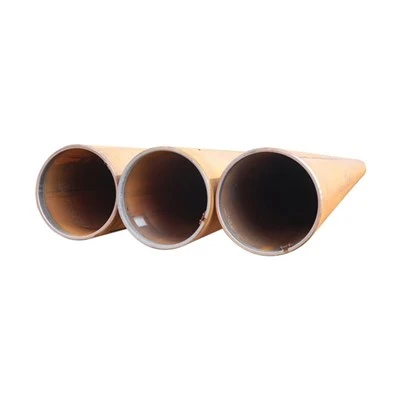
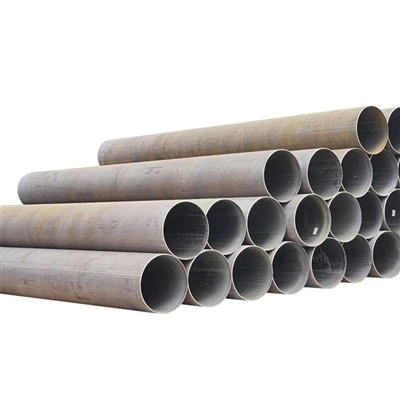
How to produce high-frequency welded steel pipes? The process starts long before a finished pipe comes off the production line. At Huayang Steel Pipe, production is organized through a series of controlled steps, including raw material preparation, automatic feeding, precision forming, high-frequency welding, cutting, finished product inspection, and standard product marking. Each stage is connected to the next to maintain stable production efficiency and consistent steel pipe quality. The following process gives buyers a closer look at what happens inside a high-frequency welded steel pipe workshop.
What Are the Main Steps in High-Frequency Steel Pipe Production?
High-frequency welded steel pipe production is a continuous manufacturing process. Although the finished product may appear simple, its dimensional accuracy and weld quality depend on the coordination of multiple production stages.
How Does Production Start?
High-Quality Raw Materials
The production process begins with steel raw materials that meet the specified grade and technical requirements. Proper material selection provides the basic foundation for subsequent forming and welding. Before production, material information can be checked and managed according to the applicable production requirements, helping maintain traceability throughout the manufacturing process.
Automatic Feeding and Continuous Production
After preparation, the steel strip or steel material enters the production line through an automatic feeding system. Automated feeding helps maintain a continuous material flow and supports stable production speed. For high-volume steel pipe orders, this is particularly important because production needs to remain consistent over extended operating periods.


How Is the Steel Strip Formed into a Pipe?
Precision Forming
The flat steel strip passes through a series of forming operations and gradually takes on a tubular shape. During this stage, forming accuracy is important because the edges of the strip need to be positioned correctly for the subsequent welding operation.
Preparing the Welding Area
As the strip approaches the welding section, the two edges are brought into the required position. Accurate forming and alignment create suitable conditions for high-frequency welding. The forming and welding stages therefore work closely together rather than operating independently.
How Does High-Frequency Welding Form the Steel Pipe?
High-frequency welding is one of the defining processes in HFW and ERW steel pipe manufacturing. After forming, the edges of the steel strip are rapidly heated in the welding area and then brought together under pressure to create a continuous longitudinal weld.
What Happens During High-Frequency Welding?
Rapid Edge Heating
An induction coil or other high-frequency heating system generates the conditions required to rapidly heat the edges of the steel strip. The heating is concentrated around the welding area, allowing the edges to reach the required condition while the material continuously moves through the production line.
Pressure Welding and Seam Formation
After heating, pressure is applied to bring the edges together and complete the welded connection. Temperature, welding speed, alignment, and equipment stability all need to be controlled to maintain a consistent welding process.
What Happens After Welding?
Cutting to Required Length
Once the welded pipe has been formed, it continues through subsequent sizing and finishing operations before being cut into the required lengths. Cutting accuracy is important when customers specify particular pipe lengths for transportation, construction, or installation.
Finished Product Inspection
Inspection is an essential part of the production process. Depending on the applicable standard and customer requirements, finished steel pipes can undergo dimensional inspection, non-destructive testing, hydrostatic testing, and other required examinations. These checks help verify that the finished products meet the specified technical requirements.
What Does a Complete HFW Steel Pipe Manufacturing Process Include?
A high-frequency steel pipe production line combines material preparation, forming, welding, finishing, inspection, and identification into one coordinated process. Understanding the complete workflow helps buyers evaluate how a manufacturer controls product quality rather than looking only at the finished pipe.


How Are the Production Stages Connected?
From Raw Material to Finished Pipe
Each production stage has a specific function, but the quality of the final steel pipe depends on how effectively these stages work together. Raw material quality provides the starting point, forming determines the geometry of the pipe, welding creates the longitudinal seam, and inspection verifies the finished product.
| Production Stage | Main Operation | Quality Focus |
|---|---|---|
| Raw material preparation | Steel material storage and preparation | Grade, material condition and traceability |
| Automatic feeding | Continuous material feeding | Stable production flow |
| Precision forming | Steel strip formed into pipe shape | Diameter, geometry and edge alignment |
| High-frequency welding | Edge heating and pressure welding | Weld stability and seam quality |
| Cutting | Finished pipe cut to required length | Length accuracy |
| Finished product inspection | Dimensional and quality inspection | Product conformity |
| Product marking | Standard marking on finished pipe | Identification and traceability |
| Finished pipe offline | Product collection and storage | Order organization and delivery preparation |
Why Is Product Marking Important?
Clear Identification
After production and inspection, steel pipes are marked according to the applicable requirements. Product marking provides important identification information and can help customers and project teams distinguish different specifications, grades, standards, or production batches.
Supporting Traceability
Clear marking also supports communication between the manufacturer, customer, warehouse, and project site. For large orders involving multiple steel pipe specifications, accurate identification can make handling and inspection more efficient.
Why Does Intelligent Manufacturing Matter for Steel Pipe Buyers?
Modern steel pipe manufacturing is not simply about operating machines at high speed. For engineering procurement, buyers need consistent products, stable production capacity, accurate specifications, and reliable quality control throughout the order.
How Does Huayang Steel Pipe Control Production?
Coordinated Manufacturing
At Huayang Steel Pipe, production combines automated equipment with controlled manufacturing procedures across forming, welding, cutting, inspection, and product marking. This coordinated approach is designed to reduce unnecessary variation and maintain consistent production conditions.
Huayang's HFW and ERW steel pipe production covers diameters from Φ48 mm to Φ660.4 mm, wall thicknesses from 2.0 mm to 22 mm, and lengths from 6 m to 27 m. Different steel grades, standards, dimensions, and lengths can be manufactured according to project and customer requirements.
For customers sourcing high-frequency welded steel pipes, a clear manufacturing process provides more than an impressive factory view. It shows how the final product is built step by step, from raw material preparation to precision forming, high-frequency welding, cutting, inspection, and marking. At Huayang Steel Pipe, every stage is part of the overall quality control system, with the goal of providing customers with consistent steel pipe specifications, stable weld quality, reliable inspection results, and dependable supply for different engineering and industrial applications.
Read More:
What Are 3PE And 3PP Coatings For Steel Pipe?
What Does Double Submerged Arc Welding Mean in LSAW Steel Pipe Production?