


LSAW steel pipe, or Longitudinal Submerged Arc Welded steel pipe, is widely used in large-diameter oil and gas pipelines, water transmission systems, and infrastructure projects. As part of the Huayang Steel Pipe Product Series, Huayang LSAW steel pipes cover outside diameters from 406 mm to 2800 mm, providing options for demanding pipeline applications. With non-destructive testing available, compliance with applicable API, CE, and GOST requirements, and customized pipe cutting and beveling services upon request, Huayang supports overseas engineering projects with steel pipe solutions tailored to project specifications.
What Is LSAW Steel Pipe and How Is It Manufactured?
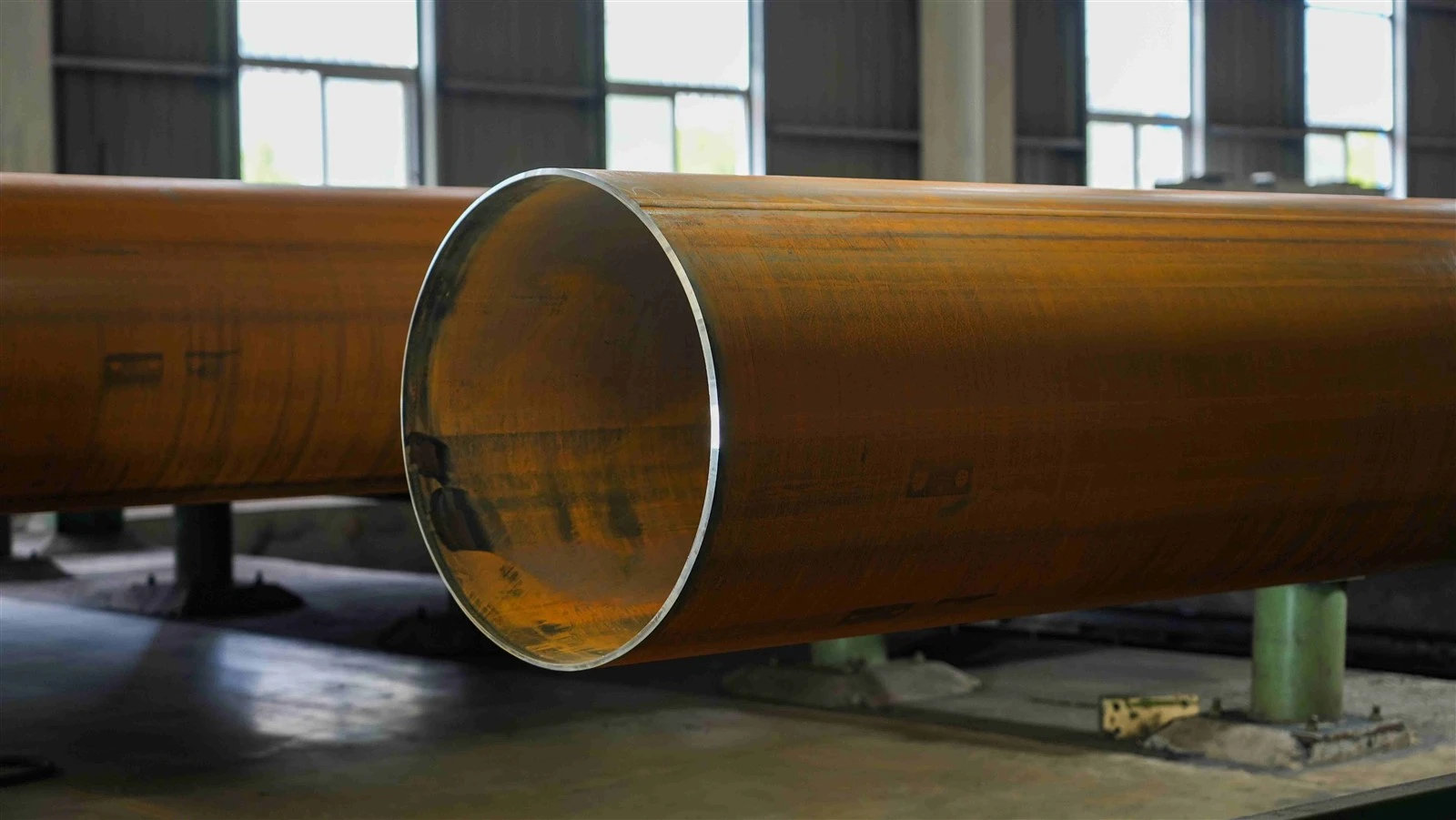
LSAW steel pipe is produced by forming steel plate into a cylindrical shape and welding the longitudinal seam using the submerged arc welding process. Compared with small-diameter welded pipes, LSAW steel pipes are particularly suitable for applications requiring large diameters and substantial wall thicknesses.
During submerged arc welding, the welding arc operates beneath a layer of granular flux. This shields the welding area from the surrounding atmosphere and helps produce a consistent weld under controlled production conditions. Depending on the manufacturing process, the pipe may be formed using methods such as JCOE or other suitable forming techniques. The specific process depends on the pipe dimensions, steel grade, production equipment, and applicable technical requirements.
For large-scale projects, the manufacturing process is only one part of the quality picture. Steel plate properties, forming accuracy, weld integrity, dimensional tolerances, and inspection results all affect whether a pipe meets the project's requirements. Buyers should therefore evaluate the complete manufacturing and quality-control process rather than selecting a supplier based on diameter range or price alone.
Why Is LSAW Steel Pipe Suitable for Large-Diameter Pipeline Applications?
Large Diameter and Wall Thickness for Demanding Conditions
One major advantage of LSAW steel pipe is its suitability for producing large-diameter pipes. These dimensions are important in projects where pipeline capacity, structural requirements, installation methods, and operating conditions determine the required pipe size.
For oil and gas transmission, water infrastructure, and industrial pipeline systems, the correct outside diameter and wall thickness must be selected according to design pressure, transported medium, installation environment, and the governing project specification. Larger diameter does not automatically mean better performance; the pipe must be engineered for its intended service.
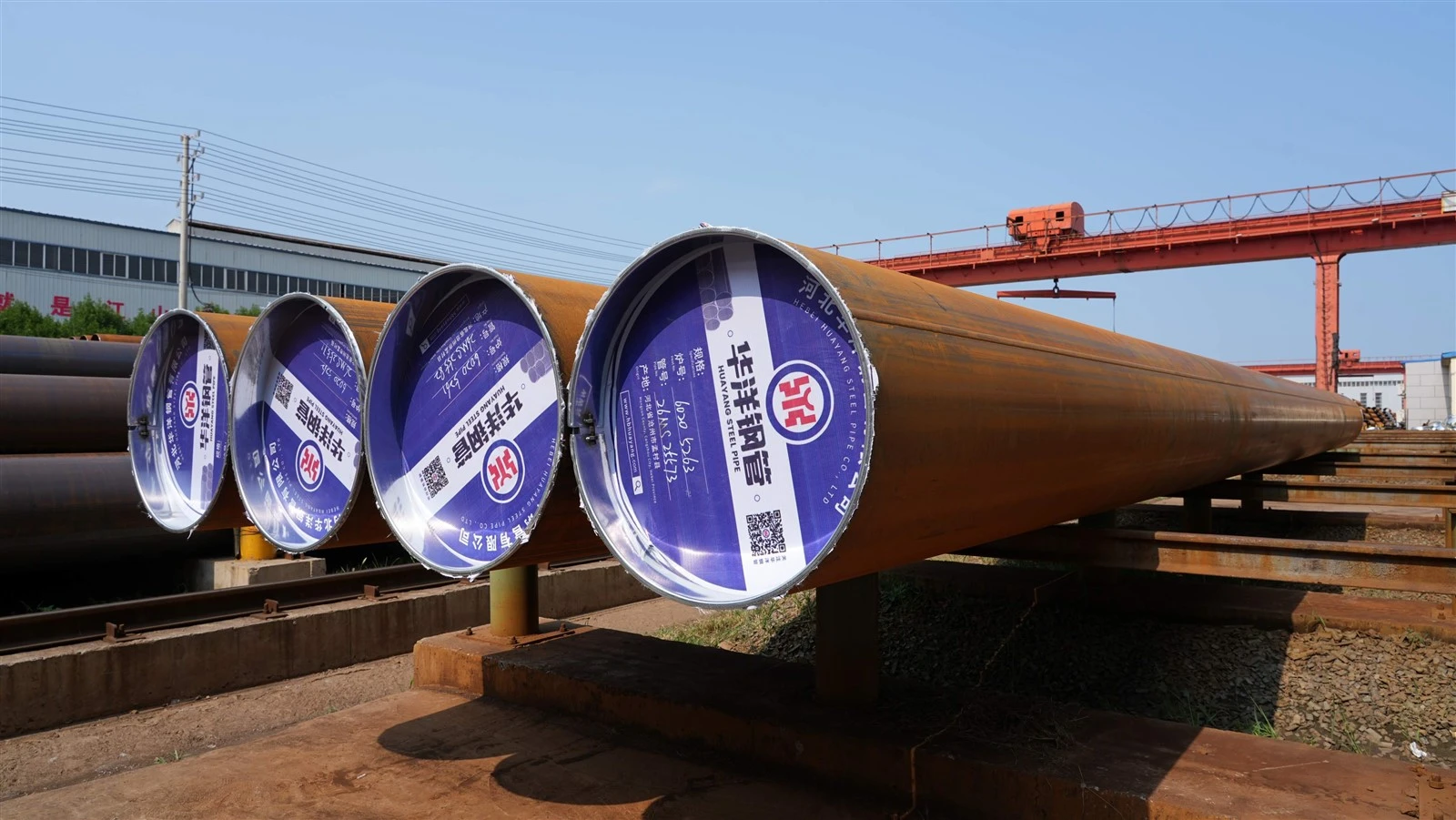
Huayang LSAW steel pipes cover outside diameters from 406.4 mm to 2800 mm, with wall thicknesses from 7 mm to 50 mm and standard production lengths from 6 m to 12.5 m, subject to the selected product and order requirements. This range provides flexibility for projects involving large-diameter pipeline sections and heavy-duty infrastructure.
Weld Integrity and Dimensional Control
Why Does Longitudinal Weld Quality Matter?
The longitudinal weld is a critical feature of LSAW steel pipe. Its integrity must be assessed against the applicable standard and purchase specification. Depending on the project, inspection may include ultrasonic testing, radiographic testing, hydrostatic testing, and dimensional examination. The required methods and acceptance criteria vary according to the product standard, grade, pipe dimensions, and contractual requirements.
Dimensional control is equally important. Outside diameter, wall thickness, length, straightness, ovality, and end preparation can influence fit-up during field installation. Consistent dimensions help reduce adjustment work and support smoother welding and assembly.
For buyers, the practical question is not simply whether a manufacturer offers non-destructive testing, but whether the inspection plan is clearly defined, documented, and appropriate for the intended application.
How Can Buyers Select the Right LSAW Steel Pipe for a Project?
Choosing LSAW steel pipe requires a review of technical, manufacturing, and delivery requirements. A quotation request should provide enough information for the manufacturer to confirm whether the requested specification can be met. The following table summarizes key parameters that buyers should clarify before placing an order.
| Selection Factor | What Buyers Should Confirm | Why It Matters |
|---|---|---|
| Outside diameter | Required diameter in millimeters | Determines pipeline dimensions and connection compatibility |
| Wall thickness | Nominal thickness and applicable tolerance | Relates to design requirements and project calculations |
| Steel grade | Grade specified by the design or standard | Defines relevant mechanical and chemical requirements |
| Product standard | Applicable API, EN, GOST, or project specification | Establishes technical and acceptance requirements |
| Inspection | Required NDT methods, hydrostatic testing, and reports | Supports verification of product conformity |
| Pipe length | Fixed length or permitted length range | Affects transport, installation, and field joint planning |
| Pipe ends | Plain ends, beveling, or other specified preparation | Supports fit-up and welding at the construction site |
| Coating | Required external or internal protection, if applicable | Addresses corrosion risks in the service environment |
Why Should Project Specifications Be Confirmed Before Production?
Avoiding Costly Changes During Procurement
A detailed technical specification helps prevent misunderstandings between the buyer, manufacturer, inspection agency, and installation contractor. For example, a project may require a particular steel grade, impact-test temperature, wall-thickness tolerance, or non-destructive testing method. These requirements should be agreed upon before production rather than treated as general expectations.
Buyers should also confirm whether the requested standard and grade are applicable to the intended service. API, CE-related requirements, and GOST standards do not represent interchangeable certifications; each has a specific scope and set of requirements. Compliance should be verified against the exact standard, product, and order documentation.
When requesting a quotation from Huayang Steel Pipe, provide the outside diameter, wall thickness, steel grade, standard, quantity, required length, inspection requirements, end preparation, coating requirements, and delivery destination whenever available. This information helps the technical and sales teams evaluate the order more accurately.
What Processing and Quality Services Can Support LSAW Steel Pipe Projects?
Steel pipe procurement often involves more than manufacturing the base pipe. Project requirements may include cutting to specified lengths, end beveling, coating, marking, protective packaging, and documentation. Coordinating these requirements with the manufacturer can help reduce additional processing after delivery.
Huayang can provide customized cutting lengths and pipe beveling upon request, subject to order specifications and production feasibility. End preparation should be defined in the purchase documents, including the required bevel geometry and any applicable dimensional tolerances. If pipes will be welded together at the construction site, consistent end preparation can help contractors manage fit-up and welding operations more efficiently.
Quality documentation is another important consideration for international projects. Depending on the order, buyers may need material certificates, inspection records, dimensional reports, or third-party inspection documentation. The required documents should be confirmed in advance so that the supplied records match the project's quality assurance plan.
Huayang Steel Pipe manufactures LSAW steel pipes for large-diameter applications and supports customers with product specification confirmation, inspection coordination, and export-oriented order preparation. For projects with special dimensional, inspection, or processing requirements, early technical communication helps establish a clearer production and delivery plan.
How Does Huayang Steel Pipe Support Overseas LSAW Pipe Projects?
For international pipeline and infrastructure projects, a suitable manufacturer needs to understand both the product specification and the practical demands of export supply. Huayang Steel Pipe offers LSAW steel pipes in a wide range of large diameters and supports customized processing according to confirmed order requirements.
Its LSAW product range is intended for applications such as oil and gas transmission, water infrastructure, and other large-scale engineering projects. Non-destructive testing can be arranged according to the applicable specification, while cutting and beveling services can be discussed during technical review. Product compliance must be confirmed for each order based on the required standard, grade, dimensions, and inspection scope.
Before procurement, buyers are encouraged to share their technical specifications and project requirements with Huayang's team. This allows both parties to review product suitability, inspection arrangements, processing details, and delivery expectations before production begins.
How Can You Get the Right LSAW Steel Pipe for Your Project?
Selecting the right LSAW steel pipe means matching diameter, wall thickness, steel grade, manufacturing quality, inspection requirements, and end preparation to the project's actual needs. For large-diameter pipelines, these details are essential to achieving reliable installation and meeting the applicable engineering specification.
Huayang Steel Pipe provides LSAW steel pipe solutions for overseas oil and gas, water transmission, and infrastructure projects. Contact Huayang Steel Pipe with your drawings or technical specification to discuss suitable pipe dimensions, inspection requirements, and customized processing options for your project.
Read More:
Why Is The Arc Buried in Submerged Arc Welding?
Why Does The Steel Pipe Delivery Schedule Matter For Your Pipeline Project?


