


SSAW, LSAW, and ERW steel pipes are three widely used types of welded steel pipe for industrial, infrastructure, structural, water transmission, and pipeline applications. Although all three are manufactured by welding steel, their forming methods, welding processes, dimensional ranges, and typical applications are different.
Understanding the differences between SSAW vs LSAW vs ERW steel pipe is important when selecting pipe for a specific project. The right choice depends on factors such as pipe diameter, wall thickness, steel grade, operating pressure, service conditions, applicable standards, inspection requirements, and project design.
What Are SSAW, LSAW, and ERW Steel Pipes?
The main difference between SSAW, LSAW, and ERW steel pipe lies in how the steel is formed and how the longitudinal or spiral seam is welded. These manufacturing characteristics directly influence the available dimensions, production efficiency, weld configuration, and suitable applications.
What Is SSAW Steel Pipe?
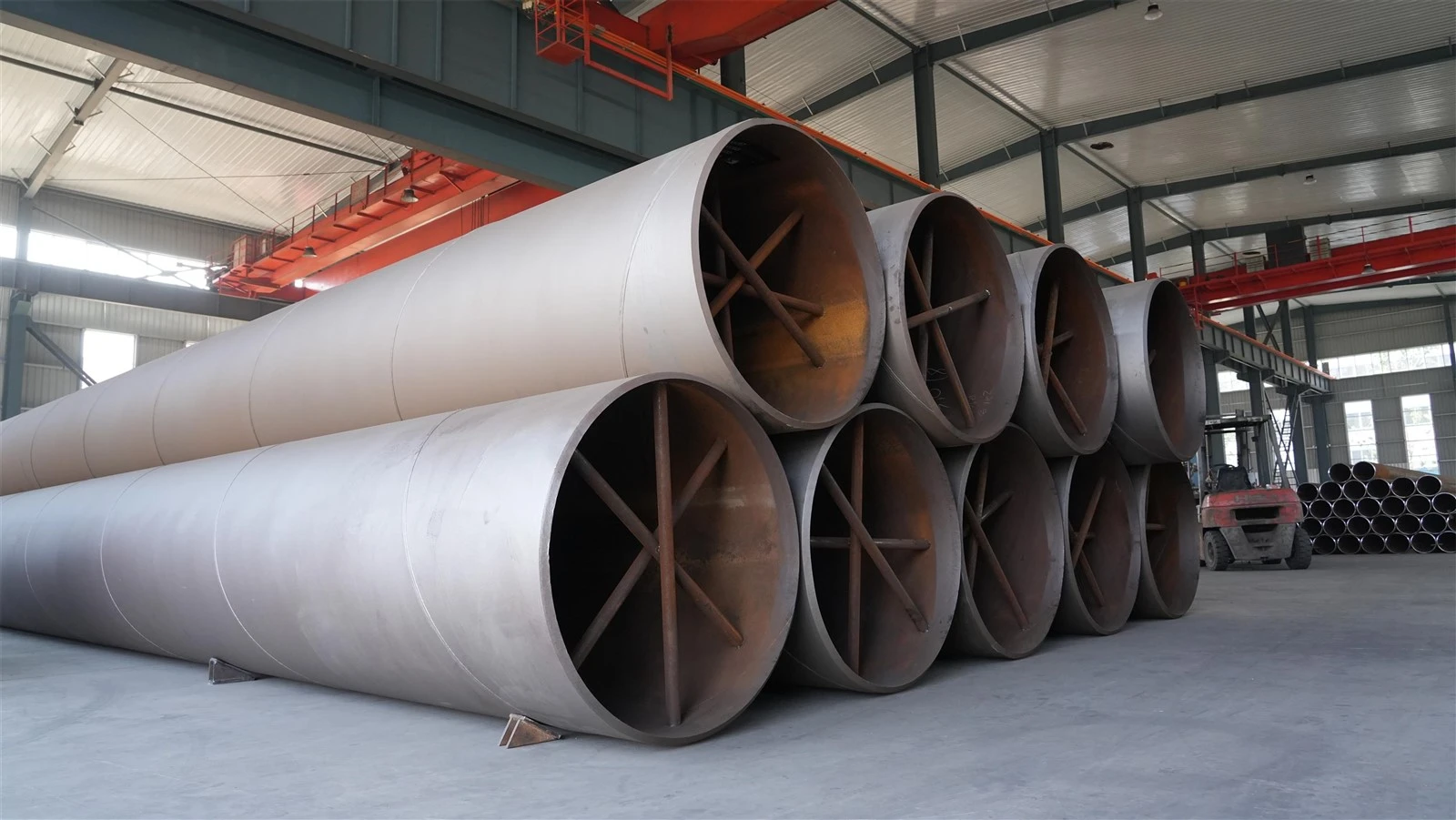
SSAW stands for Spiral Submerged Arc Welded pipe. It is also commonly called spiral welded steel pipe. During production, a continuous steel strip is formed into a cylindrical shape at a controlled angle, while the edges are joined by submerged arc welding to create a spiral seam.
Why Is SSAW Suitable for Large-Diameter Pipe?
The spiral forming process allows manufacturers to produce large-diameter pipe from steel strip with controlled forming parameters. SSAW steel pipe is therefore commonly considered for water transmission, piling, structural engineering, and other large-diameter applications where the required dimensions and service conditions are compatible with spiral welded construction.
What Is LSAW Steel Pipe?
LSAW means Longitudinal Submerged Arc Welded pipe. Unlike SSAW pipe, the steel plate is formed into a cylindrical shape and the longitudinal seam is welded along the length of the pipe.
How Does LSAW Manufacturing Differ from SSAW?
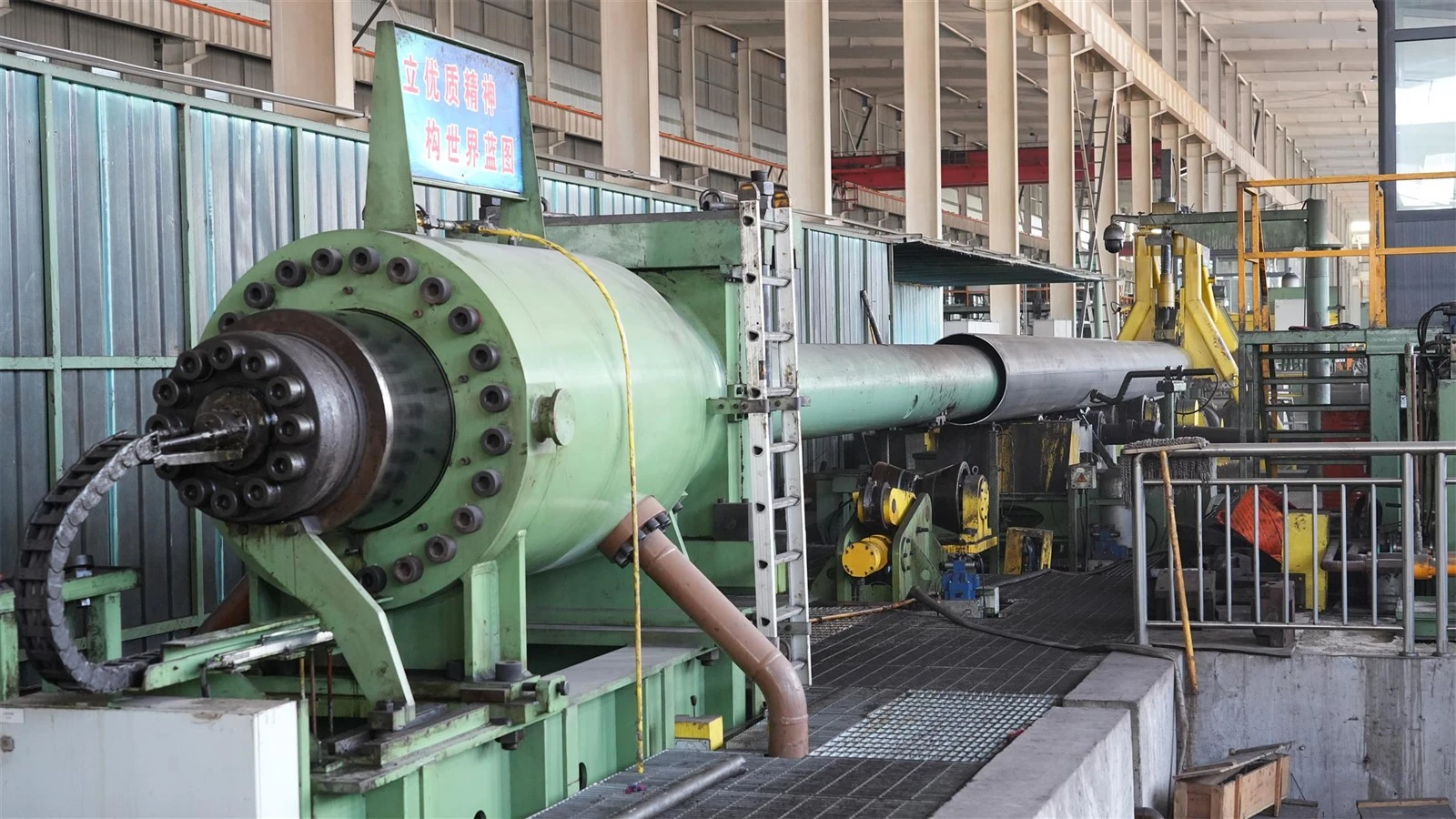
LSAW production commonly uses forming methods such as JCOE or other plate-forming processes. The steel plate is progressively formed, the edges are aligned, and the longitudinal seam is welded using submerged arc welding. Because the pipe is formed from individual plates rather than continuously spiraled strip, LSAW is widely used for large-diameter and heavy-wall pipe requiring controlled dimensions and specific mechanical properties.
What Is ERW Steel Pipe?
ERW stands for Electric Resistance Welded pipe. In modern production, high-frequency electric resistance welding is commonly used to heat and join the edges of continuously formed steel strip.
Unlike SSAW and LSAW, which use submerged arc welding, ERW/HFW pipe is produced by resistance welding without adding welding wire or flux to the seam. The process is highly continuous and is particularly suitable for small- and medium-diameter welded steel pipe.
| Feature | SSAW Steel Pipe | LSAW Steel Pipe | ERW/HFW Steel Pipe |
|---|---|---|---|
| Full name | Spiral Submerged Arc Welded | Longitudinal Submerged Arc Welded | Electric Resistance Welded / High-Frequency Welded |
| Forming method | Spiral forming | Plate forming | Continuous strip forming |
| Weld direction | Spiral seam | Longitudinal seam | Longitudinal seam |
| Main welding process | Submerged arc welding | Submerged arc welding | Resistance/high-frequency welding |
| Typical diameter range | Large diameter | Medium to very large diameter | Small to medium diameter |
| Production characteristic | Continuous spiral forming | Plate-based production | Highly continuous production |
| Typical applications | Water, piling, infrastructure | Pipelines, water, structural and industrial projects | Structural, mechanical, utility and pipeline applications |
| Main selection factors | Diameter and project requirements | Diameter, wall thickness and specification | Size, grade, wall thickness and application |
How Do SSAW, LSAW, and ERW Steel Pipe Manufacturing Processes Differ?
Manufacturing technology is one of the most important factors when comparing SSAW vs LSAW vs ERW steel pipe. Although all three are welded products, the raw material preparation, forming method, and welding process are substantially different.
How Is SSAW Steel Pipe Manufactured?
SSAW production starts with steel coil or strip. After inspection and preparation, the strip is uncoiled and gradually formed into a cylindrical shape. The edges meet along a spiral line and are welded using submerged arc welding.
Spiral Forming and Weld Control
The forming angle determines the relationship between strip width and finished pipe diameter. During production, manufacturers control strip alignment, forming stability, weld gap, welding current, voltage, travel speed, and other parameters.
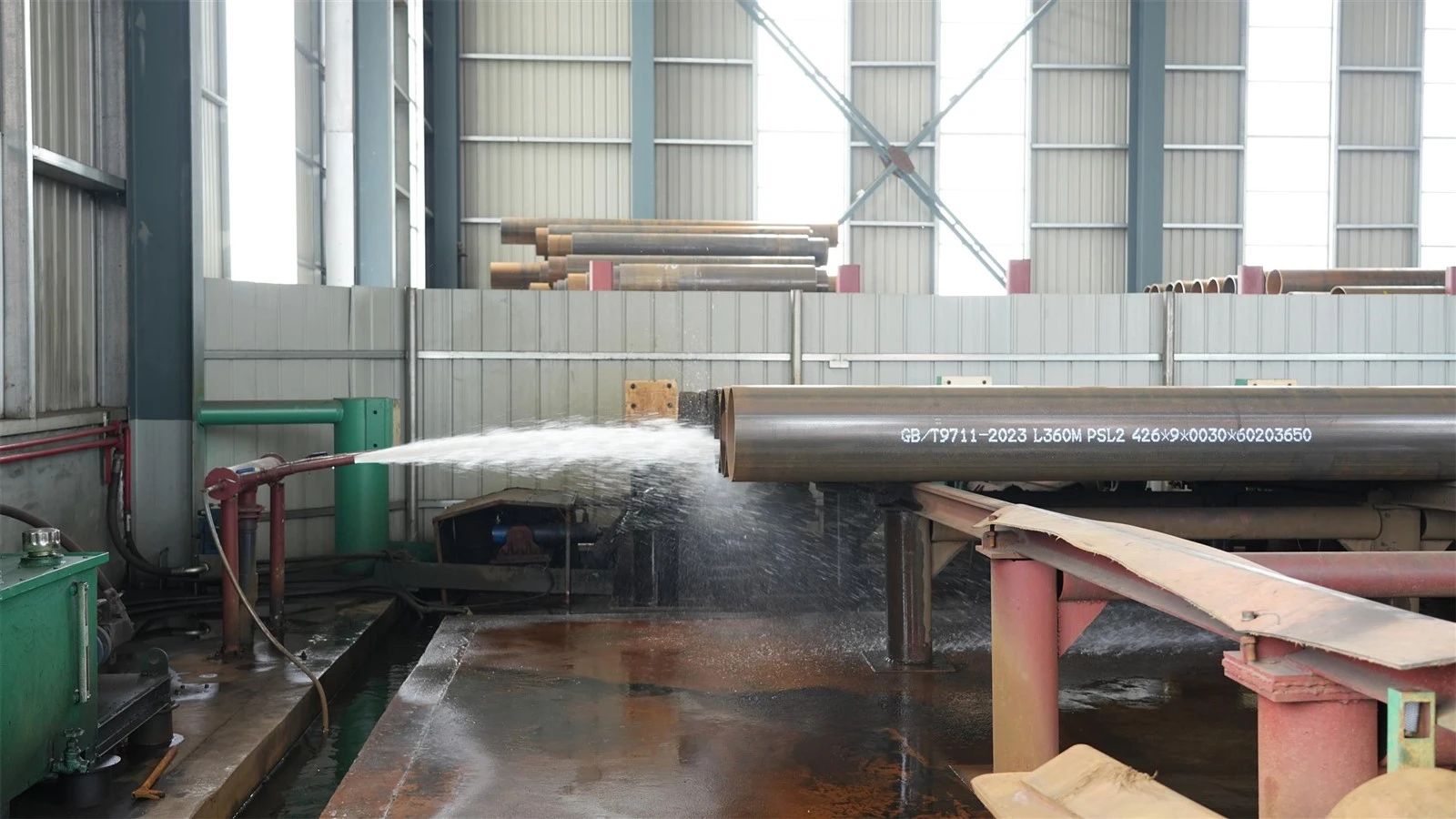
After welding, the pipe is cut to the required length and subjected to dimensional inspection and nondestructive testing. Hydrostatic testing and other examinations may be performed according to the applicable standard and purchase specification.
How Is LSAW Steel Pipe Manufactured?
LSAW pipe is generally produced from steel plate. The plate is inspected and prepared before being progressively formed into a cylindrical shape.
JCOE Forming and Submerged Arc Welding
In JCOE production, the plate is gradually pressed into a J-shaped, C-shaped, and O-shaped configuration before the edges are brought together. After tack welding and alignment, the longitudinal seam is welded using submerged arc welding.
This manufacturing route provides strong control over pipe diameter, wall thickness, steel grade, and finished dimensions, making LSAW suitable for many large-diameter and heavy-wall applications.
How Is ERW Steel Pipe Manufactured?
ERW/HFW steel pipe starts from steel coil that is continuously uncoiled, leveled, formed, and shaped into a cylindrical profile. The strip edges are heated by high-frequency electrical energy and pressed together to form the longitudinal weld.
Continuous High-Frequency Welding
Because ERW production is continuous, it can provide efficient manufacturing for a wide range of standard sizes. After welding, the pipe passes through sizing equipment before being cut into specified lengths.
Online inspection, dimensional control, weld inspection, and final testing are important parts of the ERW production process. The finished pipe can then be supplied with the required surface treatment, end configuration, marking, and documentation.
How Do SSAW, LSAW, and ERW Pipes Compare in Size and Application?
There is no single pipe manufacturing process that fits every project. Diameter, wall thickness, pressure, steel grade, length, connection method, and service environment all affect the selection.
When Should You Choose SSAW Steel Pipe?
SSAW can be considered when the project requires large-diameter welded steel pipe and the applicable specification permits spiral welded construction. It is commonly associated with water transmission, piling, structural projects, and infrastructure applications.
Typical SSAW Selection Conditions
For large-diameter applications, buyers should pay particular attention to diameter tolerance, wall thickness, roundness, spiral weld quality, NDT requirements, hydrostatic testing, and pipe-end processing.
When Should You Choose LSAW Steel Pipe?
LSAW is commonly selected for applications requiring large diameters, relatively heavy wall thicknesses, controlled mechanical properties, and demanding inspection requirements.
Applications Requiring Controlled Weld and Dimensions
LSAW steel pipe can be used in oil and gas infrastructure, water transmission, structural engineering, industrial projects, and other applications where the applicable standard and design specification call for longitudinal submerged arc welded pipe.
When Should You Choose ERW Steel Pipe?
ERW/HFW is often suitable for applications requiring small- and medium-diameter steel pipe with efficient continuous production. It is used across structural, mechanical, utility, industrial, and selected pipeline applications.
The final selection should be based on the required standard and service conditions rather than diameter alone. A specific grade and size may be available in more than one manufacturing process, but the applicable product standard and project specification determine whether the pipe is acceptable.
What Factors Should Buyers Consider When Choosing Between SSAW, LSAW, and ERW?
Pipe selection should begin with the engineering requirements rather than simply comparing manufacturing methods.
Diameter and Wall Thickness
Outside diameter and wall thickness are two fundamental factors. ERW is commonly used for smaller and medium sizes, while SSAW and LSAW provide manufacturing options for larger diameters. However, actual availability depends on the manufacturer's equipment and applicable product standard.
Steel Grade and Service Conditions
The required steel grade should match the design conditions. For pipeline applications, factors such as operating pressure, temperature, corrosive environment, fracture toughness, and welding requirements may affect material selection.
Standards and Inspection Requirements
Buyers should specify the applicable standard, steel grade, PSL or quality level where relevant, NDT requirements, hydrostatic test requirements, dimensional tolerances, and documentation before production.
For example, Huayang Steel Pipe manufactures HFW/ERW steel pipe in sizes from Φ48 to Φ660.4 mm, with wall thicknesses from 2.0 to 22 mm and lengths from 6 to 27 m. Its LSAW steel pipe range covers Φ406.4 to Φ2800 mm, with wall thicknesses from 7 to 50 mm and lengths from 6 to 12.5 m. These ranges illustrate why manufacturing capability should be considered together with the project specification.
Can SSAW, LSAW, and ERW Steel Pipe Be Used for the Same Applications?
There can be some overlap between the applications of SSAW, LSAW, and ERW pipe, but they should not be treated as interchangeable products.
Water transmission projects, for example, may use large-diameter SSAW or LSAW pipe depending on the engineering specification. Structural projects may use ERW, LSAW, or other welded pipe depending on dimensions and applicable structural standards. Pipeline projects may specify particular manufacturing processes, grades, testing levels, and dimensional requirements.
For this reason, the correct approach is to compare the complete technical specification rather than choosing a pipe solely according to its welding method.
How Does Huayang Steel Pipe Support Different Pipe Requirements?
Huayang Steel Pipe provides multiple welded steel pipe manufacturing options, including HFW/ERW and LSAW, allowing projects to be matched with different diameter, wall thickness, steel grade, length, and standard requirements.
The company can also provide pipe processing and anti-corrosion solutions according to project specifications, including FBE, 2PE, 3PE, 2PP, 3PP, and internal epoxy coatings. For engineering projects, inspection and documentation can be coordinated with the applicable technical requirements.
When selecting between SSAW, LSAW, and ERW, buyers should provide the required outside diameter, wall thickness, length, steel grade, standard, application, testing requirements, coating requirements, and quantity. These details allow the manufacturer to determine a suitable production route and quotation.
Conclusion
SSAW, LSAW, and ERW steel pipes differ primarily in their forming methods and welding processes. SSAW uses spiral forming and submerged arc welding, LSAW uses plate forming with a longitudinal submerged arc weld, while ERW/HFW uses continuous strip forming and high-frequency resistance welding.
The choice between them should be based on the complete project specification, including dimensions, steel grade, service conditions, applicable standards, inspection requirements, and intended application. Understanding these differences helps buyers communicate technical requirements more accurately and select a steel pipe manufacturing solution that fits the actual project.


