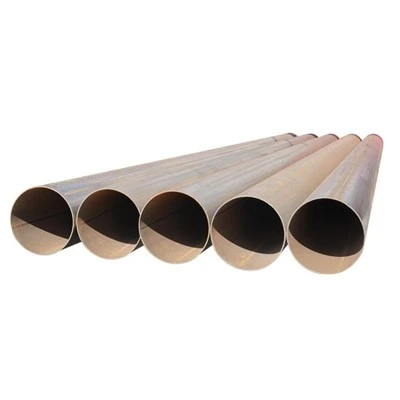
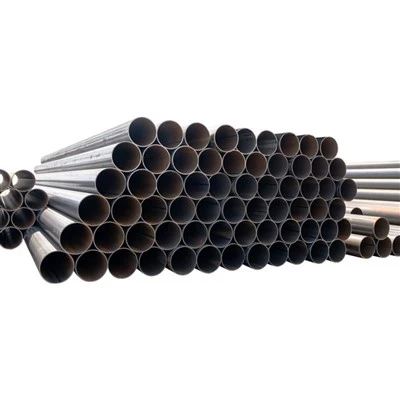
Electric Resistance Welded (ERW) steel pipes are a cornerstone of modern infrastructure, widely utilized in applications ranging from oil and gas gathering lines to water transmission, structural components, and mechanical tubing. The reliability and safety of these applications hinge entirely on the integrity and performance of the ERW pipes. For manufacturers like Hebei Huayang Steel Pipe Co., Ltd., ensuring this integrity is not just a commitment but a rigorous, multi-faceted process of Quality Assurance (QA). So, how does Huayang implement comprehensive Quality Assurance in ERW pipe manufacturing to guarantee that every pipe delivers unwavering integrity and performance? This article delves into our stringent QA protocols, highlighting the critical steps and advanced technologies that set our ERW pipes apart.
The Imperative of Quality in ERW Pipes
ERW pipes are produced through a continuous process where a steel strip is formed into a tube and its edges are welded together using high-frequency electric current and pressure. While highly efficient, this process demands meticulous control to prevent defects that could compromise the pipe's strength and service life. Potential issues, if not rigorously controlled, include:
•Weld Line Defects: Lack of fusion, cold welds, inclusions, or cracks.
•Material Imperfections: Laminations, non-metallic inclusions, or surface defects in the raw material.
•Dimensional Deviations: Variations in diameter, wall thickness, ovality, or straightness.
•Mechanical Property Discrepancies: Inconsistent yield strength, tensile strength, or toughness.
To mitigate these risks, a robust QA system is indispensable.


Huayang's Comprehensive Quality Assurance Framework
At Hebei Huayang Steel Pipe Co., Ltd., our Quality Assurance in ERW pipe manufacturing is an integrated system that spans from raw material procurement to final product delivery. It adheres to international standards such as API 5L, ASTM, EN, and ISO 9001, ensuring consistency and excellence.
1. Raw Material Control: The Foundation of Quality
•Supplier Qualification: We partner only with reputable steel coil suppliers who meet stringent quality criteria and provide comprehensive material test reports (MTRs).
•Incoming Inspection: Each batch of steel coil undergoes thorough inspection, including chemical composition analysis, mechanical property testing (tensile strength, yield strength, elongation), and surface defect checks.
•Traceability: A robust traceability system ensures that every finished pipe can be traced back to its original steel coil, enabling full accountability.
2. In-Process Quality Control: Precision at Every Step
•Edge Preparation Monitoring: Continuous monitoring of edge trimming and forming processes to ensure clean, parallel edges for optimal welding.
•High-Frequency Welding (HFW) Parameter Control: Precise control over welding current, frequency, speed, and squeeze pressure. Automated systems adjust parameters in real-time to maintain consistent weld quality.
•Online Weld Seam Heat Treatment: For critical applications, our ERW lines are equipped with inline normalizing heat treatment facilities. This process refines the grain structure of the weld seam and heat-affected zone (HAZ), eliminating any potential hardness variations and ensuring uniform mechanical properties across the entire pipe body.
•Online Non-Destructive Testing (NDT):
•Ultrasonic Testing (UT): 100% of the weld seam is continuously scanned by advanced ultrasonic probes (e.g., phased array UT) immediately after welding and heat treatment. This detects internal and external weld defects such as cracks, lack of fusion, and inclusions.
•Eddy Current Testing (ECT): Often used in conjunction with UT to detect surface and near-surface defects.
•Magnetic Particle Inspection (MPI): For detecting surface discontinuities.
•Online Dimensional Monitoring: Continuous measurement of pipe diameter, wall thickness, and straightness to ensure adherence to specifications.
3. Post-Production Testing and Inspection: Final Verification
•Hydrostatic Testing: Every ERW pipe undergoes a hydrostatic test, where it is filled with water and pressurized to a level exceeding its maximum operating pressure. This confirms the pipe's leak-tightness and structural integrity under pressure.
•Mechanical Property Testing: Samples from each production lot are subjected to tensile tests, flattening tests, bend tests, and Charpy impact tests (for low-temperature applications) to verify mechanical properties.
•Metallographic Examination: Microscopic analysis of weld cross-sections to assess weld quality, grain structure, and HAZ characteristics.
•Dimensional Inspection: Final checks for length, end bevels, ovality, and straightness.
•Visual Inspection: Thorough visual inspection of internal and external surfaces for any defects or damage.
•Coating Inspection (if applicable): For FBE or 3LPE coated pipes, inspections include coating thickness, adhesion, holiday detection, and cathodic disbondment tests.
The Huayang Advantage: Technology, Expertise, and Certification
Hebei Huayang Steel Pipe Co., Ltd. combines cutting-edge manufacturing technology with a team of highly skilled engineers and quality control specialists. Our facilities are equipped with the latest NDT equipment and a certified laboratory to perform all necessary tests in-house. We hold numerous international certifications, including API 5L, ISO 9001, ISO 14001, and OHSAS 18001, demonstrating our unwavering commitment to quality, environmental management, and occupational health and safety.
By choosing Huayang's ERW steel pipes, clients are not just purchasing a product; they are investing in a solution backed by a comprehensive and transparent Quality Assurance system that guarantees superior integrity and reliable performance for their most critical projects.
Key Stages of Quality Assurance in ERW Pipe Manufacturing at Huayang
|
QA Stage |
Key Activities |
Purpose & Benefit |
|
Raw Material Control |
Supplier qualification, incoming inspection, MTR analysis, traceability. |
Ensures high-quality input materials, prevents downstream defects. |
|
In-Process Control |
HFW parameter control, online heat treatment, 100% online UT/ECT, dimensional monitoring. |
Detects and corrects deviations in real-time, ensures consistent weld integrity. |
|
Post-Production Testing |
Hydrostatic test, mechanical tests, metallographic exam, final dimensional/visual inspection. |
Verifies structural integrity, mechanical properties, and compliance to standards. |
|
Certification & Traceability |
Adherence to API 5L, ISO 9001, full product traceability. |
Provides independent verification of quality, enables accountability and trust. |
In conclusion, the integrity and performance of ERW steel pipes are paramount for the safety and longevity of pipeline infrastructure. Hebei Huayang Steel Pipe Co., Ltd. upholds the highest standards of Quality Assurance in ERW pipe manufacturing through a meticulous, multi-stage process that integrates advanced technology, skilled expertise, and rigorous testing. Our commitment ensures that every ERW pipe delivered is a testament to uncompromising quality, providing our clients with reliable and high-performing solutions for their diverse project needs worldwide.