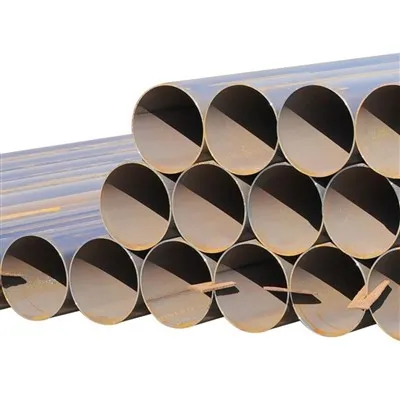
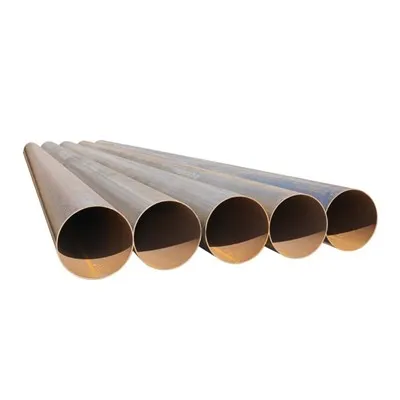
In the global oil and gas industry, the safe and efficient transportation of hydrocarbons relies heavily on high-quality pipeline systems. At the heart of these systems are steel pipes manufactured to stringent international standards. Among these, the API 5L Specification stands as the definitive benchmark for line pipe, dictating the manufacturing, testing, and material requirements for both seamless and welded pipes. For Electric Resistance Welded (ERW) steel pipes, adherence to API 5L is not merely a compliance issue but a fundamental guarantee of reliability and performance. This article delves into the critical aspects of the API 5L Specification for ERW steel pipes, exploring its various grades, key requirements, and its profound impact on industry standards. Hebei Huayang Steel Pipe Co., Ltd., a leading manufacturer of API 5L compliant ERW steel pipes, emphasizes the importance of understanding these specifications for ensuring pipeline integrity.
What is API 5L and Why is it Crucial for ERW Pipes?
The American Petroleum Institute (API) Specification 5L, titled "Specification for Line Pipe," is an internationally recognized standard that defines the requirements for the manufacture of two product specification levels (PSL1 and PSL2) of seamless and welded steel pipes for use in pipeline transportation systems in the petroleum and natural gas industries. Its primary purpose is to ensure the safety, reliability, and interchangeability of line pipe used in critical applications.
For ERW steel pipes, API 5L is crucial because it:
•Establishes Minimum Quality: Sets minimum acceptable standards for material properties, manufacturing processes, and testing.
•Ensures Performance: Guarantees that pipes can withstand the demanding conditions of oil and gas transmission, including high pressures, varying temperatures, and corrosive environments.
•Facilitates Global Trade: Provides a common language and set of requirements, enabling global procurement and project execution.
•Reduces Risk: Minimizes the risk of pipeline failures, which can have catastrophic environmental, economic, and safety consequences.
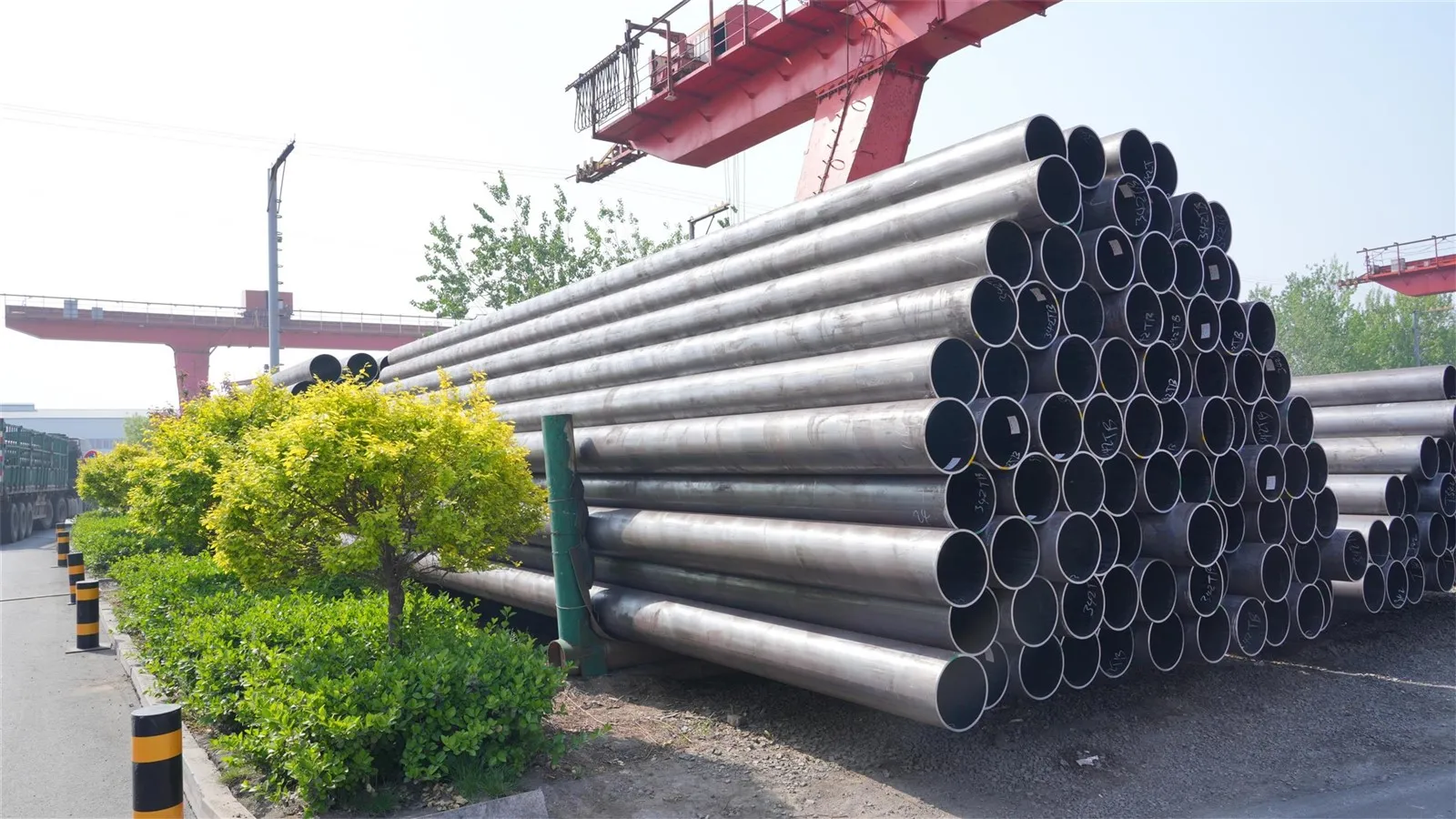

API 5L Grades for ERW Steel Pipes
API 5L specifies various grades of steel, each with defined chemical compositions and mechanical properties (yield strength, tensile strength, elongation). These grades are categorized under two Product Specification Levels (PSL):
PSL1 (Product Specification Level 1)
PSL1 is the standard quality level for line pipe. It includes a range of grades suitable for general pipeline applications. Common ERW grades under PSL1 include:
•Grade A, B: Lower strength grades, often used for less demanding applications.
•Grade X42, X46, X52, X56, X60, X65, X70: Higher strength grades, where 'X' denotes the minimum yield strength in ksi (e.g., X52 has a minimum yield strength of 52,000 psi).
PSL1 pipes have less stringent testing requirements compared to PSL2, but still ensure a reliable product for many applications.
PSL2 (Product Specification Level 2)
PSL2 represents a higher quality level with additional mandatory requirements for chemical composition, mechanical properties, and non-destructive testing. It is typically specified for more critical applications, such as sour service, offshore pipelines, or high-pressure transmission lines. PSL2 grades also include X42 to X80, with more tightly controlled properties. Key differences include:
•Chemical Composition: Tighter limits on carbon equivalent (CE) and other alloying elements to improve weldability and toughness.
•Mechanical Properties: More stringent requirements for impact toughness (Charpy V-notch testing) at specified temperatures.
•Non-Destructive Testing (NDT): Mandatory NDT of the weld seam (e.g., ultrasonic testing) and often the pipe body.
•Traceability: Enhanced traceability requirements.
Key Requirements for API 5L ERW Steel Pipes
Beyond grading, API 5L outlines comprehensive requirements that ERW pipe manufacturers must adhere to:
1.Manufacturing Process: Specifies that ERW pipes must be manufactured by the electric resistance welding process, ensuring a continuous, solid-state weld.
2.Chemical Composition: Detailed limits for carbon, manganese, phosphorus, sulfur, and other alloying elements. For PSL2, carbon equivalent (CE) limits are crucial for weldability.
3.Mechanical Properties: Minimum yield strength, tensile strength, and elongation values for each grade. PSL2 also includes impact toughness requirements.
4.Dimensions and Tolerances: Specifies permissible variations in outside diameter, wall thickness, length, straightness, and ovality.
5.Non-Destructive Testing (NDT): Mandatory NDT of the weld seam (e.g., ultrasonic testing) to detect internal and external defects. For PSL2, this is more rigorous and may include additional NDT methods.
6.Hydrostatic Testing: Every pipe must undergo a hydrostatic test to verify its leak-tightness and structural integrity under pressure.
7.Heat Treatment: For certain grades and PSL2, heat treatment of the weld seam (e.g., normalizing) is required to ensure uniform mechanical properties.
8.Surface Condition: Requirements for internal and external surface finish, free from harmful defects.
9.End Finish: Specifies requirements for pipe ends, including beveling for welding.
10.Marking and Documentation: Clear marking of pipes with grade, size, manufacturer, and other relevant information. Comprehensive documentation, including Mill Test Certificates (MTCs), is mandatory.
Huayang's Adherence to API 5L Standards
Hebei Huayang Steel Pipe Co., Ltd. is committed to manufacturing ERW steel pipes that not only meet but often exceed the stringent requirements of API 5L. Our production facilities are equipped with advanced HFW technology, inline heat treatment capabilities, and state-of-the-art non-destructive testing equipment, including 100% online ultrasonic testing of the weld seam.
We produce a full range of API 5L ERW grades, from Grade B to X70 (and higher upon request), in both PSL1 and PSL2. Our rigorous quality control system, certified to ISO 9001, ensures that every pipe delivered is fully compliant with the specified API 5L requirements, providing our clients with reliable and high-performance solutions for their critical pipeline projects worldwide.
Overview of API 5L Requirements for ERW Steel Pipes
|
Requirement Category |
Key Aspects |
Impact on Pipeline Performance |
|
Grades (PSL1/PSL2) |
Defines chemical composition and mechanical properties (e.g., X52, X65). |
Ensures pipe strength and suitability for specific pressure/stress conditions. |
|
Manufacturing Process |
Electric Resistance Welding (ERW) with solid-state weld. |
Guarantees consistent, high-quality weld seam without filler metal. |
|
Non-Destructive Testing |
100% weld seam UT, often pipe body NDT for PSL2. |
Detects internal/external defects, ensures structural integrity. |
|
Hydrostatic Testing |
Pressure testing to verify leak-tightness. |
Confirms pipe's ability to withstand internal pressure without leakage. |
|
Heat Treatment |
Weld seam normalizing for uniform properties (especially PSL2). |
Refines microstructure, eliminates hardness variations, improves toughness. |
|
Dimensional Tolerances |
Strict limits on OD, WT, length, straightness. |
Facilitates ease of installation, reduces field fit-up issues, optimizes flow. |
In conclusion, the API 5L Specification is more than just a standard; it is a critical framework that ensures the safety, reliability, and performance of ERW steel pipes in the demanding oil and gas industry. Hebei Huayang Steel Pipe Co., Ltd.'s unwavering adherence to these specifications, coupled with our advanced manufacturing capabilities and stringent quality control, positions us as a trusted partner for delivering API 5L compliant ERW steel pipes that meet the highest industry standards and contribute to the integrity of global energy infrastructure.