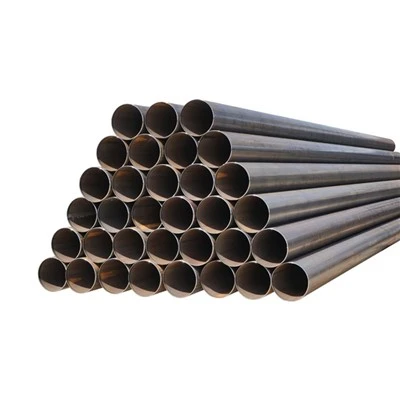

Foundation piling is one of the most critical stages of modern infrastructure construction. Whether supporting high-rise buildings, long-span bridges, offshore platforms, ports, airports, or industrial facilities, foundation piles must withstand enormous vertical loads, lateral forces, and complex geological conditions throughout decades of service. Choosing the appropriate steel pipe directly affects structural stability, construction efficiency, and project safety. Among large-diameter steel pipe products, LSAW steel pipe has become one of the preferred materials for foundation piling because of its outstanding structural strength, dimensional accuracy, and manufacturing reliability.
LSAW, or Longitudinal Submerged Arc Welded Steel Pipe, is manufactured by forming heavy steel plates into cylindrical shapes and welding the longitudinal seam using submerged arc welding technology. Compared with many other welded pipe products, LSAW steel pipe offers excellent roundness, thick-wall capability, and stable mechanical properties. These characteristics make it especially suitable for foundation piling applications where heavy structural loads and strict dimensional requirements are essential.
Huayang Steel Pipe manufactures LSAW steel pipes in accordance with ASTM A252, API 5L, EN standards, ASTM A671, ASTM A672, and GB/T 9711. The production range covers outside diameters from Φ406.4 mm to Φ1422.4 mm, wall thicknesses from 6 mm to 50 mm, and customized lengths suitable for various foundation engineering projects worldwide.
| Item | LSAW Steel Pipe for Foundation Piling |
|---|---|
| Manufacturing Process | Longitudinal Submerged Arc Welding |
| Diameter Range | Φ406.4–Φ1422.4 mm |
| Wall Thickness | 6–50 mm |
| Pipe Length | Up to 18 m |
| Manufacturing Standards | ASTM A252, API 5L, EN, ASTM A671, GB/T |
| Typical Steel Grades | Grade 2, Grade 3, X52, X60, L245, L360M |
| Main Applications | Foundation Piling, Bridges, Ports, Marine Structures, Buildings |
As global infrastructure investment continues to increase, large-diameter LSAW steel pipe has become an indispensable component in modern foundation engineering.
Why Is LSAW Steel Pipe Widely Used in Foundation Piling?
Foundation piles must safely transfer structural loads to stable soil or rock layers while maintaining long-term durability.
How Does Large Diameter Improve Structural Capacity?
Large-diameter steel pipe piles provide greater cross-sectional area and higher load-bearing capacity than smaller piles.
LSAW steel pipe can be manufactured in large diameters with thick walls, allowing engineers to design foundation systems capable of supporting heavy buildings, bridge piers, offshore facilities, and industrial plants.
Its excellent circularity also improves pile driving performance and structural alignment during installation.
Why Is Thick Wall Construction Important?
Foundation piles experience compressive loads, bending moments, and lateral forces generated by wind, earthquakes, traffic, and water currents.
Thicker wall sections improve structural rigidity and increase resistance to deformation during both installation and long-term service.
How Does LSAW Manufacturing Improve Structural Reliability?
The quality of the steel pipe directly influences foundation performance.
What Makes Plate-Based Manufacturing Advantageous?
LSAW steel pipe is produced from high-quality steel plates rather than steel coils.
This manufacturing method allows precise control of wall thickness, dimensional accuracy, and mechanical properties while producing large-diameter pipes suitable for demanding structural applications.
The submerged arc welding process creates a strong longitudinal weld with excellent consistency, contributing to reliable structural performance.
How Is Weld Integrity Verified?
Manufacturers perform multiple quality inspections throughout production.
Ultrasonic testing, radiographic inspection, hydrostatic testing, dimensional verification, and visual examination are commonly used to ensure that every LSAW steel pipe satisfies engineering specifications before shipment.


How Does Corrosion Protection Improve Foundation Durability?
Many piling systems operate in aggressive environments, including coastal regions, ports, river crossings, and industrial zones.
Which Protective Coatings Are Available?
Depending on project requirements, LSAW steel pipes can be supplied with Fusion Bonded Epoxy (FBE), 3PE, 3PP, 2PE, or customized coating systems.
Marine piling projects frequently require advanced external coatings to resist seawater corrosion, while buried foundations may utilize coating systems designed for underground service conditions.
Why Is Environmental Protection Important?
Corrosion can gradually reduce wall thickness and structural capacity over time.
Selecting appropriate coating systems according to soil conditions, groundwater chemistry, and marine exposure helps maximize foundation durability while reducing maintenance costs throughout the structure's service life.
How Do Manufacturers Ensure Consistent Product Quality?
Large infrastructure projects require thousands of steel pipe piles with consistent quality.
Which Quality Control Procedures Are Applied?
Quality management begins with inspection of raw steel plates to verify chemical composition and mechanical properties.
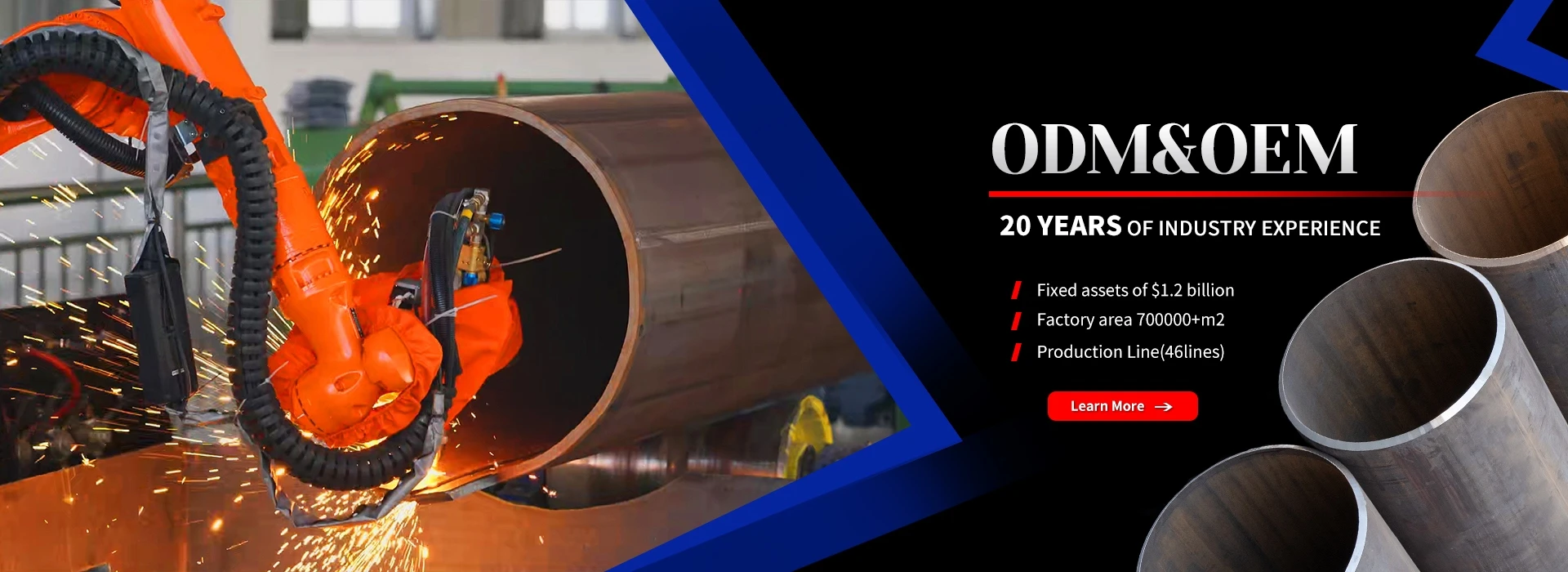
Throughout manufacturing, automated equipment monitors forming accuracy, welding parameters, dimensional tolerances, and expansion processes.
Finished products undergo comprehensive non-destructive testing and mechanical property verification before shipment, ensuring compliance with international standards.
Why Is Production Traceability Valuable?
Major engineering projects often require complete manufacturing records.
Material certificates, inspection reports, welding documentation, and testing records provide full product traceability, allowing contractors and project owners to verify quality throughout construction and future maintenance.
Project Reference
A representative application is the CNOOC Terminal Construction Project.
For this project, Huayang Steel Pipe supplied approximately 3,000 tons of LSAW steel pipe manufactured with L360M steel grade, specification 914 × 12 mm, for terminal infrastructure construction.
The project required steel pipes with excellent dimensional consistency, high structural strength, and reliable weld quality to support heavy marine infrastructure. Through precision plate forming, submerged arc welding, comprehensive quality inspection, and strict production control, the supplied LSAW steel pipes successfully met the engineering requirements and contributed to efficient project execution.
Read More:
Why Is HFW Steel Pipe The Preferred Choice For Oil, Gas, And Structural Applications?
How Does LSAW Steel Pipe Improve Safety And Efficiency in High Pressure Industrial Pipeline Systems?