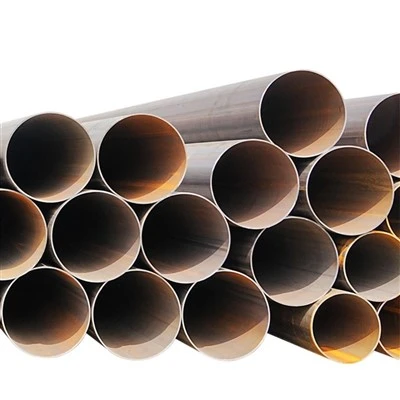
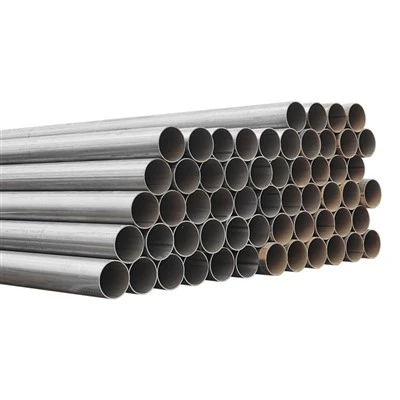
Materials in Submerged Arc Welded Steel Pipes
In the production and application of SAW (Submerged Arc Welded) steel pipes, the selection of steel materials is directly related to the pipeline's load-bearing capacity, service life, and engineering safety. Q235B, Q345B, and Q355B are three commonly used structural steel materials in engineering projects, widely employed in the manufacture of longitudinal submerged arc welded steel pipes and spiral submerged arc welded steel pipes.
Although they all belong to the carbon structural steel or low-alloy high-strength structural steel system, there are significant differences in strength grade, applicable working conditions, and engineering positioning. This article will systematically popularize knowledge about these three common SAW steel pipe materials from aspects such as material standards, performance indicators, application fields, and selection ideas.
I. Source and Standard System of Q235B, Q345B, and Q355B Materials
Q235B, Q345B, and Q355B are all structural steel materials in China's national standard system, mainly implementing the standards GB/T 700 Carbon Structural Steel and GB/T 1591 Low-Alloy High-Strength Structural Steel.
- Q235B is a common carbon structural steel, one of the most widely used basic steel materials, featuring good formability, weldability, and economy.
- Q345B is a low-alloy high-strength structural steel. Based on Q235, it achieves a significant improvement in strength through microalloying design, making it a mature and mainstream steel grade in engineering structures.
- Q355B is a new generation of low-alloy high-strength structural steel, an upgraded alternative to the original Q345B. It further optimizes strength, toughness, and stability, conforming to the development trend of high-performance materials required by current engineering projects.
II. Core Differences in Mechanical Properties of the Three Materials
During actual service, SAW steel pipes need to withstand multiple effects such as internal medium pressure, external soil load, temperature difference changes, and construction stress. Therefore, the mechanical properties of steel are an important basis for material selection.
Differences in Strength Grades
- Q235B has a yield strength of not less than 235MPa, belonging to medium-low strength steel, suitable for low-pressure and low-load working conditions.
- Q345B has a yield strength of not less than 345MPa, an increase of nearly 50% compared with Q235B, showing obvious advantages in pressure-bearing capacity and structural load-bearing.
- Q355B has a yield strength of not less than 355MPa, slightly higher than Q345B in strength grade, making it more suitable for high-load and high-safety-level engineering projects.
Tensile Strength and Plasticity
All three steels have good plasticity and ductility, meeting the requirements for steel pipe forming and welding processing. However, with the increase in strength grade, Q345B and Q355B maintain good plasticity while possessing higher tensile strength and structural stability.
Impact Toughness Requirements
In low-temperature environments or high-stress working conditions, the impact resistance of steel is particularly important. Q345B and Q355B usually have higher requirements for impact toughness, making them more suitable for cold regions, outdoor engineering, or high-safety-level projects.
III. Adaptability Differences in SAW Steel Pipe Manufacturing
SAW steel pipes are usually manufactured by rolling steel plates into shape and completing welding through internal and external submerged arc welding, which places high requirements on the weldability and formability of the base metal.
- Q235B has excellent weldability due to its low carbon content, stable welding process, and relatively low requirements for process control, making it suitable for mass engineering applications.
- Q345B and Q355B belong to the low-alloy steel system, with a carbon equivalent slightly higher than Q235B. However, high-quality welding can still be achieved through reasonable welding process design. Their weld strength matches well with the base metal, making them more suitable for pressure-bearing structures.
In the production of large-diameter and thick-walled SAW steel pipes, Q345B and Q355B have more advantages in comprehensive stability.


IV. Application Positioning of the Three Materials in Different Engineering Fields
Water Supply, Drainage, and Water Transmission Engineering
In urban water supply and drainage and water diversion projects, pipelines focus more on corrosion resistance life and economy, with relatively low operating pressure. SAW steel pipes of Q235B are widely used, and can meet long-term service requirements when combined with internal and external anti-corrosion systems.
Municipal Utility Tunnels and Structural Engineering
In fields such as comprehensive utility tunnels, steel structure pile foundations, and bridge foundations, which have high requirements for the load-bearing capacity of steel pipes, Q345B is the mainstream material selection, achieving a good balance between safety and cost.
Energy and Industrial Pipelines
In projects such as power plant circulating water and industrial fluid transmission, Q345B or Q355B materials are usually preferred to ensure long-term operational stability.
High-Load Foundation Engineering
In projects such as offshore piles, wind power foundations, and large bridges, Q355B has gradually become the mainstream material, meeting the requirements of complex working conditions with its higher strength and better toughness.
V. Engineering Ideas for Material Selection of SAW Steel Pipes
In practical engineering, choosing Q235B, Q345B, or Q355B is not only a material issue but also part of the systematic engineering design.
It is necessary to comprehensively consider multiple factors such as design pressure, structural load, service environment, service life, construction conditions, and project budget. For low-pressure and conventional water transmission projects, Q235B is an economical and practical choice; for medium-high load engineering, Q345B is a mature and reliable solution; and in high-safety-level or special working condition projects, Q355B has stronger engineering adaptability.
Conclusion
Although Q235B, Q345B, and Q355B all belong to the structural steel system, they have clear divisions of labor in terms of strength grade, engineering positioning, and application fields. In the manufacture and application of SAW steel pipes, the reasonable selection of steel materials is an important foundation for ensuring the safe operation of pipelines and engineering quality.
With the continuous improvement of material performance requirements for large-scale infrastructure and energy projects, high-strength and high-toughness structural steel is becoming an important development direction of SAW steel pipes. Correctly understanding the differences between the three materials helps engineering designers and purchasers make more scientific and reasonable selection decisions.