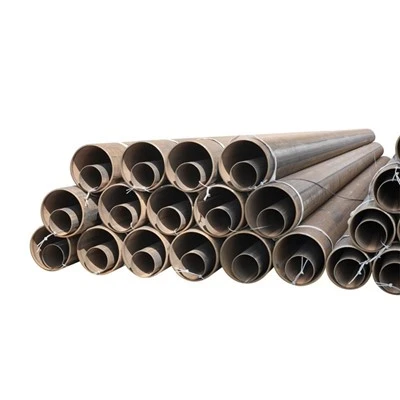
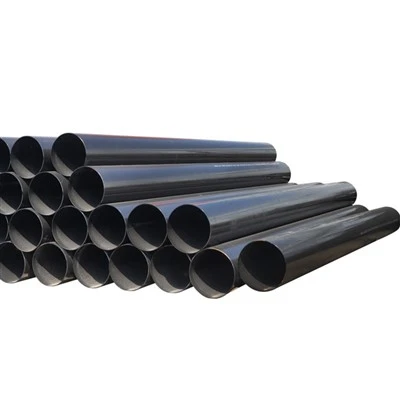
HFW steel pipe, or High Frequency Welded steel pipe, is widely used in modern pipeline engineering because it combines high production efficiency, consistent dimensions, reliable longitudinal welding, and good adaptability to different steel grades and service conditions. As a high-frequency welded product, HFW steel pipe is manufactured by forming steel strip into a cylindrical shape and joining the edges through high-frequency electrical energy. The process allows manufacturers to produce pipe continuously while maintaining controlled welding parameters.
For project owners, EPC contractors, and international steel pipe buyers, HFW steel pipe can be an efficient solution when the required diameter, wall thickness, steel grade, standard, and testing requirements are properly defined. It is used in oil and gas transportation, water transmission, industrial pipelines, structural applications, and utility systems. From the manufacturer's perspective, product performance depends not only on the welding process but also on raw material selection, forming accuracy, heat input, weld inspection, dimensional control, and final testing.
| Parameter | HFW Steel Pipe | Project Consideration |
|---|---|---|
| Manufacturing Method | High Frequency Welding | Continuous longitudinal welding |
| Outside Diameter | Approx. Φ48–Φ660.4 mm | Suitable for various pipeline systems |
| Wall Thickness | Approx. 2.0–22 mm | Selected according to design conditions |
| Typical Length | Approx. 6–27 m | Can be coordinated with project requirements |
| Steel Grades | Grade B, X42, X52, X60 and others | Based on applicable specifications |
| Standards | API 5L, ASTM, EN, GB/T and others | Selected according to project requirements |
| Main Applications | Oil, gas, water, industrial and structural | Broad engineering applications |
| Coating Options | FBE, 3PE, 3PP and others | Selected according to corrosion environment |
Why Does HFW Manufacturing Technology Improve Production Efficiency?
The HFW steel pipe manufacturing process starts with steel coil that is uncoiled, leveled, and prepared for forming. The strip passes through a series of forming rolls, gradually changing the flat material into a circular pipe shape.
How Does High Frequency Welding Work?
When the longitudinal edges of the formed strip approach each other, high-frequency electrical energy generates concentrated heat at the edges. The heated edges are then pressed together under controlled pressure to form a continuous longitudinal weld.
Compared with conventional production methods that may involve individual welding operations, HFW technology is particularly suitable for continuous production. Stable production parameters allow manufacturers to achieve high output while maintaining consistent pipe dimensions and weld characteristics.
What Makes HFW Different From Conventional Welding?
The key feature of HFW is the use of high-frequency electrical energy to generate heat rapidly and locally. The controlled heating zone helps achieve efficient edge joining without requiring conventional filler metal in the resistance welding process.
However, high production speed does not automatically guarantee product quality. Welding power, forming condition, strip edge quality, welding speed, squeeze pressure, and cooling conditions must all be properly controlled.
Why Is Raw Material Quality Critical for HFW Steel Pipe?
The performance of HFW steel pipe starts with the quality of the incoming steel coil. Chemical composition, yield strength, tensile strength, thickness tolerance, surface condition, and edge quality can all influence the stability of the forming and welding process.
How Does Steel Coil Quality Affect the Weld?
The strip edges become the welded area, so their condition has a direct influence on weld formation. Surface contamination, excessive edge defects, inconsistent thickness, or unsuitable mechanical properties may cause instability during high-frequency welding.
For this reason, manufacturers should verify raw material certificates and conduct appropriate incoming inspections before production.
Why Is Material Traceability Important?
Traceability allows each finished pipe to be connected with its original steel heat and production records. This is particularly important for pipeline projects requiring material certificates, inspection reports, and third-party verification.
A well-organized traceability system can also help manufacturers investigate production issues and provide reliable documentation to international customers.


Why Is HFW Steel Pipe Suitable for Oil and Gas Pipelines?
Oil and gas transportation is one of the important application areas for high-frequency welded pipe. When the product meets the applicable line pipe specification and project requirements, HFW steel pipe can provide an efficient solution for selected pipeline systems.
How Does API 5L Support HFW Applications?
API 5L is widely used for line pipe in pipeline transportation systems. Depending on the project, HFW steel pipe may be manufactured in grades such as Grade B, X42, X52, X60, or other specified grades.
The appropriate grade depends on design pressure, operating temperature, transported medium, installation conditions, and engineering calculations.
Why Should PSL Requirements Be Confirmed Before Production?
API 5L PSL1 and PSL2 have different technical requirements. PSL2 generally involves additional requirements for chemical composition, mechanical properties, toughness, testing, and traceability.
Buyers should clearly identify the required PSL level in the purchase specification. This allows the manufacturer to organize the correct raw material, production controls, inspection procedures, and quality documentation before manufacturing begins.
Why Is Weld Inspection Essential for HFW Steel Pipe?
The longitudinal weld is one of the most important quality areas of HFW steel pipe. Manufacturers therefore need to combine process control with appropriate inspection and testing.
How Can HFW Welds Be Tested?
Depending on the applicable standard and project requirements, manufacturers may use ultrasonic testing, visual inspection, hydrostatic testing, dimensional inspection, and mechanical testing.
Ultrasonic testing can help detect potential discontinuities in the welded area, while hydrostatic testing verifies the pressure resistance of the finished pipe.
How Does Process Control Support Inspection?
Inspection is most effective when combined with real-time production control. Welding power, line speed, forming condition, and other parameters should be monitored throughout production.
This approach helps reduce the possibility of batch-to-batch variations and supports stable product quality during large-volume orders.
Why Is Dimensional Accuracy Important in Pipeline Construction?
HFW steel pipe is commonly supplied in large quantities, and consistent dimensions can significantly influence field installation efficiency. Outside diameter, wall thickness, straightness, roundness, and pipe length are therefore important quality parameters.
How Does Dimensional Control Improve Field Fit-Up?
During pipeline construction, individual pipe sections must be aligned and joined. Consistent outside diameter and wall thickness can make fit-up more predictable and help reduce unnecessary field adjustments.
This is particularly valuable for projects where thousands of pipe sections are transported and installed under a fixed construction schedule.
How Does Pipe Length Affect Installation?
Longer pipe sections can reduce the number of field joints, potentially improving installation efficiency. However, transportation, lifting equipment, storage space, and local construction conditions must also be considered.
The final pipe length should therefore be determined according to both manufacturing capability and project logistics.
Why Is HFW Steel Pipe Used in Water and Industrial Systems?
In addition to oil and gas pipelines, HFW steel pipe can be used in water transmission, industrial utility pipelines, heating systems, mechanical applications, and other infrastructure projects.
How Does HFW Pipe Support Water Projects?
Water pipelines require appropriate diameter, wall thickness, steel grade, and corrosion protection. For buried pipelines, external coatings such as FBE, 3PE, or 3PP may be selected according to soil conditions and expected service life.
Internal epoxy coating may also be considered when the transported water or internal environment requires additional protection.
What Determines the Appropriate Coating?
The coating system should be selected according to soil characteristics, moisture, transported medium, operating temperature, installation method, and project design life.
A professional manufacturer can coordinate pipe production and coating requirements so that the finished product meets the complete project specification.
Why Should Buyers Evaluate HFW Steel Pipe Manufacturers Carefully?
When purchasing HFW steel pipe, buyers should evaluate more than the quoted price. Production capacity, raw material control, welding technology, inspection equipment, laboratory capabilities, certifications, coating facilities, traceability, packing, and international delivery experience can all affect project performance.
For large orders, production consistency is especially important. A capable manufacturer should be able to maintain stable quality across the entire production batch and provide complete inspection and material documentation.
Why Does HFW Project Experience Matter?
The Turkmenistan Kiyanly 1574 MW Combined Cycle Power Plant Project provides a practical example of large-scale welded steel pipe supply. Approximately 538 tons of ERW and LSAW steel pipe were supplied for the project, including API 5L Grade B PSL1 and ASTM A672 Grade B60 Class 22, with sizes ranging from approximately 508 to 1016 mm.
Although the project included different welded pipe manufacturing methods, it demonstrates the importance of coordinating steel grade, applicable standards, dimensions, welding quality, inspection, documentation, and delivery for major energy infrastructure. These requirements are also central to HFW steel pipe supply for international engineering projects.
Read More:
Why Is ERW Steel Pipe Suitable For Efficient And Reliable Pipeline Construction?
Why Is LSAW Steel Pipe Widely Used in Large Diameter Water And Energy Infrastructure?