


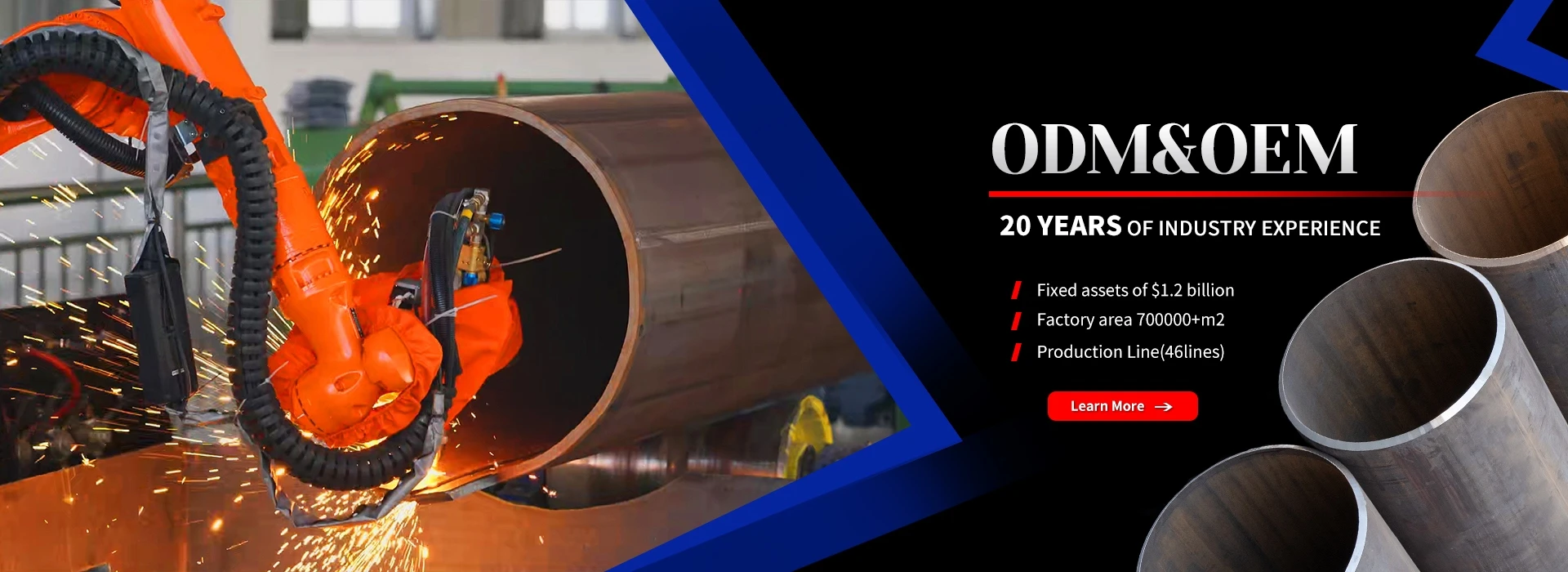

ERW steel pipe, or Electric Resistance Welded steel pipe, is widely used in modern pipeline and engineering projects because it combines efficient manufacturing, consistent dimensions, reliable longitudinal welding, and flexible material options. The production process forms steel strip into a cylindrical shape and joins the edges through electrical resistance heating, creating a continuous longitudinal seam. This manufacturing method makes ERW steel pipe a practical choice for many water, oil and gas, industrial, utility, and structural applications.
For project owners and contractors, selecting the right ERW steel pipe requires consideration of the complete operating environment. Pipe diameter, wall thickness, steel grade, applicable standard, weld quality, inspection requirements, coating system, and delivery conditions all influence the suitability of the final product. From a manufacturer's perspective, stable raw material quality and precise process control are equally important for maintaining consistent performance throughout a large production order.
| Parameter | ERW Steel Pipe | Typical Project Consideration |
|---|---|---|
| Manufacturing Method | Electric Resistance Welding | Continuous longitudinal seam welding |
| Outside Diameter | Approx. Φ48–Φ660.4 mm | Suitable for various pipeline systems |
| Wall Thickness | Approx. 2.0–22 mm | Selected according to design requirements |
| Length | Approx. 6–27 m | Can be coordinated with project needs |
| Standards | API 5L, ASTM, EN, GB/T and others | Depends on application and market |
| Main Applications | Oil, gas, water, industrial and structural | Broad engineering versatility |
| Coating | FBE, 3PE, 3PP and other systems | Provides additional corrosion protection |
Why Does the ERW Production Process Support Consistent Pipe Quality?
ERW steel pipe begins with steel coil or strip that is uncoiled, leveled, and prepared for forming. The strip passes through a series of forming rolls that gradually transform the flat material into a cylindrical shape. The edges are then brought together for high-frequency resistance welding.
Why Is High Frequency Welding Important?
During the welding process, high-frequency electrical energy generates localized heat at the edges of the formed strip. The heated edges are pressed together to create a continuous longitudinal weld. The controlled nature of this process allows manufacturers to produce large quantities of pipe with consistent production parameters.
After welding, the pipe passes through sizing equipment to achieve the required outside diameter and dimensional accuracy. It is then cut into specified lengths and subjected to inspection.
What Factors Influence the Welded Seam?
Welding power, production speed, edge preparation, squeeze pressure, forming accuracy, and raw material characteristics can all influence weld quality. Manufacturers therefore need to establish suitable production parameters according to the pipe diameter, wall thickness, and steel grade.
Why Is Dimensional Consistency Important for Pipeline Projects?
Dimensional accuracy has a direct influence on pipe handling, field welding, and installation efficiency. Consistent outside diameter, wall thickness, straightness, roundness, and pipe length help contractors maintain predictable installation conditions.
How Does ERW Pipe Geometry Affect Field Welding?
Pipeline construction involves connecting many individual pipe sections. Significant dimensional differences can make alignment and fit-up more difficult, potentially increasing field adjustment work.
Consistently manufactured ERW steel pipe can help contractors achieve more efficient joint preparation and installation, particularly when large quantities of pipe are supplied for a single project.
How Does Pipe Length Influence Construction?
Longer pipe sections can reduce the number of field joints, although transportation and lifting limitations must also be considered. ERW steel pipe can be produced in specified lengths according to manufacturing capabilities and project requirements.
For international projects, the selected pipe length should also take into account container or vessel transportation, storage, loading, unloading, and construction equipment.
Why Is ERW Steel Pipe Widely Used in Water Engineering?
Water transmission is one of the major applications of ERW steel pipe. Municipal water pipelines, industrial water systems, irrigation networks, utility pipelines, and other infrastructure projects may use ERW pipe when the selected specifications satisfy the design conditions.
What Should Engineers Consider When Selecting ERW Water Pipe?
Pipe diameter is closely related to required flow capacity, while wall thickness is influenced by pressure and installation conditions. Steel grade and applicable standards should also be selected according to the project specification.
Underground water pipelines may require external corrosion protection because steel surfaces can be exposed to moisture and corrosive soil.
Which Coating Systems Can Be Used?
Depending on the application, ERW steel pipe can be supplied with FBE, 3PE, 3PP, or other external coating systems. Internal epoxy coating can also be considered where the internal environment requires additional protection.
The coating should be selected according to soil conditions, transported medium, operating temperature, installation method, and expected service life.
Why Can ERW Steel Pipe Support Oil and Gas Pipeline Projects?
ERW steel pipe can be used in selected oil and gas transportation systems when the product meets the applicable line pipe specification. API 5L is one of the key international standards used for pipeline applications.
How Does API 5L Apply to ERW Steel Pipe?
API 5L specifies requirements for line pipe used in pipeline transportation systems. Depending on the project, ERW steel pipe may be supplied in Grade B and other specified grades according to the required mechanical and chemical properties.
The appropriate steel grade should be determined based on operating pressure, temperature, transported medium, design conditions, and engineering calculations.


Why Should Buyers Pay Attention to PSL Requirements?
API 5L PSL1 and PSL2 have different levels of technical requirements. PSL2 generally includes additional controls related to chemical composition, mechanical properties, toughness, testing, and traceability.
For energy projects, buyers should confirm the required PSL level before production so that the manufacturer can organize raw material procurement, manufacturing, inspection, and documentation accordingly.
Why Is Weld Inspection Essential for ERW Steel Pipe?
The longitudinal welded seam is a critical part of ERW steel pipe, particularly when the pipe is used for pressure transportation. Quality control therefore needs to cover the weld as well as the base material.
How Do Manufacturers Verify Weld Integrity?
Depending on the applicable standard and project requirements, manufacturers may use ultrasonic testing, visual inspection, hydrostatic testing, and other non-destructive examination methods.
Ultrasonic testing can help identify potential discontinuities in the welded area, while mechanical testing provides information about the strength and ductility of the material.
What Does Hydrostatic Testing Demonstrate?
Hydrostatic testing subjects the finished pipe to a specified internal pressure for a defined period. It helps verify pressure resistance and identify leakage or unacceptable deformation.
The exact testing requirements should follow the applicable product standard and approved customer specification.
Why Does Raw Material Quality Affect ERW Pipe Performance?
The quality of ERW steel pipe begins with the steel coil. Chemical composition, mechanical properties, thickness tolerance, surface condition, and edge quality can all affect production stability and final pipe performance.
How Does Steel Grade Influence Application?
Different steel grades provide different levels of strength and toughness. Pipeline projects select steel grade according to design pressure, temperature, transported medium, and applicable standards.
For manufacturers, maintaining consistent raw material properties also helps stabilize the forming and welding process.
Why Is Edge Quality Important?
The edges of the steel strip directly participate in the welding process. Surface contamination, poor edge geometry, or inconsistent preparation can affect heating and weld formation.
Proper inspection and preparation of the steel strip before forming are therefore important steps in ERW pipe production.
Why Should Buyers Evaluate the Manufacturer's Complete Capability?
When sourcing ERW steel pipe, buyers should not compare suppliers only by unit price. Production capacity, raw material control, welding technology, inspection facilities, certification, traceability, coating capability, and delivery experience can all influence the total project cost and schedule.
A qualified manufacturer should also be able to coordinate pipe dimensions, steel grade, testing, end preparation, marking, packing, and transportation requirements. This becomes particularly important for large orders where consistent quality must be maintained throughout the entire batch.
Why Does International Project Experience Matter for ERW Steel Pipe?
The TITAS natural gas transmission project in Bangladesh provides a practical example of ERW steel pipe supplied for energy infrastructure. Approximately 1,700 tons of ERW steel pipe were supplied in API 5L PSL1 Grade B, DN200–DN400 specifications.
For a natural gas transmission project, reliable material selection, controlled longitudinal welding, dimensional accuracy, inspection, hydrostatic testing, documentation, and delivery coordination all contribute to successful project execution. Such projects demonstrate why manufacturer capability should be evaluated together with product specifications when sourcing ERW steel pipe.
Read More:
Why Is ERW Steel Pipe A Practical Choice For Water, Structural, And Industrial Engineering?
What Makes LSAW Steel Pipe A Suitable Choice For Large Diameter Pipeline Projects?


