How Do Modern Irrigation Systems Depend on Reliable Pipelines?
Agricultural productivity relies heavily on efficient water management. As global demand for food continues to grow, farmers and agricultural developers are investing in modern irrigation systems that can deliver water consistently and efficiently across large cultivation areas. Whether used in crop farming, orchards, greenhouse operations, or livestock facilities, irrigation pipelines are critical components of agricultural infrastructure.
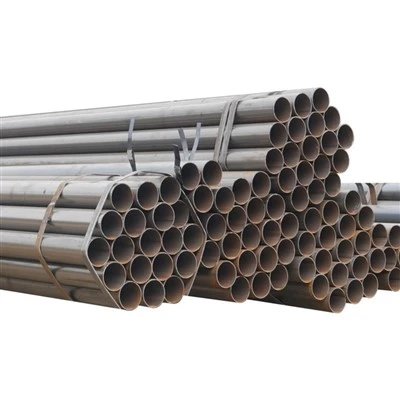
Among the various pipe materials available on the market, ERW steel pipe has become a popular choice for many irrigation projects because of its strength, durability, and cost-effectiveness. ERW steel pipe, manufactured through electric resistance welding technology, provides reliable performance while maintaining competitive project costs.
Unlike some alternative materials, ERW steel pipes can withstand mechanical loads, external impacts, and varying environmental conditions. This makes them particularly suitable for agricultural projects where pipelines may be installed above ground, buried underground, or exposed to changing weather conditions throughout the year.
| Irrigation Application | Benefits of ERW Steel Pipe |
|---|---|
| Main Water Transmission Lines | High strength and durability |
| Pumping Stations | Stable pressure performance |
| Agricultural Reservoir Connections | Reliable flow capacity |
| Irrigation Distribution Networks | Long service life |
| Livestock Water Systems | Corrosion protection options |
| Greenhouse Water Supply | Dimensional accuracy |
These advantages have helped ERW steel pipes become an important material in agricultural water infrastructure.


Why Are ERW Pipes Suitable for Large-Scale Water Distribution?
Large agricultural projects often require extensive pipeline networks covering significant distances. Water must be transported efficiently from reservoirs, rivers, wells, or pumping stations to cultivation areas without excessive pressure loss or maintenance requirements.
ERW steel pipes provide smooth internal surfaces that support efficient water flow. Their consistent wall thickness and dimensional accuracy help maintain stable hydraulic performance throughout the pipeline system.
In addition, ERW pipes are available in a wide range of diameters and wall thicknesses, allowing engineers to select products that match specific irrigation requirements. Whether the project involves a small farming operation or a regional agricultural development program, ERW steel pipes can be adapted to meet different operational demands.
Because irrigation systems often operate continuously during growing seasons, reliability becomes a key factor in material selection. ERW steel pipes offer dependable performance that helps ensure uninterrupted water delivery.
How Do Anti-Corrosion Coatings Improve Agricultural Applications?
Agricultural environments can expose pipelines to moisture, fertilizers, soil chemicals, and seasonal weather changes. These factors may accelerate corrosion if steel surfaces are not adequately protected.
To improve durability, ERW steel pipes are frequently supplied with galvanized coatings, FBE coatings, or 3PE anti-corrosion systems. These protective layers help prevent moisture penetration and reduce environmental damage to the steel surface.
Galvanized ERW pipes are particularly common in agricultural projects because they provide an economical solution for corrosion protection. For buried irrigation pipelines or systems operating in aggressive soil conditions, advanced coatings such as 3PE may offer additional long-term benefits.
Effective corrosion protection helps reduce maintenance costs, extend service life, and improve overall project economics.
How Does ERW Pipe Support Sustainable Agriculture?
Sustainability has become a major focus in modern agriculture. Efficient water utilization, reduced maintenance requirements, and long-lasting infrastructure all contribute to more sustainable farming operations.
ERW steel pipes support these goals by providing reliable transportation of water with minimal leakage risk. Their durability helps reduce the frequency of pipeline replacement, lowering material consumption over the long term.
Because ERW manufacturing utilizes steel coils efficiently, production processes can also contribute to resource optimization. Combined with the recyclability of steel, this makes ERW pipes an environmentally responsible choice for many agricultural infrastructure projects.
As water conservation becomes increasingly important worldwide, durable pipeline systems will continue playing a critical role in supporting sustainable agricultural development.
How Does Huayang Steel Pipe Serve Agricultural Infrastructure Projects?
Huayang Steel Pipe manufactures ERW steel pipes for water transportation, irrigation systems, industrial infrastructure, and municipal engineering projects worldwide.
The company produces ERW pipes according to international standards and offers customized solutions based on project requirements. Different diameters, wall thicknesses, steel grades, and anti-corrosion coatings can be supplied to meet specific agricultural applications.
Strict quality control procedures ensure consistent product performance, dimensional accuracy, and long-term reliability. Huayang's products have been supplied to various infrastructure projects across international markets, supporting efficient water transportation and agricultural development.
Conclusion
ERW steel pipe has become an important component of modern agricultural irrigation systems due to its strength, reliability, and cost-effectiveness. Its ability to support efficient water distribution, resist environmental challenges, and provide long-term durability makes it a practical choice for agricultural infrastructure projects.
As farming operations continue adopting modern irrigation technologies, ERW steel pipes will remain a valuable solution for supporting efficient and sustainable agricultural development.