Why Has ERW Steel Pipe Become So Widely Used?
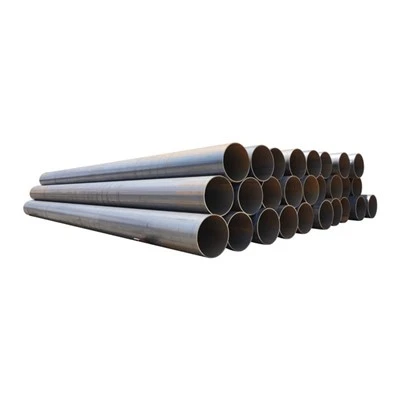
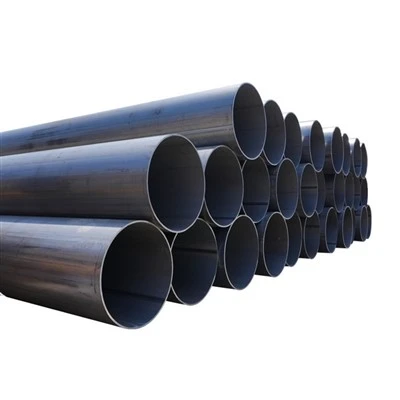
ERW steel pipe, short for Electric Resistance Welded steel pipe, is one of the most widely used welded steel pipe products in the global market. Manufactured through a high-frequency resistance welding process, ERW pipes offer excellent dimensional accuracy, stable weld quality, high production efficiency, and competitive cost advantages. These characteristics have made ERW steel pipes an important material in numerous industries, ranging from oil and gas transportation to construction, water supply, and industrial infrastructure.
As global infrastructure investment continues to grow, the demand for reliable and cost-effective pipeline solutions is increasing. ERW steel pipes have gained widespread acceptance because they provide a balance between performance and economy. Modern manufacturing technologies have significantly improved weld seam integrity and overall pipe quality, allowing ERW products to be used in increasingly demanding applications.
Today, ERW steel pipes are produced according to various international standards such as API 5L, ASTM A53, ASTM A500, EN10219, and other project-specific specifications. Their versatility enables them to serve multiple industries while maintaining stable long-term performance.
| Industry Sector | Typical ERW Steel Pipe Applications |
|---|---|
| Oil & Gas | Gathering lines, low-pressure transmission |
| Water Supply | Municipal water pipelines |
| Construction | Structural columns and supports |
| Fire Protection | Sprinkler and firefighting systems |
| Industrial Facilities | Utility and process pipelines |
| Agriculture | Irrigation and drainage systems |
| Mechanical Engineering | Equipment fabrication and frameworks |
These diverse applications demonstrate why ERW steel pipe remains one of the most important products in modern engineering projects.


How Is ERW Steel Pipe Used in Water Transmission Projects?
One of the largest application areas for ERW steel pipe is water transportation infrastructure. Municipal water supply systems, industrial water pipelines, irrigation networks, and wastewater treatment facilities all require reliable pipe systems capable of long-term operation.
ERW steel pipes are particularly suitable for these projects because of their smooth internal surface and dimensional consistency. The smooth bore helps improve flow efficiency while reducing friction losses during transportation. This can contribute to lower pumping costs and improved operational performance.
For underground installations, ERW steel pipes are often supplied with anti-corrosion coatings such as galvanized, FBE, or 3PE systems. These protective coatings help extend service life and reduce maintenance requirements in challenging environments.
As governments continue investing in water infrastructure upgrades and urban development projects, ERW steel pipes remain a preferred choice for water transportation networks worldwide.
Why Are ERW Pipes Important in the Oil and Gas Industry?
Although large-diameter transmission pipelines often utilize LSAW steel pipes, ERW steel pipes play a significant role in many oil and gas operations.
Oilfields require extensive gathering systems to transport crude oil, natural gas, produced water, and auxiliary fluids between wells and processing facilities. ERW steel pipes are frequently used in these networks because they offer reliable performance and economic efficiency.
The high-frequency welding process creates a strong and consistent weld seam that supports safe operation under many working conditions. When combined with anti-corrosion systems such as FBE and 3PE coatings, ERW pipes can provide long-term durability in demanding energy environments.
Because of their competitive cost and manufacturing efficiency, ERW steel pipes are widely used throughout upstream and midstream oil and gas infrastructure projects.
How Does the Construction Industry Benefit from ERW Steel Pipes?
The construction industry is another major consumer of ERW steel pipes. Modern buildings, industrial facilities, warehouses, transportation terminals, and public infrastructure projects all require structural materials that offer strength, dimensional accuracy, and efficient installation.
ERW steel pipes are commonly used as structural columns, support frames, scaffolding systems, and foundation components. Their consistent dimensions simplify fabrication and assembly processes while ensuring reliable structural performance.
Compared with many alternative materials, steel pipe structures offer a favorable strength-to-weight ratio and flexible design possibilities. This makes ERW steel pipes particularly attractive for modern engineering and architectural projects.
As construction technologies continue advancing, the demand for high-quality ERW structural pipes remains strong across global markets.
Why Are ERW Pipes Commonly Used in Fire Protection Systems?
Fire protection systems require dependable pipeline networks capable of remaining operational for long periods while providing immediate performance during emergencies.
ERW steel pipes are widely used in sprinkler systems, firefighting water distribution networks, and industrial fire protection infrastructure. Their dimensional precision and reliable weld quality help ensure consistent system performance.
Galvanized ERW pipes are especially common in fire protection applications because the zinc coating helps prevent internal and external corrosion. This additional protection contributes to longer service life and reduced maintenance requirements.
Many commercial buildings, industrial plants, airports, logistics centers, and public facilities rely on ERW steel pipe systems to support their fire safety infrastructure.
How Are ERW Steel Pipes Applied in Industrial Facilities?
Industrial facilities depend on extensive utility systems for transporting water, compressed air, steam, gas, and various process fluids. ERW steel pipes provide an economical and reliable solution for many of these applications.
Manufacturing plants, power stations, petrochemical facilities, and mining operations frequently utilize ERW steel pipes because of their stable mechanical properties and compatibility with different coating systems.
The pipes can be customized according to project requirements, including diameter, wall thickness, steel grade, and surface treatment. This flexibility allows engineers to select suitable products for a wide range of industrial operating conditions.
As industrial modernization continues worldwide, ERW steel pipes remain an essential component of utility and process infrastructure.
How Does Huayang Steel Pipe Supply ERW Products for Global Projects?
Huayang Steel Pipe manufactures ERW steel pipes for customers across the oil and gas, water transportation, construction, industrial, and infrastructure sectors.
The company produces ERW pipes according to international standards including API 5L, ASTM, EN, and GB specifications. Various anti-corrosion solutions such as galvanization, FBE coating, and 3PE coating are available to meet different project requirements.
Strict quality control procedures are implemented throughout production, including weld seam inspection, dimensional verification, hydrostatic testing, and non-destructive testing. These measures help ensure reliable product performance and compliance with international engineering standards.
Huayang's ERW steel pipes are exported to numerous countries and support a wide range of infrastructure and industrial projects worldwide.
Conclusion
ERW steel pipe has become one of the most versatile products in modern engineering due to its combination of manufacturing efficiency, dimensional accuracy, and economic advantages. From water transmission and oilfield infrastructure to construction, fire protection, and industrial utility systems, ERW pipes serve a wide variety of applications across multiple industries.
As global infrastructure development continues expanding, ERW steel pipes will remain an important solution for projects requiring reliable performance, efficient installation, and long-term value.