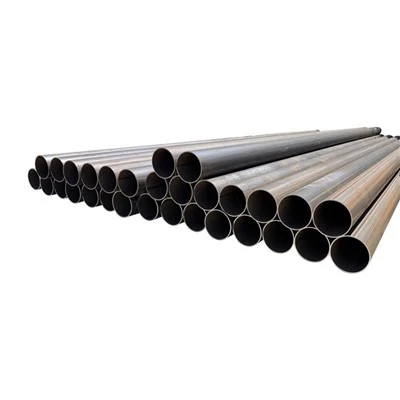
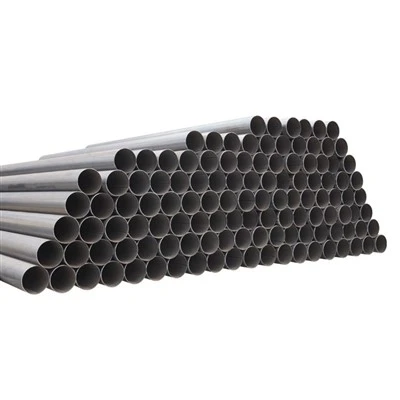
Galvanized steel pipes are widely used in water supply and drainage systems, fire protection projects, gas pipelines, building structures, and municipal pipe networks due to their excellent corrosion resistance, long service life, and stable mechanical strength. However, all metal materials undergo natural aging and performance degradation. When the zinc layer gradually fails and the base steel begins to corrode, the safety and reliability of the piping system decline significantly.
Failure to identify risk signs and replace pipes in a timely manner can not only affect project operational efficiency but also lead to serious consequences such as leakage, pipe burst, and contamination. Therefore, scientifically judging whether galvanized steel pipes have reached their replacement cycle is an important prerequisite for ensuring the long-term stable operation of piping systems.
1. Theoretical Service Life vs. Actual Service Life of Galvanized Steel Pipes
The theoretical service life of galvanized steel pipes is usually 15 to 30 years, depending on factors such as zinc layer thickness, service environment, transport medium, and construction quality.
Dry indoor environments: Slow corrosion rate, longer service life.
Humid environments, underground laying, coastal areas, or transport of corrosive media: Accelerated zinc layer consumption, shorter service life.
Thus, when a galvanized steel pipe system has been in operation for more than 15 years, it should enter a high-priority inspection cycle, with professional evaluation based on operating conditions.
2. Zinc Layer Shedding: The Most Intuitive Replacement Sign
The anti-corrosion core of galvanized steel pipes lies in the surface zinc layer. When intact, the zinc layer effectively isolates the steel base from air, moisture, and corrosive media, while providing electrochemical protection.
The following phenomena indicate significant zinc layer failure:
- Pipe surface color changes from silver-white to dark gray or yellowish-brown.
- Powdering, peeling, or flaky zinc loss on the surface.
- Local exposure of the black steel base.
- Obvious rust spots that continue to expand.
When the zinc layer starts to fall off in large-area, the steel pipe enters a rapid corrosion stage. Continued use will drastically increase leakage and burst risks, requiring an urgent replacement plan.
3. Pipe Leakage: A Critical Sign of Structural Failure
During long-term operation, both inner and outer pipe walls are subjected to medium erosion, pressure fluctuations, and environmental corrosion. Local corrosion penetrating the pipe wall forms leakage points.
Common manifestations:
- Persistent water leakage at joints.
- Water droplets or streaks appearing on the pipe surface.
- Rust streaks on the pipe surface.
- Significant pressure drop.
- Reduced water supply or transport efficiency.
If repeated repairs cannot fully resolve the issue, it often indicates severe internal corrosion, and local repairs are no longer sufficient to eliminate safety hazards. Replacing the entire pipe section is a more reasonable solution.
4. Severe Internal Scaling Affecting Transport Performance
During long-term water or fluid transport, galvanized steel pipes are prone to internal scaling, rust deposits, and sediments. These attachments narrow the effective diameter, increase flow resistance, and reduce transport efficiency.
In water supply systems, internal rust can lead to water discoloration, endangering water safety.
The following signs indicate severe pipe aging:
- Significantly reduced water flow.
- Increased pressure loss.
- Turbid water or rusty taste.
- Frequent blockages.
Such issues typically suggest that the zinc layer has largely failed, and the steel substrate is continuously to corrode. Early replacement of the piping system is recommended.
5. Reduced Pressure-Bearing Capacity: A Safety Hazard
As zinc layer deteriorates and the steel corrodes, the effective wall thickness of the pipe gradually decreases, leading to a reduction in pressure resistance.
In fire protection systems, gas transmission systems, and high-pressure water supply systems, instantaneous pressure shocks can easily cause aging galvanized steel pipes to bulge, crack, or burst, posing serious safety risks.
Immediate system evaluation and replacement are required if the following are found during routine inspections:
- Local bulging of the pipe wall.
- Fine cracks.
- Deformed joints.
- Abnormal vibration or noise during operation.


6. Replacement Cycle Reference for Different Application Scenarios
Different engineering scenarios have varying requirements for the service cycle of galvanized steel pipes. Reasonable replacement cycles help reduce system risks:
- Building water supply and drainage systems: Systematic evaluation recommended after 15 to 20 years of use.
- Fire protection piping systems: Key inspection recommended after approximately 15 years of use.
- Gas transport pipelines: Regular replacement in strict accordance with safety standards.
- Underground municipal pipe networks: Periodic evaluation based on corrosion environment.
By establishing a complete inspection and detection mechanism, issues can be detected before they escalate, preventing sudden accidents.
7. Preventive Replacement: A More Economical Choice
Compared to the costs of emergency repairs and downtime losses, preventive replacement offers higher economic and safety benefits.
Advance replacement planning can:
- Avoid sudden production or supply disruptions.
- Reduce emergency maintenance costs.
- Ensure continuous and stable system operation.
- Extend the overall project service life.
For large-scale engineering projects, a reasonable pipe renewal plan is an integral part of project management.
8. Choosing a Reliable Steel Pipe Manufacturer: The Foundation for Long-Term Stable Operation
The service life of galvanized steel pipes depends not only on later maintenance but also on manufacturing quality. Uniform zinc layer thickness, stable steel base material, and reliable welds directly affect the pipe's service cycle.
Professional steel pipe manufacturers excel in raw material control, process stability, and quality inspection systems. As a professional welded pipe manufacturer, Huayang Steel Pipe has mature production processes and a comprehensive testing system. All pipes undergo water pressure testing, dimensional inspection, and visual inspection before leaving the factory, ensuring stable and reliable long-term service capabilities and providing safe and reliable piping guarantees for various engineering projects.
Conclusion
Galvanized steel pipes are not maintenance-free permanent materials. Scientifically judging the replacement timing is crucial for ensuring the safe operation of engineering systems. By monitoring zinc layer status, operational performance, internal conditions, and pressure-bearing capacity changes, risk signs can be identified in a timely manner, preventing minor issues from escalating into major accidents.
Rational selection, standardized construction, regular inspection, and scientific replacement are essential to fully realize the value of galvanized steel pipes in engineering systems and provide a solid guarantee for long-term stable operation.