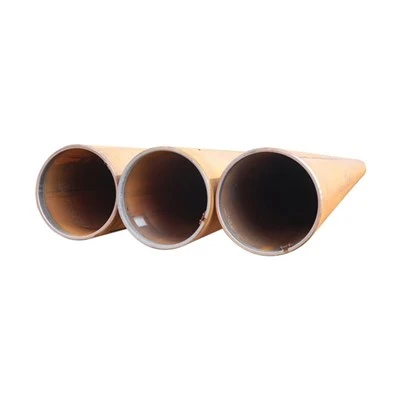
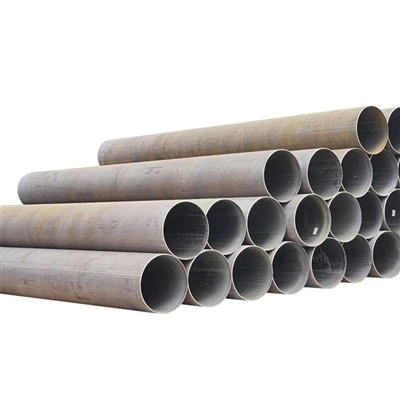
1. Concept and Origin of OGTC Steel Pipe
OGTC steel pipe is not a specific material grade but rather a general industry term for Oil & Gas Tubular and Casing products, mainly used to refer to various oil and gas-specific steel pipe products used in the oil and gas field. In international engineering and oil and gas projects, OGTC is more of a summary of application attributes, covering steel pipe types used in scenarios such as oil and gas transmission, wellbore structures, and gathering and transportation systems. Its core feature does not lie in the pipe type itself, but in their ability to meet the comprehensive requirements for strength, tightness, corrosion resistance, and safety under oil and gas working conditions.
In practical engineering, OGTC steel pipes often need to determine standards and materials according to specific usage positions, such as pipeline pipes for surface oil and gas transmission, casing pipes for oil well structure support, or structural steel pipes for gathering and transportation systems. Precisely because the application environment is complex, OGTC steel pipes usually implement more stringent technical specifications than ordinary structural steel pipes in the design and manufacturing stages.
2. Common Standards for OGTC Steel Pipe
The most common implementation standards for OGTC steel pipes in the international market are the API system, among which API 5L and API 5CT are the two most frequently used standards. API 5L is mainly used for oil and gas transmission pipelines, emphasizing the performance of steel pipes in pressure bearing, weld quality, and overall consistency; API 5CT is more used for oil well casing and tubing, with clearer requirements for the tensile strength, yield strength, and thread connection performance of steel pipes.
In addition to API standards, some OGTC steel pipe projects are also produced in combination with ASTM, ISO, or customized technical conditions of the owner. Such steel pipes usually need to go through a more complete inspection process, including chemical composition analysis, mechanical performance testing, non-destructive testing, and hydrostatic testing, to ensure their long-term stable operation under oil and gas working conditions.
3. Material Characteristics of Commonly Used OGTC Steel Pipes
Regarding materials, OGTC steel pipes mostly use medium and low carbon steel or low alloy high strength steel. Such materials have good welding performance and forming performance while ensuring strength. Common steel grades include API 5L Gr.B, X42, X52, X60, and J55, K55, N80 under the API 5CT system.
In the smelting and rolling processes of these steels, the control of impurity elements is relatively strict to reduce the risk of stress corrosion or hydrogen-induced cracking in oil and gas media. At the same time, according to different service environments, anti-corrosion coatings can be added or subsequent heat treatment can be performed to further improve the service life and safety factor of OGTC steel pipes.


4. Typical Applications of OGTC Steel Pipe
OGTC steel pipes are widely used in various links of the oil and gas industry. In ground systems, they are often used for long-distance transportation of crude oil, natural gas, and related media, bearing the dual tests of continuous pressure and complex environments. In the development of oilfields and gas fields, OGTC steel pipes also play an important role in wellbore structure support, with extremely high requirements for dimensional accuracy and material stability.
In addition, in gathering and transportation stations, processing stations, and supporting energy projects, OGTC steel pipes are also widely used in pipe rack structures and process pipelines. Although such applications are not directly in high-pressure wellbores, they still need to have reliable welding quality and long-term durability.
5. Quality Control and Production Requirements of OGTC Steel Pipe
Given the high sensitivity of oil and gas engineering to safety, OGTC steel pipes usually implement stricter quality control processes during production. From the entry of raw materials, chemical composition re-inspection and appearance inspection of steel plates or coils are required. After forming and welding, the steel pipes need to undergo non-destructive testing such as ultrasonic, radiographic, or magnetic particle testing to ensure that there are no defects affecting use in the welds and base metal.
Before leaving the factory, OGTC steel pipes generally need to undergo hydrostatic testing and dimensional re-inspection to verify their load-bearing capacity under design pressure. For specialized welded pipe manufacturers, stable process control and a complete inspection system are the key foundations to ensure that OGTC steel pipes meet the requirements of oil and gas projects.