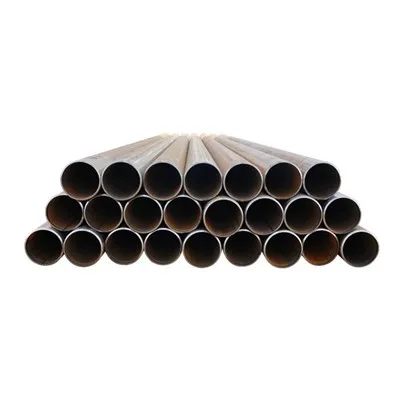
Why Do Industries Choose Carbon Steel Pipes Over Stainless Steel Pipes?
For many industrial buyers, project engineers, and procurement teams, one of the most common questions is why industries choose carbon steel pipes over stainless steel pipes. Although stainless steel offers excellent corrosion resistance, the reality is that carbon steel pipes are still more widely used in oil and gas, construction, mechanical engineering, agriculture, drilling, and energy sectors. Understanding the difference between carbon steel pipes and stainless steel pipes is essential for choosing the right material for long-term performance and safety. This article explains the main reasons industries continue to rely heavily on carbon steel pipes and compares the two materials in applications where performance, durability, cost, and pressure handling are critical.
Carbon steel pipes have remained the backbone of pipeline infrastructure worldwide because of their strength, affordability, and suitability for high-pressure and high-temperature environments. Stainless steel pipes are valuable in corrosive or sanitary conditions, but in many industrial scenarios they simply cost more without delivering proportional benefits. By examining mechanical behavior, welding performance, coating options, and lifecycle considerations, this article provides a comprehensive explanation of why carbon steel pipes are often selected over stainless steel pipes.
To further understand the differences between the two materials, you can also refer to our main guide:
The Difference Between Carbon Steel Pipes and Stainless Steel Pipes
What Advantages Make Carbon Steel Pipes the Preferred Choice in Heavy Industries?
A key reason industries choose carbon steel pipes is their high mechanical strength and ability to withstand demanding operating conditions. Carbon steel, especially medium- and high-carbon grades, offers superior tensile strength and excellent resistance to shock, vibration, and pressure fluctuations. These properties make carbon steel pipes indispensable in power plants, oil fields, refineries, and structural applications.
In contrast, stainless steel-although strong-focuses more on corrosion performance rather than maximum pressure capacity. When high strength is required, stainless steel becomes significantly more expensive, which impacts large-scale projects with long pipeline distances.
Carbon steel is also easy to weld and fabricate, which reduces installation time and labor costs. It can be threaded, grooved, bent, or welded using standard industrial equipment without the need for special filler materials. Stainless steel welding requires expert techniques to prevent chromium carbide precipitation, which makes installation more complex.
In industries such as petroleum and gas transmission, carbon steel is preferred because it handles pressure and temperature swings, can be coated for corrosion protection, and is far more cost-effective.
How Do Carbon Steel and Stainless Steel Perform in Harsh Industrial Environments?
Performance in harsh environments largely depends on how each material reacts to pressure, heat, corrosive media, mechanical loads, and environmental exposure.
Carbon steel excels in environments involving:
- high internal pressure
- elevated temperatures
- mechanical shock
- underground installation
- structural load bearing
- long-distance pipelines
- abrasive or erosive media
In these cases, corrosion can be controlled through external coatings, galvanizing, epoxy linings, or cathodic protection systems, making carbon steel both durable and economical.
Stainless steel, on the other hand, is chosen when:
- constant moisture exposure occurs
- sanitary or hygienic processing is required
- chemical or acidic media are present
- aesthetic appearance is important
- high corrosion resistance outweighs cost
- the environment contains chlorides or acids
However, stainless steel becomes significantly more expensive in thicker wall schedules required for industrial pressure handling. This is another reason carbon steel dominates high-pressure sectors.
The table below compares environment suitability:
Carbon Steel vs Stainless Steel Environmental Performance
| Environment Type | Carbon Steel Pipe Performance | Stainless Steel Pipe Performance |
|---|---|---|
| High Pressure | Excellent | Good only in thick-wall grades |
| High Temperature | Excellent | Very good |
| Corrosive Chemicals | Requires coating | Excellent |
| Underground | Very good with coating | Moderate |
| Outdoor Weather | Requires coating | Excellent |
| Sanitary Applications | Moderate | Excellent |
| Long-distance Pipelines | Excellent | Expensive |
Carbon steel clearly outperforms stainless steel in many heavy-duty scenarios, particularly where structural strength and cost control are priorities.


Why Are Carbon Steel Pipes More Cost-Efficient for Large Infrastructure Projects?
Cost remains one of the most influential factors. Carbon steel pipes typically cost 3 to 10 times less than stainless steel pipes of similar size and schedule. For large-scale pipeline installations, the cost difference can be massive.
Carbon steel offers:
- lower raw material cost
- lower welding and fabrication cost
- lower coating and installation cost
- reduced maintenance when properly protected
- cheaper transportation due to lower-grade alloying elements
For a project requiring kilometers of pipeline-such as district heating, water transport, LNG facilities, or oil fields-stainless steel becomes economically unfeasible unless corrosion resistance is critically required.
Because carbon steel is strong, affordable, and adaptable to coatings, industries choose it for long-distance and high-volume pipeline networks.
Which Industries Benefit the Most from Carbon Steel Pipes?
Carbon steel pipes are widely used in:
- Oil and gas pipelines
- Refinery units
- Petrochemical plants
- Boilers, heaters, and pressure vessels
- Mechanical and structural applications
- Power generation plants
- Water and sewage transport
- Offshore platforms
- Firefighting systems
- Agricultural irrigation
- Mining and drilling equipment
- Shipbuilding and marine engineering
These industries require high strength, shock resistance, weldability, and the ability to withstand extreme temperatures. Carbon steel pipes deliver these benefits at an economical cost, making them the most practical choice for heavy industries worldwide.
Stainless steel pipes remain essential but in more specialized niches such as chemical processing, pharmaceutical facilities, food production, and high-purity pipelines.
How Does Coating Improve Carbon Steel Pipe Performance?
One of the biggest advantages of carbon steel is its compatibility with various protective coatings such as:
- 3LPE coating
- Fusion-bonded epoxy
- Hot-dip galvanizing
- Zinc-rich painting
- Polyurethane coating
- Cement lining
- Bitumen coating
These coatings dramatically increase corrosion resistance, allowing carbon steel pipes to perform well even in aggressive environments.
Stainless steel does not typically use coatings because its corrosion resistance is internal, coming from chromium and nickel content. But coated carbon steel often provides better performance-to-cost ratio, especially underground or in marine environments.
Conclusion: Why Industries Continue Choosing Carbon Steel Pipes
Industries prefer carbon steel pipes over stainless steel pipes because of their unmatched combination of strength, cost efficiency, weldability, and pressure handling capability. While stainless steel is essential for corrosion-intensive or sanitary environments, carbon steel remains the dominant material for large-scale industrial and infrastructure projects worldwide.
For strength, durability, and affordability, carbon steel pipes remain the first choice in oil and gas, construction, energy, water systems, and heavy engineering applications.