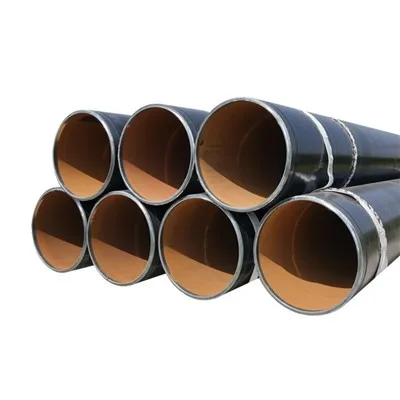
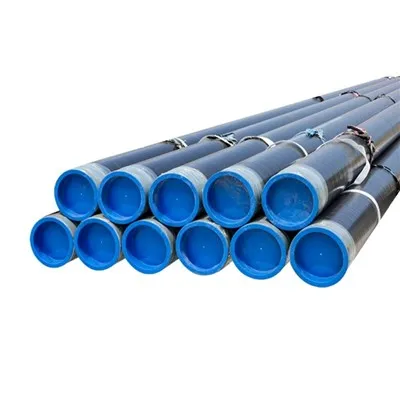
Electric Resistance Welded pipes, commonly known as ERW pipes, are among the most widely used forms of carbon steel pipe in modern infrastructure and industry. Manufactured through high-frequency resistance welding of steel strip, ERW pipes offer consistent wall thickness, reliable seam integrity, and cost-effective mass production capability. While previous discussions may focus on material composition or dimensional precision, this article explores ERW pipes from the perspective of real-world applications across different industries. Understanding where and why ERW carbon steel pipes are used helps clarify their practical engineering value.
Water Supply and Municipal Infrastructure
Urban Water Transmission Systems
One of the most common applications of ERW carbon steel pipes is in municipal water supply networks. Cities require reliable piping systems to transport potable water from treatment plants to residential, commercial, and industrial areas. ERW pipes are particularly suitable for small to medium diameters in these systems because they offer adequate pressure resistance, smooth internal surfaces, and ease of installation.
The consistent wall thickness of ERW pipes ensures predictable hydraulic performance. When combined with internal epoxy lining or protective coatings, they provide corrosion resistance suitable for long-term underground service. Their relatively light weight compared with thicker plate-formed pipes simplifies transportation and trench installation in urban environments.
Fire Protection and Drainage Systems
ERW carbon steel pipes are also widely used in fire sprinkler systems and building drainage networks. In fire protection systems, pipe reliability is critical because performance under emergency conditions must be immediate and dependable. ERW pipes manufactured under ASTM or equivalent standards provide sufficient strength to handle pressurized water during fire suppression.
For drainage and wastewater systems, ERW pipes offer mechanical durability and ease of joining through threading, grooving, or welding. Their adaptability to various connection methods enhances their versatility in building construction projects.
The following table summarizes common municipal applications of ERW pipes.
| Application Area | Typical Diameter Range | Pressure Level | Key Advantage |
|---|---|---|---|
| Potable Water Supply | 1/2 inch to 12 inch | Low to medium | Smooth flow and cost efficiency |
| Fire Protection | 1 inch to 8 inch | Medium | Reliable weld seam integrity |
| Drainage Systems | 2 inch to 24 inch | Low | Structural durability |
| Irrigation Networks | 1 inch to 16 inch | Low to medium | Easy installation |
These applications demonstrate the adaptability of ERW carbon steel pipe in urban infrastructure.
Oil and Gas Distribution
Low-Pressure Gas Transmission
In the oil and gas sector, ERW pipes are frequently used for low- to medium-pressure distribution lines. While large-diameter, high-pressure trunk pipelines may use alternative manufacturing methods, ERW carbon steel pipes are well suited for regional gas distribution networks and gathering systems.
Their longitudinal weld seam aligns with hoop stress direction, providing efficient resistance to internal pressure. Modern non-destructive testing ensures weld quality and compliance with API standards. For gas distribution companies, ERW pipes offer an economical balance between safety and cost.
Oil Transportation and Refinery Piping
Within refinery facilities and petrochemical plants, ERW carbon steel pipes are commonly used for transporting refined products and process fluids. Their compatibility with protective coatings and corrosion inhibitors enhances service life in controlled industrial environments. The ability to produce pipes in various grades allows adaptation to different temperature and pressure conditions within processing units.
Structural and Construction Applications
Building Framework and Support Columns
ERW carbon steel pipes are widely used in structural applications due to their consistent geometry and mechanical strength. In commercial and residential construction, circular hollow sections made from ERW pipe serve as columns, supports, and framework components. Their uniform cross-section ensures even load distribution and aesthetic consistency.
Structural engineers value ERW pipes for their predictable yield strength and compliance with standards such as ASTM A500. Because of their high dimensional accuracy, they integrate seamlessly with prefabricated steel assemblies.


Scaffolding and Temporary Structures
In construction sites, ERW pipes are frequently used in scaffolding systems and temporary support structures. Their moderate strength-to-weight ratio allows safe load-bearing capacity while remaining manageable for assembly and disassembly. Surface treatments such as galvanizing enhance corrosion resistance during outdoor exposure.
The following table outlines structural applications of ERW carbon steel pipes.
| Structural Application | Typical Grade | Key Property Requirement | Benefit of ERW Pipe |
|---|---|---|---|
| Building Columns | ASTM A500 | High yield strength | Dimensional consistency |
| Scaffolding | ASTM A53 | Moderate strength | Ease of handling |
| Mechanical Supports | API or ASTM grades | Uniform wall thickness | Stable load transfer |
| Fencing and Barriers | Mild carbon steel | Corrosion protection | Cost efficiency |
These structural uses highlight the versatility of ERW pipes beyond fluid transmission.
Mechanical and Industrial Manufacturing
Automotive and Machinery Components
ERW carbon steel pipes are widely utilized in automotive frames, drive shafts, and mechanical components. Their smooth internal and external surfaces make them suitable for precision machining. The uniformity of wall thickness supports balanced rotational components and structural stability.
Manufacturers benefit from the consistent supply and scalability of ERW production, enabling high-volume fabrication. Controlled mechanical properties ensure repeatable performance in dynamic applications.
Agricultural and Equipment Fabrication
In agricultural machinery and equipment manufacturing, ERW pipes are used for frames, supports, and hydraulic systems. Their adaptability to bending and welding processes allows customization for different equipment designs. Protective coatings further extend service life in outdoor and corrosive farming environments.
Advantages Driving Widespread Adoption
The broad application of ERW carbon steel pipes is largely due to their balance of performance and economic efficiency. Continuous strip-based production enables large output volumes at competitive costs. At the same time, advancements in weld seam inspection and heat treatment ensure mechanical reliability.
ERW pipes are also compatible with various joining methods including welding, threading, and mechanical coupling. This versatility simplifies integration into diverse engineering systems. Whether in municipal infrastructure, industrial facilities, or structural construction, ERW carbon steel pipes provide dependable service across a wide range of operating conditions.
Conclusion
The common applications of ERW pipes span water supply, gas distribution, structural engineering, manufacturing, and agricultural equipment. Their consistent dimensional accuracy, reliable weld seam integrity, and cost-effective production make them a practical choice for small to medium diameter carbon steel pipe systems.
By understanding how ERW carbon steel pipes function across different industries, engineers and project planners can better match material capabilities to operational requirements. From urban infrastructure to industrial manufacturing, ERW pipes continue to play a vital role in supporting modern development and construction.