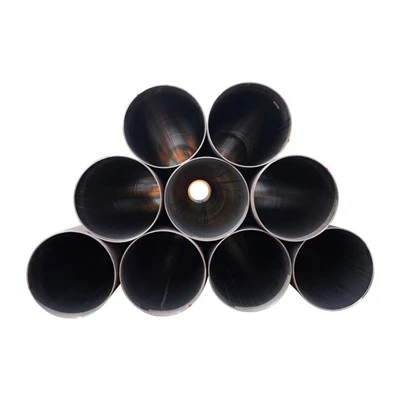
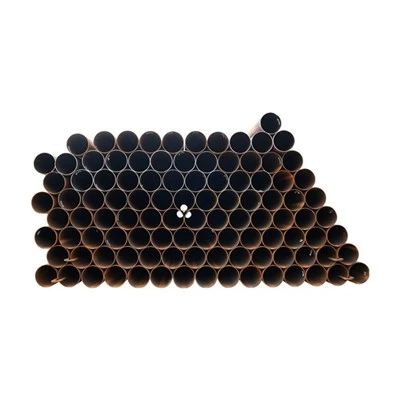
3PE coating steel pipe is one of the commonly used external anti-corrosion solutions for buried and exposed pipeline systems. The name 3PE refers to a three-layer coating structure consisting of fusion bonded epoxy powder, adhesive, and polyethylene. Each layer performs a different function, and the three layers work together to protect the steel substrate from moisture, soil, chemicals, and mechanical damage.
For long-distance oil and gas pipelines, water transmission systems, industrial pipelines, and infrastructure projects, corrosion protection is an important part of pipeline design. Understanding the structure of 3PE coating helps buyers and engineers evaluate whether the coating system is suitable for their operating environment and project requirements.
What Is the Structure of 3PE Coating?
The 3PE coating system is applied to the external surface of a steel pipe after appropriate surface preparation. Unlike a single-layer coating, 3PE combines the chemical protection and adhesion characteristics of epoxy with the mechanical and environmental protection provided by polyethylene.
The three layers are applied under controlled production conditions so that the finished coating forms a continuous protective system around the steel pipe. The performance of the final coating depends on the quality of the steel substrate, surface preparation, coating materials, application parameters, thickness, adhesion, and inspection.
| Coating Layer | Main Material | Primary Function | Typical Characteristics |
|---|---|---|---|
| First layer | Fusion bonded epoxy powder | Corrosion barrier and adhesion | Strong adhesion and chemical resistance |
| Second layer | Polymer adhesive | Bonds FBE and PE | Strong interlayer bonding |
| Third layer | Polyethylene | Mechanical and environmental protection | Impact, moisture and abrasion resistance |


What Does the First Layer of 3PE Do?
Fusion Bonded Epoxy Powder Primer
The first layer is fusion bonded epoxy, or FBE. It is applied directly to the prepared steel surface and acts as the primary corrosion-resistant layer.
Before FBE application, the steel pipe is normally abrasive blast cleaned to remove rust, mill scale, dust, oil, and other contaminants. The prepared surface provides the foundation for coating adhesion.
The steel pipe is then heated to the temperature specified by the coating procedure. Epoxy powder is electrostatically sprayed onto the heated surface. The powder melts, flows, and cures to form a continuous epoxy film.
FBE provides strong adhesion to the steel substrate and acts as an important barrier against moisture and corrosive substances. The required coating thickness depends on the applicable standard and project specification. It should not be assumed that one fixed thickness is suitable for every pipe size or service condition.
Why Is Surface Preparation Important?
Surface preparation directly affects the bonding between the epoxy layer and the steel substrate. If rust, oil, dust, or other contaminants remain on the surface, they can interfere with adhesion and create potential coating defects.
Abrasive blasting also creates a controlled surface profile that helps the coating mechanically anchor to the steel. For this reason, cleanliness and surface profile should be inspected before the coating material is applied.
What Does the Second Layer of 3PE Do?
Polymer Adhesive Layer
The second layer is a polymer adhesive, which connects the FBE primer with the polyethylene outer layer. This intermediate layer is essential because epoxy and polyethylene have different material properties.
During production, the adhesive is heated and applied through an extrusion system. It bonds to the epoxy layer while also providing a suitable surface for the polyethylene layer.
The quality of the adhesive layer influences the bonding strength between the different coating layers. Proper extrusion temperature, application speed, thickness, and contact with the underlying FBE layer must therefore be controlled during production.
Without an effective intermediate adhesive layer, the polyethylene outer coating cannot work as part of a stable three-layer system.
What Does the Third Layer of 3PE Do?
Polyethylene Outer Layer
The third and outermost layer is polyethylene, or PE. Its main purpose is to provide mechanical and environmental protection to the underlying coating layers.
During transportation, handling, installation, and backfilling, coated steel pipe may be exposed to impact, abrasion, moisture, and contact with soil. The polyethylene outer layer provides additional resistance against these conditions.
PE also has low water permeability and good resistance to many environmental conditions. Its mechanical properties make it suitable for protecting the more corrosion-sensitive epoxy layer beneath it.
The required PE thickness depends on the pipe diameter, coating specification, application, and applicable standard. Larger or more demanding projects may have specific requirements for impact resistance, coating thickness, adhesion, and other performance characteristics.
How Do the Three Layers Work Together?
The strength of 3PE lies in the complementary functions of its three layers rather than in any single material.
The FBE layer provides direct protection of the steel substrate and strong adhesion. The adhesive layer creates a reliable bond between the epoxy and polyethylene. The PE layer provides mechanical protection and resistance to moisture and environmental exposure.
This layered structure allows 3PE to address different corrosion risks within one coating system. The epoxy layer focuses on corrosion resistance and bonding, while the polyethylene layer protects the coating system from external mechanical and environmental conditions.
How Is 3PE Coating Applied to Steel Pipe?
Surface Preparation and Heating
The steel pipe first undergoes inspection and abrasive blast cleaning. After cleaning, the surface is heated to the temperature required by the FBE coating procedure.
Temperature uniformity is important because insufficient heating can affect powder fusion, while excessive heating may negatively influence coating properties. Production equipment must therefore maintain controlled heating conditions around the pipe.
Three-Layer Application
The FBE powder is applied first, followed by the polymer adhesive and polyethylene outer layer. These materials are processed under controlled conditions to achieve the specified coating structure.
After coating, the pipe is cooled in a controlled manner. The finished surface is then inspected before the pipe is released for subsequent handling, storage, or delivery.
What Quality Tests Are Used for 3PE Coating?
3PE coating quality cannot be judged by appearance alone. Different inspection methods are used to verify coating integrity according to the project specification.
| Inspection Item | Purpose |
|---|---|
| Visual inspection | Checks surface appearance and visible defects |
| Coating thickness measurement | Confirms coating thickness |
| Holiday detection | Identifies pinholes and discontinuities |
| Adhesion testing | Evaluates bonding performance |
| Impact testing | Checks resistance to mechanical impact |
| Peel or stripping testing | Evaluates interlayer bonding where specified |
Holiday detection is particularly useful because even a small discontinuity can expose the steel substrate to the surrounding environment. The testing voltage and acceptance criteria should be determined according to the coating specification and applicable standard.
Does 3PE Protect the Inside of the Steel Pipe?
No. 3PE is normally an external anti-corrosion coating system. If internal corrosion protection is required, a separate internal coating should be specified.
For water and industrial applications, internal protection may include internal epoxy powder coating or internal liquid epoxy coating, depending on the transported medium, water quality, operating conditions, and applicable requirements.
The choice between external and internal coating should therefore be made separately. A pipeline may require only external protection, only internal protection, or both.
Where Is 3PE Coated Steel Pipe Used?
3PE coated steel pipe is widely used in buried and exposed pipeline applications where external corrosion protection is required. Common applications include oil and gas transportation, water transmission, municipal infrastructure, industrial pipelines, and other long-distance pipeline projects.
For buried pipelines, the coating helps protect the steel surface from contact with soil moisture and other environmental factors. In water transmission projects, external protection is also important when steel pipes are installed underground or in other environments where moisture exposure is expected.
The suitability of 3PE depends on the actual project conditions. Operating temperature, soil characteristics, mechanical loads, installation method, transported medium, and design requirements should all be considered before selecting the coating system.
What 3PE Coating Capabilities Does Huayang Steel Pipe Provide?
Hebei Huayang Steel Pipe Co., Ltd. provides integrated steel pipe manufacturing and anti-corrosion processing for international projects. Its anti-corrosion processing range covers approximately Φ159–Φ1,626 mm, with wall thicknesses of 4–40 mm and pipe lengths of 8–16 m.
Huayang can provide several external and internal anti-corrosion solutions, including 3PE, 2PE, 3PP, 2PP, FBE, internal epoxy powder, and internal liquid epoxy. The company can also provide steel pipe deep processing, hydrostatic testing, pipe expansion, and other services according to project requirements.
This integrated capability allows buyers to coordinate steel pipe production, anti-corrosion treatment, testing, and related processing with one supplier, which can be particularly useful for large infrastructure and pipeline projects.
Why Is the 3PE Structure Important?
The three-layer structure is the key characteristic that distinguishes 3PE from many single-layer coating systems. Each layer has a specific role: FBE protects and bonds to the steel, adhesive connects the coating layers, and polyethylene provides external mechanical and environmental protection.
However, coating performance depends on the entire production process. Good-quality raw materials cannot compensate for inadequate surface preparation, incorrect heating, poor extrusion control, insufficient coating thickness, or inadequate inspection.
For global buyers, the 3PE specification should therefore be confirmed together with pipe diameter, wall thickness, steel grade, coating thickness, surface preparation requirements, inspection methods, and applicable standards. When these factors are properly controlled, 3PE coating provides an effective external corrosion protection solution for a wide range of steel pipeline applications.
Read More:
Core Application Areas Of Anti-corrosion Coated Steel Pipes
How Can LSAW Steel Pipe Improve The Performance Of Large Structural Projects?