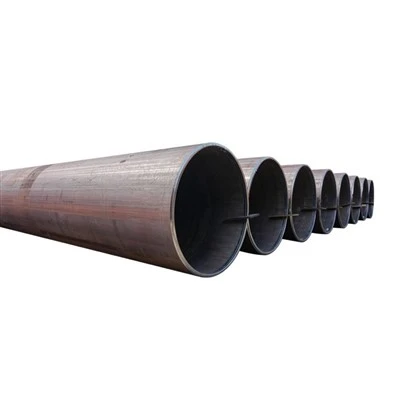
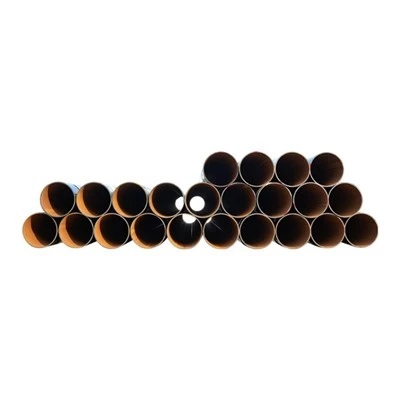
In various pipeline and structural engineering projects, steel pipes not only need to meet initial design requirements, but more importantly, maintain a stable and safe service state during long-term operation. As a widely used longitudinal welded steel pipe, the long-term service performance of ERW (Electric Resistance Welded) steel pipes has always been a key concern of project parties. This article systematically interprets the long-term operational stability of ERW steel pipes from perspectives such as structural characteristics, weld performance, environmental adaptability, and engineering practice.
I. Impact of ERW Steel Pipe Structure on Stability
ERW steel pipes adopt a longitudinal seam structure, with welds distributed along the pipe axis. This structure features a clear force-bearing path when subjected to internal pressure or axial loads, facilitating strength calculation and risk assessment.
During long-term operation, a significant advantage of the longitudinal seam structure is relatively uniform stress distribution. Especially in small and medium-diameter pipelines, complex stress superposition is less likely to occur. Compared with spiral welded pipes, which have longer welds and variable force directions, ERW steel pipes are more likely to maintain overall structural consistency under stable working conditions.
II. Decisive Role of Weld Quality in Long-Term Performance
The weld performance of ERW steel pipes is directly related to their service life. Welds formed by high-frequency resistance welding can achieve full fusion of the weld and base metal structure under reasonable process parameters.
During long-term service, high-quality welds are less prone to crack propagation and fatigue damage, and perform more stably especially in transmission systems with frequent pressure changes. On the contrary, welding defects such as inclusions, incomplete fusion, or weld overheating during welding often gradually emerge after several years of operation.
Therefore, mature ERW steel pipe production lines usually configure on-line eddy current testing, ultrasonic testing and other methods after welding to continuously monitor welds, thereby reducing long-term operational hazards.
III. Adaptability of ERW Steel Pipes Under Different Environmental Conditions
The impact of the engineering environment on the long-term stability of steel pipes cannot be ignored. ERW steel pipes perform stably under conventional temperature and pressure conditions, making them particularly suitable for projects with relatively controllable operating environments such as urban pipe networks and industrial plant pipelines.
In humid, buried, or corrosive medium environments, ERW steel pipes are usually used in combination with external anti-corrosion or internal coating treatments, such as three-layer PE (3PE), anti-corrosion paint, or lining treatment. Such supporting measures can effectively slow down the corrosion rate and extend the overall service life of the steel pipe.
Under reasonable material selection and protection conditions, ERW steel pipes can fully meet the engineering requirements of long-term continuous operation.


IV. Performance of ERW Steel Pipes Under Pressure Fluctuation Conditions
Many transmission systems are not always in a constant pressure state but have frequent start-stop and pressure fluctuation conditions. The performance of ERW steel pipes under such working conditions is closely related to their wall thickness design and weld consistency.
Uniform wall thickness and stable weld quality help the steel pipe maintain consistent deformation during repeated pressure application, reducing the risk of local fatigue damage. Compared with products with large manufacturing precision fluctuations, high-quality ERW steel pipes are more reliable in long-term pressure cycles.
This is also one of the important reasons why ERW steel pipes are widely used in municipal water supply, gas branch lines, and other projects.
V. Impact of Engineering Installation and Operation on Stability
The long-term stability of ERW steel pipes depends not only on the product itself but also on on-site construction and operation management. Good dimensional consistency makes it easier for ERW steel pipes to ensure coaxiality during butt welding and flange connection, reducing installation stress.
During the operation stage, regular inspections, anti-corrosion maintenance, and reasonable working condition control are also important factors to ensure the long-term operation safety of ERW steel pipes. Practice has shown that under standardized construction and reasonable maintenance conditions, ERW steel pipes can serve stably for many years with minimal performance degradation.
VI. Rational Judgment of ERW Steel Pipe Applicable Engineering Types
From the perspective of long-term operation, ERW steel pipes are very suitable for medium and low-pressure fluid transmission, building structure support, and general industrial pipeline systems. For ultra-high pressure or extreme working condition projects, comprehensive material selection is usually carried out in combination with other types of steel pipes.
This rational application method that matches engineering needs allows ERW steel pipes to give full play to their stable and reliable technical characteristics within their advantage range.
Conclusion
Overall, ERW steel pipes exhibit good stability in long-term engineering operation due to their clear structure, stable welds, and high dimensional consistency. Within the mainstream specification range of 76mm to 610mm, ERW steel pipes have formed a mature application system, which has been widely verified in various practical engineering projects.
Selecting manufacturers with stable production processes and strict quality control capabilities is an important foundation for ensuring the long-term operation safety of ERW steel pipes. Huayang Steel Pipe has long been engaged in the ERW steel pipe manufacturing field and continuously provides stable and reliable steel pipe product solutions for engineering projects.