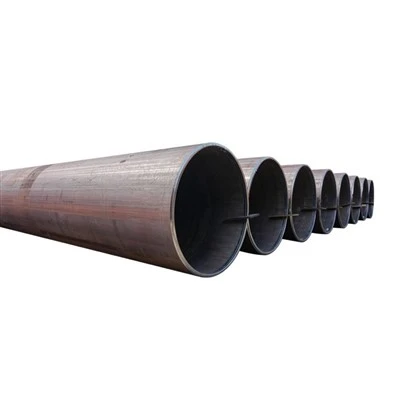
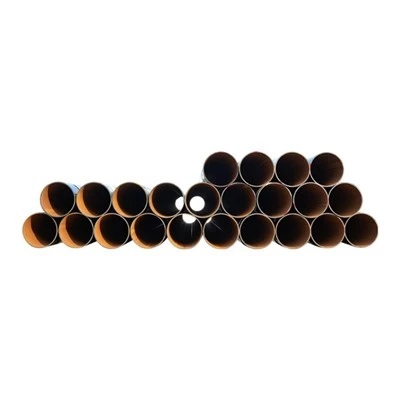
In pipeline engineering projects, while the intrinsic performance of steel pipes is undoubtedly critical, their adaptability during the construction and installation stages also has a direct impact on project schedules, construction costs, and long-term operational stability. As a widely used type of longitudinal welded pipe, ERW (Electric Resistance Welded) steel pipes demonstrate notable advantages in terms of construction friendliness and installation controllability. From the perspective of engineering implementation, this article systematically interprets the performance of ERW steel pipes throughout construction and installation processes.
I. Advantage of Forming Consistency of ERW Steel Pipes in the Construction Stage
ERW steel pipes are produced through continuous forming and high-frequency welding processes, resulting in good overall dimensional consistency and relatively stable control over outer diameter and wall thickness tolerances. This characteristic is particularly important in engineering construction.
In pipeline laying operations, stable steel pipe dimensions help avoid misalignment during joints, effectively reducing on-site adjustment work. For engineering projects requiring a large number of butt welds, this feature contributes to higher welding efficiency and lowers the risk of manual corrections and rework.
In addition, good roundness and straightness facilitate overall pipeline alignment control. Especially in long-distance laying or projects with slope requirements, it is easier to meet design specifications.


II. Impact of Weld Seam Structure on On-Site Installation
ERW steel pipes feature a straight longitudinal weld seam structure, with clear and distinguishable weld positions, which is of practical significance during the installation stage. Construction personnel can clarify the weld direction before installation, reasonably arrange stress-bearing positions, and avoid the weld being in an unfavorable stress condition.
When on-site secondary welding or joint repair operations are required, the short length and fixed direction of ERW steel pipe welds also facilitate inspection and quality control. Compared with steel pipes with long, spiral-distributed welds, the quality risks of ERW steel pipes during installation are easier to manage.
III. Adaptability of ERW Steel Pipes in On-Site Cutting and Processing
On-site cutting, beveling, and dimensional adjustments are common procedures in construction projects. ERW steel pipes have uniform material properties, with minimal differences between the weld seam micro-structure and the base metal. During cutting and processing, obvious hardness mutations are not easy to occur, which is conducive to maintaining stable processing quality.
During bevel preparation, the weld seam area offers a machining feel similar to that of other pipe sections, reducing tool wear and processing instability. In large-scale construction scenarios, this contributes positively to improved efficiency and reduced equipment wear.
IV. Controllability of ERW Steel Pipes in Welding Construction
From the perspective of on-site welding, ERW steel pipes have good controllability during butt welding. Their regular pipe ends and uniform wall thickness facilitate stable control of welding current and travel speed.
Under reasonable welding process parameters, ERW steel pipes can achieve well-formed welds with adequate fusion, reducing the likelihood of defects such as incomplete penetration and undercut. For contractors, this helps improve the first-pass acceptance rates and reduces the burden of repairs and re-inspections.
V. Comprehensive Advantages of ERW Steel Pipes in Installation Efficiency
In practical engineering applications, installation efficiency is often directly related to project cycle and comprehensive cost. Thanks to the high degree of standardization and stable supply cycles, ERW steel pipes can effectively align with project scheduling requirements.
During lifting and handling operations, ERW steel pipes exhibit uniform weight distribution and stable centers of gravity, making them well-suited for mechanized installation. This can effectively improve overall construction efficiency in municipal engineering, factory pipe networks, and long-distance pipeline construction.
VI. Key Considerations During the Construction Stage
Although ERW steel pipes have multiple advantages in construction and installation, some key issues still need to be noted in practical applications:
Strictly select the appropriate wall thickness and material in accordance with design requirements to avoid insufficient pressure-bearing capacity in the later stage due to improper selection.
During the construction process, pay attention to the protection of the weld area to prevent damage to the weld quality due to collision or improper operation.
After on-site welding is completed, carry out necessary inspections in accordance with specifications to ensure the safety of the overall pipeline system.
VII. Positioning of ERW Steel Pipes in Engineering Practice
Overall, ERW steel pipes demonstrate strong adaptability and stability during the engineering construction and installation stage, making them particularly suitable for projects with high requirements for construction efficiency, installation quality, and cost control.
In scenarios such as municipal pipeline networks, industrial pipelines, and factory supporting projects, ERW steel pipes are often used as one of the primary pipe materials, forming a reasonable match with other types of steel pipes to jointly build a safe and reliable pipeline system.
Conclusion
ERW steel pipes not only benefit from mature processes in the manufacturing link but also exhibit significant practical value during engineering construction and installation. Their stable dimensions, clearly defined weld seams, and strong controllability in processing and welding provide reliable guarantees for engineering implementation.
About Huayang Steel Pipe
As a steel pipe manufacturer with more than two decades of production experience, Huayang Steel Pipe has long focused on the process optimization and quality management of ERW steel pipes, and can provide ERW steel pipe product support with stable specifications and suitable for construction and installation for various engineering projects.