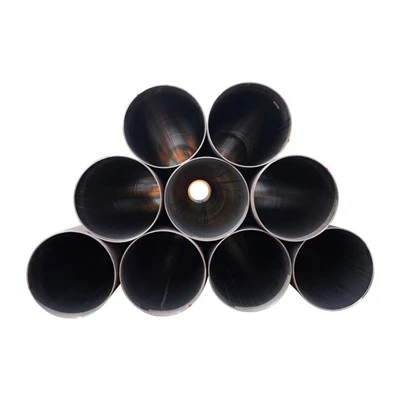
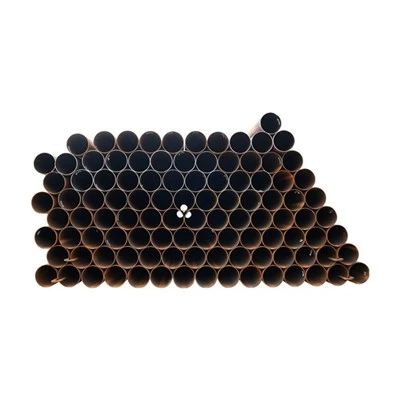
Large Diameter Longitudinal Submerged Arc Welded pipe, commonly referred to as LSAW carbon steel pipe, occupies a critical position in modern energy transmission infrastructure. Unlike small-diameter resistance welded products, LSAW pipes are designed for high-load, high-pressure, and long-distance applications where structural reliability and dimensional stability are non-negotiable. From crude oil trunk lines to offshore structural piles, the engineering logic behind LSAW carbon steel pipe lies in its controlled forming process, weld integrity, and adaptability to high-grade carbon steel materials.
Manufacturing Fundamentals of LSAW Carbon Steel Pipe
Plate Selection and Carbon Steel Characteristics
LSAW pipe production begins with high-quality carbon steel plate, typically produced by controlled rolling or thermomechanical controlled processing. The carbon steel used for LSAW applications is not merely defined by carbon content, but by a balance of carbon, manganese, and microalloying elements that provide strength, toughness, and weldability.
The plate thickness generally ranges from 6 mm to over 40 mm, enabling the production of large-diameter pipes with substantial wall thickness. Compared to coil-based processes, plate feeding allows greater control over chemical composition uniformity and mechanical consistency across the full width.
Below is a reference table for common carbon steel grades used in LSAW pipe manufacturing.
| Standard | Grade | Yield Strength MPa | Tensile Strength MPa | Typical Application |
|---|---|---|---|---|
| API 5L | X42 | ≥ 290 | 415–655 | Water, low-pressure oil |
| API 5L | X52 | ≥ 360 | 460–760 | Oil and gas pipelines |
| API 5L | X60 | ≥ 415 | 520–760 | High-pressure transmission |
| API 5L | X70 | ≥ 485 | 570–760 | Long-distance trunk lines |
| ASTM A252 | Gr.3 | ≥ 310 | ≥ 455 | Structural piling |
These grades demonstrate how carbon steel performance can be engineered to meet increasingly demanding transmission conditions.
Forming and Submerged Arc Welding Process
The LSAW process typically adopts UOE or JCOE forming methods. In both systems, the steel plate is gradually pressed into a cylindrical shape before longitudinal welding is performed by submerged arc welding. The submerged arc process uses granular flux to shield the weld pool, ensuring deep penetration and stable mechanical properties.
The key engineering advantage of LSAW lies in weld seam control. Because the seam is straight and longitudinal, stress distribution under internal pressure remains predictable. The weld can be executed from both inside and outside surfaces, achieving full penetration and minimizing defect probability.
After welding, pipes undergo expansion, ultrasonic testing, radiographic inspection, hydrostatic testing, and dimensional calibration to ensure compliance with API or ASTM standards.
Structural Performance and Mechanical Behavior
Strength, Toughness and Pressure Resistance
Carbon steel LSAW pipes are widely used in high-pressure transmission because their structural capacity scales effectively with wall thickness. Hoop stress resistance is directly proportional to thickness and yield strength, allowing engineers to design pipelines that withstand internal pressures exceeding 10 MPa in long-distance oil and gas systems.
Carbon steel's inherent ductility ensures that even at higher strength grades such as X70, adequate impact toughness can be maintained, especially under low-temperature service conditions. Charpy V-notch testing is commonly conducted to verify fracture resistance performance.


Dimensional Stability and Large Diameter Advantage
One of the defining characteristics of LSAW carbon steel pipe is its ability to achieve very large diameters while maintaining tight dimensional tolerance. Diameters commonly range from 406 mm to 1422 mm, with some custom production exceeding this range for offshore or structural projects.
The table below outlines typical dimensional ranges and engineering parameters for LSAW carbon steel pipes.
| Parameter | Typical Range |
|---|---|
| Outer Diameter | 406–1422 mm |
| Wall Thickness | 6–40 mm or higher |
| Length | 6–12 m standard |
| Weld Type | Longitudinal SAW |
| Testing Methods | UT, RT, Hydrostatic |
Such dimensional capability makes LSAW particularly suitable for trunk pipelines, cross-country transmission systems, and offshore platform foundations.
Corrosion Control and Surface Engineering
Carbon steel, while mechanically strong, requires corrosion protection in most transmission environments. LSAW pipes are often supplied with external anti-corrosion coatings such as 3LPE, 3LPP, or fusion bonded epoxy. Internal coatings may also be applied to reduce friction losses in fluid transport.
For buried pipelines, cathodic protection systems are frequently combined with external coatings to extend service life beyond 20 to 30 years. In marine environments, additional thickness allowances are sometimes incorporated into design to compensate for long-term corrosion rates.
The adaptability of carbon steel to coating systems enhances its lifecycle performance and reduces total project maintenance costs.
Engineering Applications Beyond Transmission
While oil and gas pipelines remain the most recognized use, LSAW carbon steel pipes also serve in structural and water engineering sectors. In piling applications, the large diameter and high wall thickness provide excellent axial and lateral load capacity. In water transmission, carbon steel's structural integrity allows it to perform under both pressure and soil load conditions.
Moreover, LSAW carbon steel pipes are increasingly used in renewable energy projects such as wind turbine monopiles, where structural reliability and large-diameter fabrication are essential.
Conclusion
LSAW carbon steel pipe represents a convergence of material science and welding engineering. By utilizing high-quality carbon steel plate and controlled submerged arc welding techniques, manufacturers can deliver large-diameter pipes capable of withstanding extreme pressure and structural loads.
Its predictable weld performance, dimensional precision, and compatibility with advanced anti-corrosion systems make LSAW carbon steel pipe a foundational product in global infrastructure development. As energy demand and infrastructure complexity continue to grow, the technical depth and structural reliability of LSAW carbon steel pipe ensure its continued relevance in modern engineering applications.