In urban gas pipe network construction, industrial gas transmission, and cross-regional natural gas pipeline projects, the safety of the pipeline system is always the primary consideration in engineering design. Given that gas media are highly flammable, explosive, and prone to leakage, any accidents can result in severe safety hazards. Therefore, the selection of gas pipeline materials must comply with strict technical standards and engineering specifications.
Carbon steel pipes have become one of the mainstream materials in gas transmission due to their excellent mechanical properties, mature manufacturing processes, and extensive engineering application experience. However, scientific and reasonable material selection in specific projects remains a key focus during the design, procurement, and construction phases.
From an engineering application perspective, this article systematically outlines the key selection considerations for carbon steel pipes used in gas transmission, helping project stakeholders better control the safety and reliability of gas pipeline systems.
1. Clarify the Operating Conditions of the Gas Pipeline
Before selection, it is essential to fully understand the actual operating conditions of the gas pipeline. Different transmission pressures, media, and laying environments require varying pipe properties.
Gas pipelines are generally classified into low-pressure, medium-pressure, and high-pressure systems. Urban branch lines and household pipelines are mostly low or medium-pressure, while urban trunk pipelines, industrial gas pipelines, and long-distance natural gas pipelines are typically medium-high pressure. Higher transmission pressure demands higher strength grades and weld quality for steel pipes.
Additionally, the composition of the gas medium (e.g., natural gas, coal gas, industrial gas) must be clarified, as different gases have varying corrosion resistance requirements. Furthermore, the laying method (buried, overhead, or in pipe galleries) affects the selection of the anti-corrosion structure.
2. Reasonably Select Steel Pipe Standards and Grades
Carbon steel pipes for gas transmission must comply with national or internationally recognized pipeline steel standards. The use of ordinary structural steel pipes instead of gas-specific pipes is strictly prohibited.
Commonly used standards in gas engineering include:
- GB/T 9711 Pipeline Steel Pipe Standard
- API 5L Pipeline Steel Standard
- ASTM A53 Steel Pipe Standard for Fluid Transportation
In terms of steel grade selection, common grades for gas pipelines include Grade B, X42, X52, and X60.
- Grade B and X42 are sufficient for most low and medium-pressure gas systems.
- For medium to high pressure gas trunk pipelines, X52 or higher grades are generally selected to ensure adequate pressure-bearing capacity and safety margins.
The selection of steel grades is not only related to pipeline pressure-bearing performance but also directly impacts project costs, requiring a reasonable balance between safety and economy.
3. Choose the Appropriate Manufacturing Process
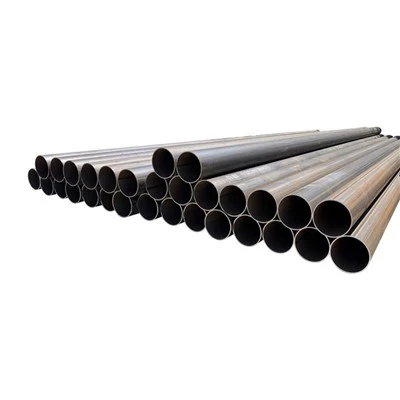
Carbon steel gas pipelines are mainly welded pipes, with common manufacturing processes including:
- ERW (Electric Resistance Welded) Steel Pipes: Suitable for low-medium pressure gas pipelines and urban gas branch systems, featuring high dimensional accuracy, smooth inner walls, stable weld quality, and high production efficiency.
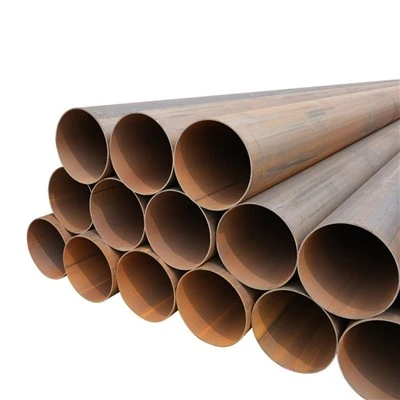
- LSAW (Longitudinal Submerged Arc Welded) Steel Pipes: Used for large-diameter, medium-high pressure gas trunk pipelines. Manufactured via steel plate forming and submerged arc welding, they offer high weld strength and excellent fatigue resistance, making them ideal for long-distance, high-pressure transmission projects.
Selection should be based on pipe diameter, pressure rating, and project scale to avoid safety hazards or unnecessary cost due to mismatched processes.
4. Determine the Appropriate Pipe Diameter and Wall Thickness
Pipe diameter and wall thickness directly determine transmission capacity and pressure-bearing capacity, serving as core parameters in selection.
- Pipe Diameter: Determined primarily through hydraulic calculations based on gas transmission demand, distance, and system pressure rating, ensuring sufficient gas supply while controlling reasonable flow rates.
- Wall Thickness: Calculated based on design pressure, steel grade strength coefficient, safety factor, and corrosion allowance. Gas engineering typically reserves a certain corrosion margin to ensure structural safety during long-term operation.
In practice, wall thickness is determined by integrating theoretical calculations, specification requirements, and engineering experience-neither too thin (to avoid compromising safety) nor excessively thick (to prevent unnecessary investment).
5. Consider the Anti-Corrosion System Design
Most gas pipelines are buried underground and operate in soil and electrochemical environments for long periods, with external corrosion being a major factor affecting service life.
Therefore, supporting anti-corrosion system design must be considered during the selection of carbon steel pipes for gas. Widely used anti-corrosion structures in engineering include:
- Three-layer polyethylene (3PE) anti-corrosion structure
- Fusion-bonded epoxy (FBE) powder anti-corrosion structure
- Double-layer epoxy anti-corrosion structure
Among these, 3PE anti-corrosion has become the mainstream solution for buried gas pipelines due to its excellent corrosion resistance, high mechanical strength, and long service life.
Additionally, gas pipelines should be used in conjunction with a cathodic protection system to form a complete corrosion protection system, ensuring long-term safe operation throughout the service life.
6. Ensure Steel Pipe Quality Control and Testing Systems
Gas pipelines are high-safety-grade projects with strict quality requirements. During selection, emphasis should be placed on manufacturers' quality control systems and testing capabilities.
Qualified carbon steel pipes for gas transmission should undergo at least the following tests:
- Chemical composition analysis
- Mechanical property testing
- Weld ultrasonic testing
- X-ray flaw detection
- Hydrostatic testing
- Dimensional and appearance inspection
Furthermore, steel pipes should be accompanied by complete factory quality assurance documents and test reports to ensure traceability of each pipe.


7. Comprehensive Consideration of Supply Capacity and Engineering Supporting Capabilities
Gas engineering often features tight construction schedules, large batches, and diverse specifications. Therefore, manufacturers' production capacity, delivery capabilities, and supporting service capabilities should be evaluated during selection.
Manufacturers with mature production lines, stable raw material supply systems, and sound logistics networks are better able to ensure smooth project progress, avoiding delays caused by unstable supply.
Conclusion
The selection of carbon steel pipes for gas is a systematic project that requires comprehensive evaluation from multiple dimensions, including operating conditions, standards and grades, manufacturing processes, pipe diameter and wall thickness, anti-corrosion systems, and quality control. Only through scientific selection in the design phase and strict checks in the procurement phase can a safe, stable, and reliable gas transmission system be truly established.
With the continuous advancement of urban gas construction and the improvement of natural gas transmission networks in China, carbon steel pipes for gas will continue to play a crucial role in energy transmission for a long time. Scientific selection is not only responsible for ensuring project quality but also the fundamental guarantee for public safety.