


How can a steel pipe manufacturer maintain consistent quality while handling large-volume orders? The key is not simply having more production lines, but establishing standardized processes across every stage of manufacturing. At Huayang Steel Pipe, multiple production lines operate under unified procedures, covering uncoiling, forming, welding, sizing, inspection, and finishing. This allows large batches of steel pipes to maintain consistent dimensions and stable performance while supporting reliable supply for major engineering projects.
Why Is Standardized Production Important for Large Steel Pipe Orders?
Large engineering projects often require hundreds or thousands of tons of steel pipes with the same specifications. In such projects, production capacity alone is not enough. The manufacturer must also ensure that pipes produced at different times and on different production lines remain within the required technical tolerances.
Standardized Processes Create Consistent Production
A standardized manufacturing process provides a common operating framework for production personnel and equipment. From raw material preparation to pipe forming, welding, sizing, testing, and finishing, each critical step follows defined procedures and quality requirements.
Consistency Starts with Process Control
Steel pipe quality can be affected by many production variables, including raw material condition, forming accuracy, welding parameters, dimensional control, and finishing operations. Standardized procedures help reduce unnecessary variations between production batches.
This becomes particularly important when an order is produced over several days or across multiple production lines. Instead of relying only on individual operator experience, a standardized system provides consistent technical requirements throughout the manufacturing process.
Large-Scale Production Does Not Mean Lower Precision
Mass production is sometimes associated with compromises in quality, but industrial steel pipe manufacturing requires the opposite approach. As production volume increases, process control becomes even more important.
For pipeline and infrastructure projects, differences in outside diameter, wall thickness, length, straightness, or weld quality can create difficulties during transportation, field installation, and subsequent pipe joining. Maintaining dimensional consistency across large quantities therefore becomes a fundamental part of production management.
How Does Huayang Steel Pipe Manage High-Volume Production?
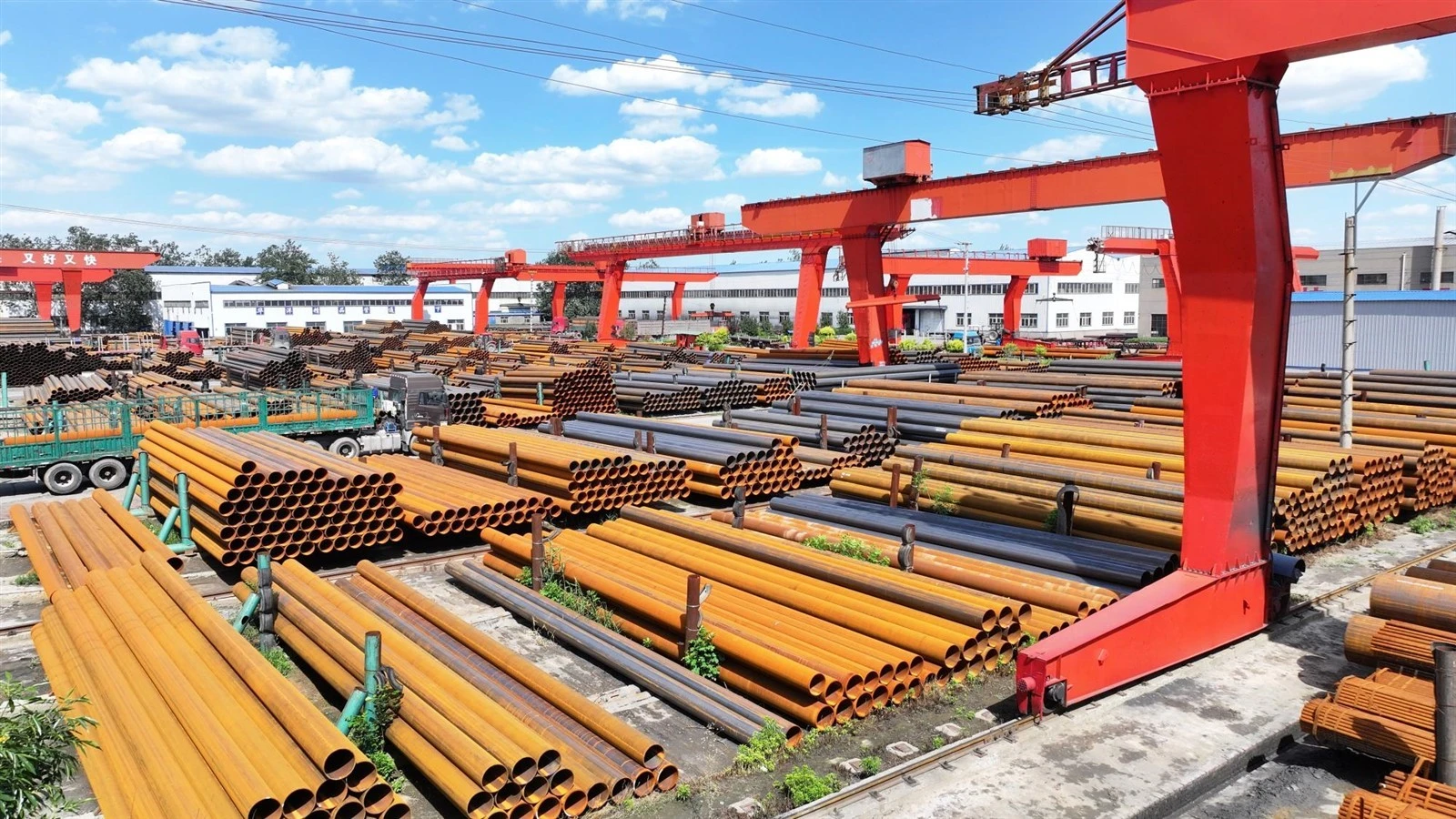
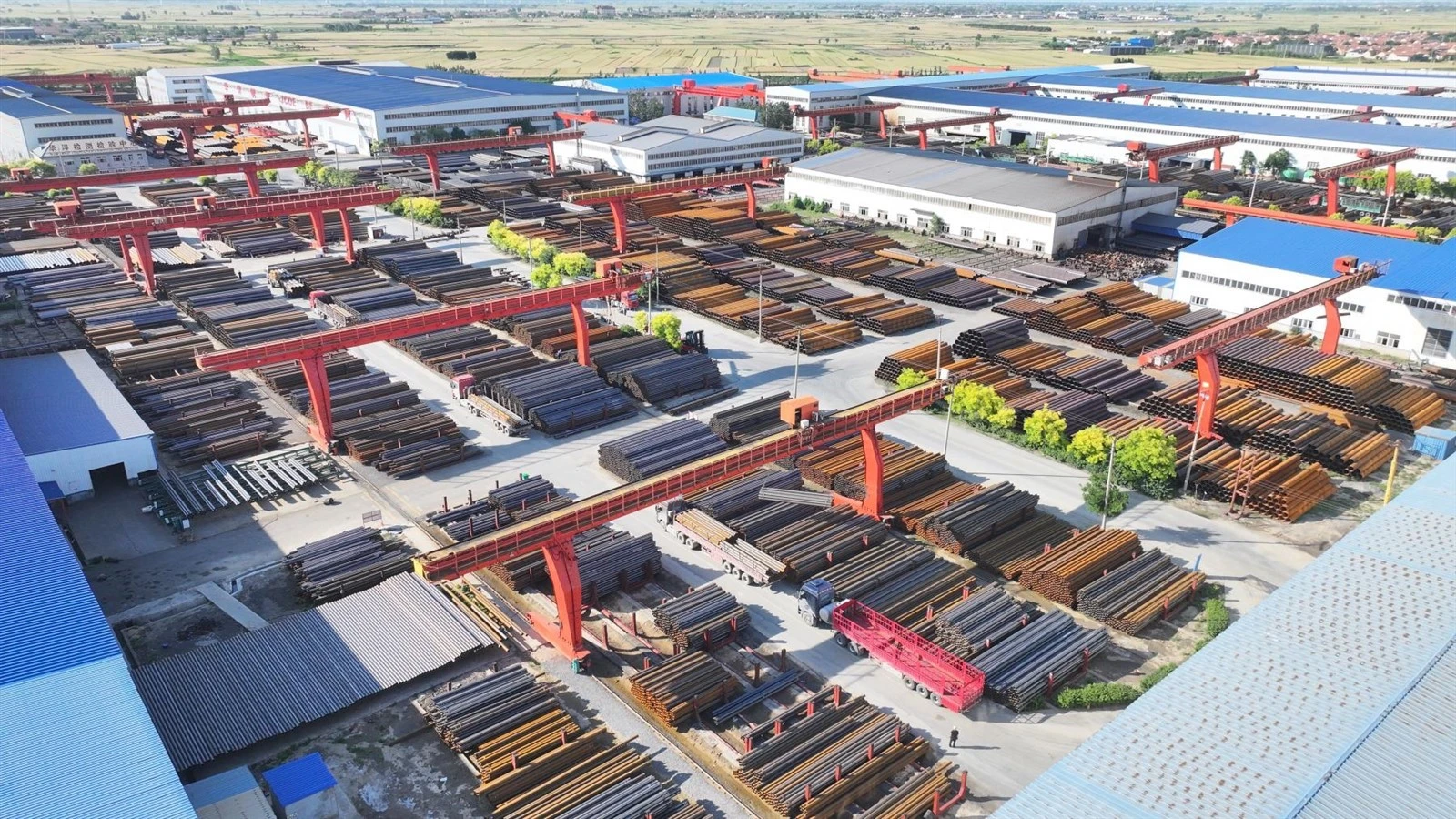
Huayang Steel Pipe uses multiple production lines to support large-scale steel pipe manufacturing. Different production lines can be arranged according to pipe type, size, material grade, and customer requirements, helping the company handle different orders while maintaining organized production schedules.
From Uncoiling to Pipe Finishing
For HFW steel pipe, the production process begins with steel coil preparation and uncoiling. The strip is then formed into a cylindrical shape before high frequency welding joins the edges. Subsequent sizing and finishing operations help bring the pipe to the specified dimensions.
HFW Production Supports Efficient Manufacturing
HFW steel pipe is particularly suitable for continuous, high-efficiency production. The use of steel coil and continuous forming allows large quantities of pipes to be produced with consistent process parameters.
Controlling Welding and Sizing
During HFW production, welding conditions and forming parameters need to remain stable. After welding, sizing equipment helps control the final outside diameter and shape. These controls are important when large quantities of the same specification are required.
For LSAW steel pipe, the production route is different. Steel plate is prepared, formed into a cylindrical shape, tack welded, and then welded through submerged arc welding. Processes such as JCOE forming allow manufacturers to produce large-diameter steel pipes with substantial wall thicknesses.
Multiple Production Lines Improve Supply Flexibility
Using multiple production lines gives a manufacturer greater flexibility when dealing with large or urgent orders. Production can be organized according to pipe specifications and delivery schedules instead of depending on a single production line.
However, production capacity must be supported by consistent quality management. Running multiple lines only creates value when each line follows the same technical requirements and inspection principles.
What Ensures Consistent Steel Pipe Quality Between Batches?
For large-volume procurement, buyers are not only concerned about whether the manufacturer can produce enough steel pipes. They also need confidence that the first batch and the last batch will meet the same requirements.
| Production Control | Quality Objective | Importance in Large Orders |
|---|---|---|
| Raw material inspection | Confirm material compliance | Establishes a consistent production foundation |
| Forming control | Maintain pipe shape and dimensions | Reduces variation between batches |
| Welding control | Maintain stable weld quality | Supports reliable structural and service performance |
| Sizing and finishing | Control final dimensions | Improves consistency during installation |
| Nondestructive testing | Identify potential defects | Provides additional weld and material assurance |
| Hydrostatic testing | Verify pressure resistance | Important for pressure-containing applications |
| Dimensional inspection | Confirm specified tolerances | Helps ensure batch-to-batch uniformity |
| Final inspection | Confirm overall compliance | Ensures products meet delivery requirements |
Quality Control Continues During Urgent Orders
Tight delivery schedules can create additional pressure on production management. However, accelerating production should not mean removing essential inspection steps or lowering technical requirements.
A professional manufacturer needs to balance production efficiency with quality assurance. Production schedules can be optimized, but critical controls such as material verification, welding control, dimensional inspection, and required testing should remain part of the process.
Stable Supply Requires More Than Production Capacity
A stable supplier needs coordinated production planning, raw material availability, equipment reliability, quality control, and logistics management. These factors work together to determine whether a large order can be completed on schedule without sacrificing consistency.
For international engineering projects, this capability is particularly valuable. Buyers may need steel pipes to arrive in several batches while maintaining the same specification and quality requirements throughout the project. Stable manufacturing and organized delivery can reduce uncertainty during project execution.
Why Does Batch Consistency Matter in Engineering Projects?
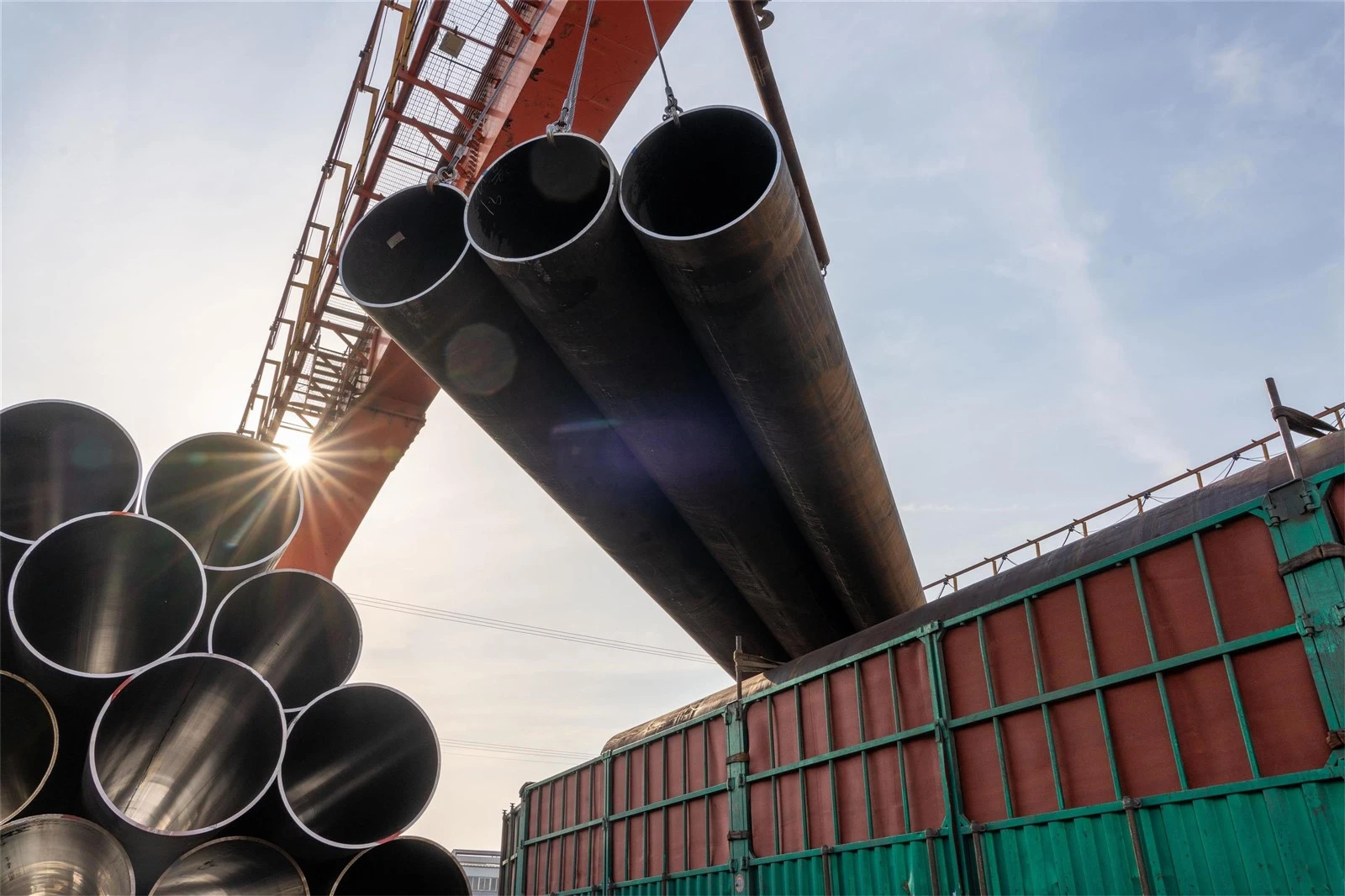
Large-scale steel pipe procurement is different from purchasing a small quantity for a single application. A major pipeline, water transmission system, structural project, or energy facility may require thousands of steel pipes. Even small variations repeated across a large quantity can create significant installation or quality-management issues.
Consistent dimensions make pipes easier to handle, connect, inspect, and install. Consistent material and weld performance also simplify quality documentation and project acceptance. For international buyers, stable batch quality can reduce the need for additional corrective work after delivery.
At Huayang Steel Pipe, we understand that large engineering orders require more than simply meeting a tonnage target. What our customers need is consistent quality throughout the entire order, from the first batch to the final shipment. That is why we coordinate production planning, process control, inspection, and delivery across multiple production lines, ensuring that each batch follows the same technical requirements and quality standards. Whether you are purchasing HFW or LSAW steel pipes, we focus on keeping dimensions, weld quality, and overall performance consistent throughout the order.
With HFW steel pipe production covering diameters from Φ48 to Φ660.4 mm and LSAW steel pipe production serving large-diameter applications, we can support different project requirements in terms of size, grade, specification, and quantity. For customers with large-volume or time-sensitive orders, we also provide supporting services such as pipe expansion, hydrostatic testing, dimensional inspection, and anti-corrosion treatment. Our goal is straightforward: to give every customer a stable supply, consistent quality, and greater confidence throughout the entire procurement process.
Read More:
Huayang Steel Pipe・Full-Process Inspection To Guard Quality And Reliability
How Do LSAW Steel Pipe And ERW Steel Pipe Differ in Production Process?


