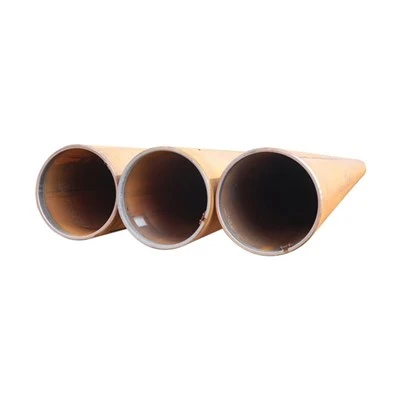
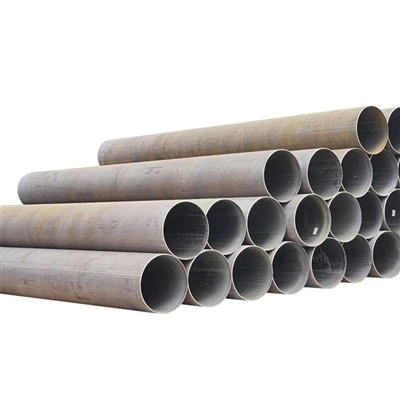
As global infrastructure continues to expand at an unprecedented pace, the demand for reliable, efficient, and cost-effective pipeline systems is higher than ever. From long-distance oil and gas transmission lines to urban water supply networks and industrial process pipelines, steel pipes form the backbone of modern engineering systems.
Among the various pipe manufacturing technologies available today, High Frequency Welded (HFW) steel pipes have become one of the most widely used solutions in infrastructure construction. Their combination of structural strength, manufacturing efficiency, dimensional precision, and adaptability to diverse operating conditions makes them an essential component in contemporary pipeline engineering.
This article explores HFW steel pipes from an application and performance perspective, highlighting how their structural behavior and engineering flexibility support a wide range of infrastructure projects worldwide.
Understanding HFW Steel Pipe Technology
HFW steel pipes are manufactured by forming hot rolled steel strip into a cylindrical shape and welding the edges together using high-frequency electric current. The current rapidly heats the strip edges to welding temperature, after which mechanical pressure forges the edges together to form a solid-state bond.
Unlike traditional fusion welding, HFW welding relies on resistance heating and forging pressure rather than filler metal. This results in a narrow and uniform heat-affected zone and a refined weld structure that closely matches the base material.
The continuous nature of HFW production enables high manufacturing efficiency and excellent dimensional consistency, making it possible to supply large-volume projects with uniform quality and predictable performance.
Structural Behavior Under Operating Loads
Pipeline systems operate under a combination of internal pressure, external loads, temperature variation, and environmental influences. The structural behavior of the pipe is therefore a critical factor in system reliability.
HFW steel pipes exhibit excellent hoop strength, which is the ability of the pipe wall to resist internal pressure. The longitudinal weld seam is oriented parallel to the pipe axis, meaning the circumferential stress is carried primarily by the base material. This structural configuration allows HFW pipes to perform reliably in pressurized applications such as oil, gas, and water transmission.
The uniform wall thickness and roundness achieved through precision forming and sizing contribute to even stress distribution along the pipe body. This reduces the risk of localized overstressing and enhances fatigue resistance in applications with cyclic pressure loading.
In buried pipelines, HFW pipes also demonstrate strong resistance to soil loads and external compression. When combined with appropriate bedding and backfill design, they provide long-term stability even in complex geotechnical environments.
Performance in Fluid Transportation Systems
One of the most important roles of HFW steel pipes is the transportation of fluids and gases across long distances. In these applications, hydraulic efficiency, pressure containment, and operational reliability are essential.
The smooth internal surface of HFW pipes minimizes friction losses and improves flow efficiency. This reduces pumping energy requirements and lowers long-term operating costs. In large-diameter transmission pipelines, even small improvements in hydraulic performance can result in significant energy savings over the system's lifetime.
HFW pipes are widely used in oil and gas gathering lines, transmission pipelines, water supply networks, industrial process pipelines, and slurry transport systems. Their ability to handle high internal pressure and temperature variations makes them suitable for both upstream and downstream energy applications.
With the addition of internal coatings such as epoxy or cement mortar lining, HFW pipes can be optimized for potable water systems, corrosion protection, and flow efficiency enhancement.
Adaptability to Harsh Environments
Infrastructure projects are often located in challenging environments, including deserts, mountains, offshore zones, permafrost regions, and seismic areas. In these conditions, pipeline materials must maintain performance under extreme mechanical and environmental stress.
HFW steel pipes offer excellent adaptability due to their metallurgical consistency and structural integrity. Their refined weld structure and controlled heat-affected zone provide stable mechanical behavior across a wide temperature range.
In cold regions, properly specified HFW pipes with low-temperature impact toughness can withstand brittle fracture risks. In high-temperature environments, alloyed or normalized steel grades provide resistance to strength degradation and thermal fatigue.
For corrosive environments, HFW pipes can be supplied with external coatings such as three-layer polyethylene, fusion bonded epoxy, or polyurethane, combined with cathodic protection systems. These corrosion control measures extend pipeline service life and reduce maintenance requirements.
Engineering Flexibility in Project Design
Modern infrastructure projects require materials that can adapt to complex design requirements. HFW steel pipes offer a high level of engineering flexibility in terms of size range, wall thickness, steel grade, and surface treatment.
HFW production lines can manufacture pipes in a wide diameter range with precise wall thickness control. This allows engineers to optimize pipe design based on pressure rating, flow capacity, and installation conditions.
The availability of multiple steel grades enables designers to balance strength, toughness, weldability, and cost. Higher-strength grades allow for thinner wall designs, reducing material weight and transportation costs without compromising safety.
HFW pipes are also compatible with a wide range of joining methods, including girth welding, flanged connections, and mechanical couplings. This simplifies field installation and allows for flexible pipeline routing.
Installation Efficiency and Construction Advantages
Pipeline construction schedules are often tight, particularly in large infrastructure projects where delays can result in significant economic losses. HFW steel pipes support efficient installation due to their dimensional accuracy, straightness, and consistent weld quality.
Their uniform geometry simplifies alignment during field welding and reduces fit-up time. The predictable mechanical behavior of HFW pipes allows welding procedures to be standardized, improving productivity and reducing rework.
Compared to heavier-wall alternatives, HFW pipes offer favorable strength-to-weight ratios, making handling and transportation more efficient. This is particularly beneficial in remote project locations where logistics can be complex and costly.
Lifecycle Performance and Cost Efficiency
From a lifecycle perspective, pipeline owners must consider not only initial material cost but also long-term operating and maintenance expenses. HFW steel pipes deliver strong economic performance across the entire asset lifecycle.
Their high manufacturing efficiency results in competitive pricing for large-volume projects. Their consistent quality reduces the risk of early failures, unplanned maintenance, and production downtime.
When combined with proper corrosion protection systems and routine inspection programs, HFW pipelines can achieve service lives of several decades with minimal intervention. This long-term reliability translates into lower total cost of ownership and improved return on investment for infrastructure operators.


Applications Across Global Infrastructure
HFW steel pipes are used extensively across a wide range of infrastructure sectors.
In the energy industry, they serve as gathering lines, transmission pipelines, and distribution networks for oil, natural gas, hydrogen, and carbon dioxide.
In municipal infrastructure, they form the backbone of water supply systems, wastewater networks, and district heating pipelines.
In industrial facilities, they support process piping, cooling water systems, compressed air networks, and chemical transport lines.
In construction and transportation, HFW pipes are used for bridge structures, piling, foundations, and structural frameworks.
Their versatility and proven performance make them a universal solution for modern engineering challenges.
Typical Engineering Standards for HFW Pipes
HFW pipes are produced in accordance with international engineering standards that define their mechanical performance, dimensional tolerances, and inspection requirements.
| Standard | Engineering Application |
|---|---|
| API 5L | Oil and gas pipelines |
| ASTM A53 | Pressure and general piping |
| ASTM A500 | Structural applications |
| EN 10219 | Structural hollow sections |
| ISO 3183 | Energy transmission systems |
These standards ensure global compatibility and facilitate international project execution.
Supporting the Future of Sustainable Infrastructure
As the world moves toward cleaner energy systems and more sustainable infrastructure, pipeline networks will play a key role in hydrogen transport, carbon capture and storage, and renewable energy integration.
HFW steel pipes are well positioned to support these emerging applications due to their adaptability, mechanical strength, and compatibility with advanced coating and lining technologies.
Their efficient manufacturing process also contributes to lower carbon emissions compared to more energy-intensive pipe production methods, supporting the sustainability goals of modern engineering projects.
Conclusion
High Frequency Welded steel pipes are a cornerstone of modern infrastructure development. Their excellent structural behavior, fluid transport performance, environmental adaptability, and engineering flexibility make them an indispensable material for pipeline systems around the world.
From energy transmission and water supply to industrial processing and urban development, HFW pipes deliver the reliability and efficiency required to support long-term infrastructure performance.
As global demand for resilient and sustainable infrastructure continues to grow, HFW steel pipes will remain a trusted and proven solution at the heart of the world's most critical pipeline networks.