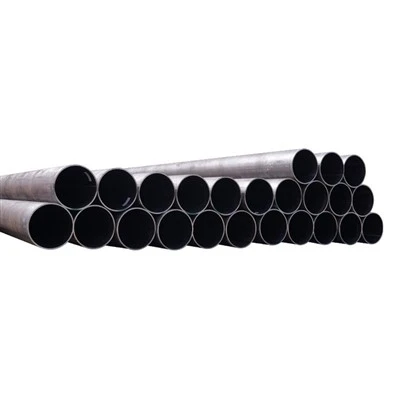
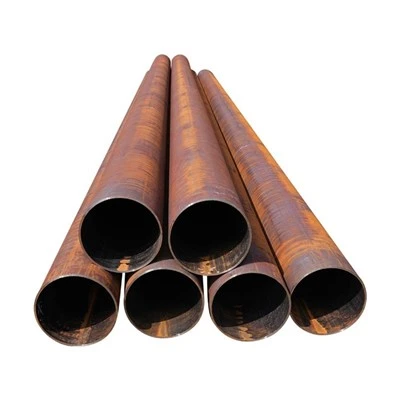
In modern pipeline engineering, safety and reliability are not optional requirements but fundamental design principles. Whether transporting oil and gas across thousands of kilometers, delivering clean water to urban networks, or supporting large-scale infrastructure projects, steel pipes must perform flawlessly under demanding conditions. Among the many pipe manufacturing technologies in use today, High Frequency Welded (HFW) steel pipes stand out not only for their efficient production but also for the high level of quality control that can be achieved throughout the manufacturing process.
With the integration of advanced inspection systems, digital monitoring, and automated defect detection, HFW steel pipes have become a benchmark product for consistent quality and long-term operational stability.
Why Quality Control Is Critical in Pipeline Engineering
Pipeline systems operate under complex mechanical and environmental loads. Internal pressure, temperature fluctuations, vibration, soil movement, and corrosion all place continuous stress on the pipe body and weld seam. A single defect in the weld or base material can lead to leakage, pressure loss, environmental damage, or even catastrophic failure.
As a result, modern engineering projects demand pipes that meet strict international standards for strength, toughness, dimensional accuracy, and weld integrity. Quality control is no longer limited to final inspection but is embedded into every stage of the manufacturing process.
HFW steel pipe production is particularly well suited for this approach because it is based on a fully continuous and highly automated process that allows real-time monitoring and corrective control.
From Raw Material to Finished Pipe: A Controlled Manufacturing Chain
The quality of an HFW pipe begins with the selection of raw material. High-quality hot rolled steel coils with controlled chemical composition and mechanical properties are used as the base material. These coils are typically produced by large integrated steel mills under strict metallurgical standards.
Before entering the pipe mill, the coils undergo incoming inspection, including chemical analysis, mechanical testing, surface inspection, and dimensional verification. Only qualified material is released into production.
During forming, the steel strip passes through multiple precision rollers that gradually shape it into a round tube. Each forming stand is digitally controlled to ensure uniform deformation and prevent residual stress or shape distortion.
At the welding station, high-frequency induction current heats the strip edges to the ideal welding temperature within milliseconds. Forging pressure is applied immediately to create a solid-state bond. The entire process is monitored by temperature sensors, current meters, and pressure feedback systems to ensure a stable and repeatable weld.
After welding, the external and internal weld beads are removed, and the pipe enters the sizing and straightening section, where its final dimensions are precisely controlled.
The Role of Online Non-Destructive Testing
One of the defining features of modern HFW pipe production is the integration of online non-destructive testing systems. These inspection technologies operate continuously during production, allowing defects to be detected and isolated in real time.
Ultrasonic testing systems scan the full length of the weld seam and adjacent base material, identifying internal discontinuities such as lack of fusion, inclusions, or porosity. Eddy current testing focuses on surface and near-surface defects, ensuring that even microscopic cracks or laps are detected.
These systems are fully automated and synchronized with the production line speed. When a defect is detected, the pipe section is automatically marked or rejected, preventing defective material from reaching the customer.
This real-time inspection capability dramatically improves product reliability and eliminates the risk of undetected weld defects.
Dimensional Control and Precision Measurement
In many engineering applications, dimensional accuracy is just as important as mechanical strength. Improper outer diameter, wall thickness variation, or ovality can cause installation problems, sealing failures, or uneven stress distribution.
HFW production lines use laser measurement systems to continuously monitor pipe diameter, wall thickness, straightness, and roundness. These systems provide instant feedback to the forming and sizing units, allowing automatic adjustment if any deviation occurs.
As a result, HFW pipes are produced with extremely tight dimensional tolerances, making them ideal for applications that require precise fit-up and alignment, such as pipeline welding, flange connections, and mechanical assemblies.
Hydrostatic Testing and Pressure Verification
For pipelines that operate under internal pressure, hydrostatic testing is a critical verification step. During this test, each pipe is filled with water and pressurized to a level well above its design pressure.
This test confirms the structural integrity of the pipe body and the weld seam under real operating conditions. Any leakage, deformation, or pressure loss is immediately detected.
Hydrostatic testing not only verifies manufacturing quality but also provides confidence to project owners, engineers, and regulatory authorities that the pipe meets all safety requirements.
Mechanical Testing and Metallurgical Validation
In addition to online inspection, HFW pipes undergo a series of laboratory tests to validate their mechanical and metallurgical properties.
Tensile tests verify yield strength, tensile strength, and elongation. Flattening and bend tests evaluate the ductility and toughness of the weld seam. Impact tests confirm resistance to brittle fracture at low temperatures.
Metallographic analysis examines the microstructure of the weld zone and heat-affected zone to ensure proper grain refinement and uniformity.
These tests ensure that the pipe not only meets dimensional and surface requirements but also delivers long-term structural reliability.
Traceability and Digital Quality Records
Modern HFW mills operate under full traceability systems. Each pipe is assigned a unique identification number that links it to its raw material batch, production parameters, inspection results, and test records.
This digital quality record allows complete transparency throughout the supply chain. Project owners can trace every pipe back to its manufacturing data, ensuring accountability and compliance with international standards.
In large-scale infrastructure projects, this level of traceability is essential for quality audits, regulatory approval, and long-term asset management.
Typical Quality Standards for HFW Steel Pipes
HFW pipes are manufactured in accordance with a wide range of international standards depending on their application.
| Standard | Typical Application |
|---|---|
| API 5L | Oil and gas transmission pipelines |
| ASTM A53 | General piping and pressure systems |
| ASTM A500 | Structural tubing |
| EN10219 | Structural hollow sections |
| ISO 3183 | Petroleum and natural gas industries |
These standards define requirements for chemical composition, mechanical properties, dimensional tolerances, inspection methods, and testing procedures, ensuring global compatibility and acceptance.


Long-Term Performance and Service Reliability
The true value of an HFW steel pipe is measured not only at the time of delivery but over decades of service. When properly manufactured, inspected, coated, and installed, HFW pipelines demonstrate excellent resistance to fatigue, corrosion, and mechanical wear.
The uniform weld structure and narrow heat-affected zone contribute to stable long-term performance under cyclic pressure and temperature changes. With appropriate corrosion protection systems such as galvanizing, epoxy coating, or polyethylene coating, HFW pipes can achieve service lives exceeding 30 to 50 years.
This long-term reliability is one of the key reasons HFW pipes are widely used in municipal water systems, industrial pipelines, and energy infrastructure around the world.
Supporting Global Infrastructure Development
As urbanization, energy transition, and industrial expansion continue worldwide, demand for safe and efficient pipeline systems is growing rapidly. HFW steel pipes support this development by providing a scalable, cost-effective, and technically robust solution for large-volume projects.
Their ability to combine high productivity with strict quality assurance makes them especially suitable for long-distance pipelines, cross-border energy corridors, and large municipal infrastructure programs.
Conclusion
High Frequency Welded steel pipes represent far more than a simple manufacturing product. They embody a complete engineering system built on precision forming, advanced welding, real-time inspection, and digital quality control.
Through continuous technological innovation and strict adherence to international standards, HFW pipe manufacturers deliver products that meet the highest expectations for safety, reliability, and durability.
In a world where infrastructure performance directly impacts economic development, environmental protection, and public safety, HFW steel pipes stand as a trusted foundation for the pipelines that keep modern society moving.