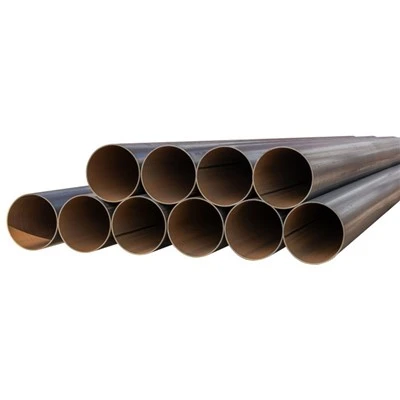
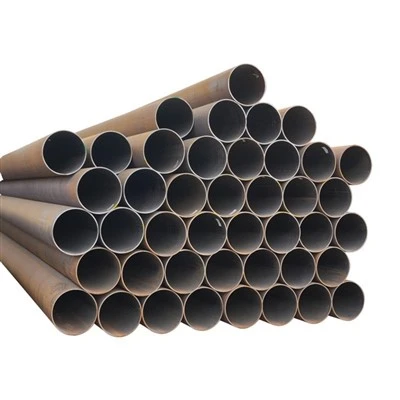
In the demanding world of pipeline infrastructure, the battle against corrosion is ceaseless. Steel pipes, whether Longitudinally Submerged Arc Welded (LSAW), High-Frequency Welded (HFW), or Electric Resistance Welded (ERW), are vulnerable to degradation from aggressive environments, leading to potential leaks, operational disruptions, and significant economic losses. To combat this, Fusion Bond Epoxy (FBE) coating has long been a cornerstone of pipeline protection, renowned for its superior adhesion and corrosion resistance. But what is the underlying science that makes FBE such an effective barrier against the relentless forces of corrosion? Hebei Huayang Steel Pipe Co., Ltd., a leading manufacturer of anti-corrosion steel pipes, delves into the chemical and physical principles that establish FBE as a critical component in ensuring pipeline longevity.
The Fundamental Challenge: Electrochemical Corrosion
Corrosion in buried or submerged pipelines is primarily an electrochemical process. When steel (anode) is exposed to an electrolyte (e.g., moist soil, water) and connected to a cathode, an electrical circuit forms. Iron atoms lose electrons (oxidation), forming rust, while electrons flow to the cathode, where they react with oxygen and water. This process is accelerated by factors like varying soil chemistry, stray currents, and microbial activity.
Effective anti-corrosion coatings must:
•Isolate the steel from the corrosive environment.
•Provide high electrical resistance to disrupt the electrochemical circuit.
•Exhibit excellent adhesion to prevent electrolyte ingress.
•Be chemically inert to resist degradation.
•Withstand mechanical stresses during installation and operation.


The Science Behind FBE: A Thermoset Polymer Solution
FBE is a thermoset polymer coating applied as a dry powder to a preheated steel pipe. The process involves:
1.Surface Preparation: The steel pipe surface is meticulously cleaned through abrasive blasting (e.g., Sa 2.5 or Sa 3) to remove rust, mill scale, and contaminants, creating a rough profile for mechanical keying.
2.Preheating: The pipe is heated to a specific temperature (typically 220-250°C) to facilitate the melting and curing of the epoxy powder.
3.FBE Application: The finely ground epoxy powder is electrostatically sprayed onto the hot pipe surface. The heat causes the powder particles to melt, flow, and chemically react (cure) to form a continuous, uniform film.
4.Curing: The pipe continues through a curing oven to ensure complete cross-linking of the epoxy polymer, achieving its final mechanical and chemical properties.
Key Scientific Principles of FBE Effectiveness:
•Chemical Adhesion (Covalent Bonding): Unlike many coatings that rely solely on mechanical adhesion, FBE forms strong covalent bonds with the prepared steel surface. The epoxy resins contain functional groups (e.g., hydroxyl groups) that react with the active sites on the steel surface (e.g., iron oxides), creating a robust, permanent chemical link. This strong bond is critical for preventing underfilm corrosion and cathodic disbondment.
•Barrier Protection: The cured FBE film creates an impermeable barrier that physically separates the steel substrate from corrosive elements (water, oxygen, ions) in the environment. Its dense, cross-linked polymer structure minimizes moisture and oxygen permeability.
•High Electrical Resistance: FBE is an excellent electrical insulator, effectively disrupting the electrochemical circuit required for corrosion. This property is vital for the efficient operation of cathodic protection (CP) systems, as it minimizes the current demand.
•Cathodic Disbondment Resistance: This is a critical property for coatings used in conjunction with CP. When a coating is damaged, CP current can cause the coating to disbond from the steel. FBE's strong chemical bond and high pH resistance at the disbondment front make it highly resistant to this phenomenon, ensuring that even if a small area is damaged, the disbondment does not propagate extensively.
•Chemical Resistance: FBE exhibits good resistance to a wide range of chemicals, including acids, alkalis, and hydrocarbons, commonly found in soil and transported fluids.
•Mechanical Toughness: While not as mechanically robust as multi-layer systems, FBE provides sufficient toughness to withstand moderate handling and installation stresses, especially when applied at optimal thickness.
Huayang's Commitment to FBE Coating Excellence
At Hebei Huayang Steel Pipe Co., Ltd., our FBE coating facilities are designed to leverage these scientific principles to their fullest. We ensure:
•Meticulous Surface Preparation: Achieving Sa 2.5 or Sa 3 blast cleaning standards to create an ideal surface for chemical bonding.
•Precise Temperature Control: Maintaining optimal preheating and curing temperatures for proper epoxy melting, flow, and cross-linking.
•Uniform Application: Electrostatic spray systems ensure a consistent and uniform FBE film thickness.
•Rigorous Quality Control: Continuous monitoring of film thickness, holiday detection (pinhole testing), adhesion tests, flexibility tests, and cathodic disbondment tests according to international standards (e.g., ISO 21809-2, NACE SP0394).
Our FBE coated LSAW, HFW, and ERW steel pipes are engineered to provide superior, long-lasting corrosion protection, ensuring the integrity and operational reliability of your pipeline assets in diverse and challenging environments.
Key Scientific Aspects of FBE Coating for Steel Pipes
|
Aspect |
Description |
Benefit for Corrosion Protection |
|
Chemical Adhesion |
Covalent bonds formed between epoxy and steel surface. |
Prevents underfilm corrosion, high resistance to cathodic disbondment. |
|
Barrier Protection |
Impermeable film separates steel from corrosive elements. |
Blocks water, oxygen, and ions from reaching the steel. |
|
Electrical Insulation |
High electrical resistance of the epoxy film. |
Disrupts electrochemical corrosion, optimizes cathodic protection efficiency. |
|
Chemical Resistance |
Stable polymer structure resists various chemicals. |
Protects against degradation from soil chemicals and transported fluids. |
|
Thermoset Properties |
Cured polymer forms a rigid, cross-linked network. |
Provides mechanical toughness and maintains integrity over time. |
In conclusion, the effectiveness of Fusion Bond Epoxy (FBE) coating as a superior anti-corrosion solution for steel pipes is rooted in its fundamental scientific principles: strong chemical adhesion, excellent barrier properties, high electrical resistance, and robust chemical stability. Hebei Huayang Steel Pipe Co., Ltd. harnesses this science through meticulous manufacturing and stringent quality control, delivering FBE coated LSAW, HFW, and ERW steel pipes that provide unparalleled protection and ensure the long-term integrity and performance of critical pipeline infrastructure worldwide.