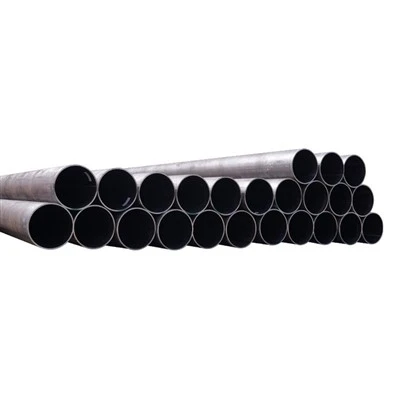
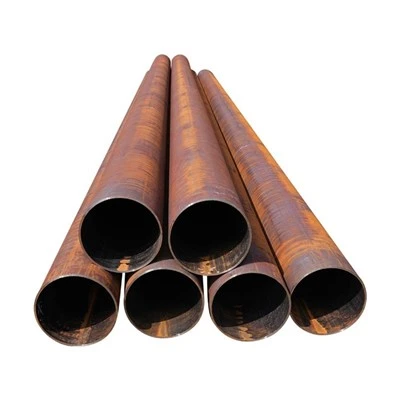
Oil Country Tubular Goods (OCTG) pipes operate in some of the most demanding industrial environments on earth. Installed thousands of meters below ground, they are exposed to extreme internal pressures, external formation stresses, temperature gradients, and corrosive fluids containing carbon dioxide or hydrogen sulfide. Under these conditions, the choice of carbon steel grade is not a routine material decision but a critical engineering judgment that directly affects well integrity, operational safety, and lifecycle cost.
Carbon steel remains the dominant material for OCTG pipes because it provides a practical balance between mechanical strength, manufacturability, and economic efficiency. While alloyed and corrosion-resistant materials are used in specialized wells, the majority of global drilling operations rely on standardized carbon steel grades defined under API 5CT. Understanding these grades requires examining not only their strength levels but also their metallurgical design philosophy and service limitations.
Understanding Carbon Steel in the OCTG Context
Chemical Composition Control
Carbon steel used in OCTG applications typically contains controlled amounts of carbon, manganese, silicon, and trace alloying elements. The carbon content is carefully balanced. Higher carbon increases strength but reduces ductility and weldability, while lower carbon improves toughness but limits achievable yield strength. Manganese enhances hardenability and tensile properties, and microalloying elements may be added to refine grain structure.
For standard grades such as J55 and K55, the chemistry is relatively simple and optimized for moderate-depth wells. As strength requirements increase in grades like N80 or P110, stricter control over composition and heat treatment becomes essential to prevent brittleness and ensure uniform mechanical performance along the pipe body and threaded connections.
Heat Treatment and Microstructure
Heat treatment plays a decisive role in defining OCTG mechanical properties. Lower grades may be normalized to produce a uniform ferrite-pearlite microstructure. Higher grades often undergo quenching and tempering, which transforms the steel into a tempered martensitic structure with significantly higher yield strength.
The challenge in OCTG production is achieving high strength while maintaining adequate impact toughness, especially in low-temperature environments. Improper heat treatment can lead to excessive hardness, increasing susceptibility to sulfide stress cracking in sour wells. Therefore, metallurgical control is as important as nominal grade designation.


Common Carbon Steel Grades and Their Applications
The API system categorizes OCTG carbon steel grades primarily by minimum yield strength. However, practical selection depends on depth, pressure, temperature, and fluid chemistry rather than strength alone.
The following table summarizes commonly used carbon steel grades for casing and tubing.
| API Grade | Minimum Yield Strength (MPa) | Typical Well Depth | Heat Treatment Condition | General Application |
|---|---|---|---|---|
| J55 | 379 | Shallow | Normalized | Surface and conductor casing |
| K55 | 379 | Shallow to medium | Normalized | General-purpose casing |
| N80 | 552 | Medium | Normalized or Q&T | Intermediate casing |
| L80 | 552 | Medium to deep | Quenched & Tempered | Sour service environments |
| C90 | 620 | Deep | Quenched & Tempered | Higher pressure wells |
| P110 | 758 | Deep and high-pressure | Quenched & Tempered | Production casing in HP wells |
J55 and K55 are widely used in low-pressure environments where structural support is the primary function. N80 represents a significant step up in strength and is commonly used for intermediate strings. L80, although similar in strength to N80, is specifically designed with hardness limitations to improve resistance to hydrogen sulfide-induced cracking.
P110 is one of the highest-strength conventional carbon steel grades in common use. It enables deeper drilling and higher-pressure containment but requires precise control to avoid brittle failure or connection weakness.
Mechanical Property Relationships
While yield strength is the primary classification parameter, OCTG performance depends on multiple mechanical indicators. Tensile strength determines ultimate load capacity, elongation reflects ductility, and impact toughness measures resistance to sudden fracture.
The following table illustrates typical mechanical property ranges for selected grades.
| Grade | Yield Strength Range (MPa) | Tensile Strength (MPa) | Minimum Elongation (%) | Key Performance Focus |
|---|---|---|---|---|
| J55 | 379–552 | ≥ 517 | 19 | Structural reliability |
| N80 | 552–758 | ≥ 689 | 18 | Balanced strength |
| L80 | 552–655 | ≥ 655 | 18 | Crack resistance |
| P110 | 758–965 | ≥ 862 | 17 | High pressure tolerance |
As yield strength increases, elongation typically decreases slightly, reflecting the trade-off between strength and ductility. Engineers must evaluate this balance carefully, especially in wells subject to dynamic loading or thermal cycling.
Environmental and Operational Constraints
Carbon steel grades used in OCTG must match environmental exposure conditions. In sweet wells where hydrogen sulfide concentration is negligible, standard grades such as N80 or P110 are generally sufficient. However, in sour service wells containing H₂S, hardness limitations become critical to prevent sulfide stress cracking. Grades like L80 are specifically engineered for such conditions, with maximum hardness thresholds defined in standards.
Temperature also affects material behavior. Deep wells may experience high bottom-hole temperatures that reduce yield strength. Conversely, cold environments increase the risk of brittle fracture. Impact testing at specified temperatures ensures adequate fracture toughness.
In addition to downhole conditions, connection design significantly influences grade selection. High-strength materials require premium threaded connections to maintain joint integrity under axial tension and internal pressure.
Economic and Lifecycle Considerations
Although higher grades offer superior strength, they also increase procurement and processing costs. Over-specification can lead to unnecessary capital expenditure, while under-specification raises the probability of failure and costly well remediation. Therefore, OCTG grade selection is an optimization exercise that balances safety margins with economic efficiency.
Lifecycle cost analysis often includes factors such as corrosion allowance, anticipated production duration, and potential workover operations. In long-term production wells, selecting a grade with enhanced durability may reduce overall operating expenses despite higher initial investment.
Conclusion
Carbon steel grades used in OCTG pipes are engineered solutions tailored to specific downhole environments rather than simple strength categories. From J55 in shallow structural applications to P110 in deep high-pressure wells, each grade reflects a controlled combination of chemical composition, heat treatment, and mechanical performance. Proper understanding of yield strength, toughness, environmental resistance, and operational demands ensures that OCTG pipes fulfill their fundamental mission: maintaining well integrity safely and efficiently throughout the drilling and production lifecycle.