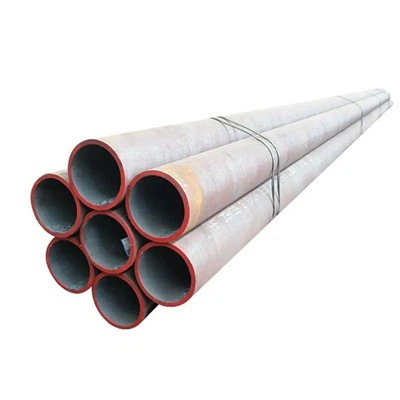
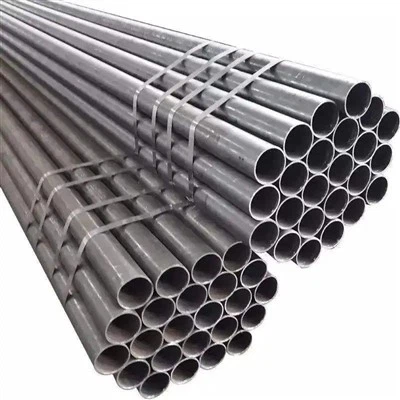
As a seasoned supplier of Electric Resistance Welded (ERW) steel pipes, I've witnessed firsthand the critical role that quality standards play in the industry. ERW steel pipes are widely used in various sectors, including construction, oil and gas, and automotive, due to their cost - effectiveness, high production efficiency, and good mechanical properties. In this blog, I'll delve into what the quality standards of ERW steel pipes entail.
1. Dimensional Accuracy
One of the fundamental aspects of the quality standard for ERW steel pipes is dimensional accuracy. The outer diameter (OD), wall thickness, and length of the pipes must adhere to specific tolerances. These tolerances are set to ensure that the pipes can be used interchangeably in different applications and fit properly into the intended systems.
For example, in the construction of a pipeline, if the outer diameter of the ERW steel pipes varies significantly from the specified value, it can lead to difficulties in connecting the pipes, resulting in leaks or structural instability. Similarly, inconsistent wall thickness can affect the pipe's pressure - bearing capacity.
Industry standards such as ASTM A53 ASTM A53 ERW Steel Pipe provide clear guidelines on the allowable tolerances for OD, wall thickness, and length. Manufacturers are required to use precision measuring tools, such as calipers and ultrasonic thickness gauges, to ensure that the pipes meet these dimensional requirements.


2. Weld Quality
The weld is the most critical part of an ERW steel pipe, as it joins the edges of the steel strip to form a continuous tube. High - quality welds are essential for the pipe's overall strength and integrity.
There are several factors that contribute to good weld quality. First, the welding process must be carefully controlled. The heat input, welding speed, and electrode pressure need to be optimized to ensure a proper fusion of the steel edges. If the heat input is too high, it can cause excessive melting and result in a weak weld with large heat - affected zones. On the other hand, insufficient heat input may lead to incomplete fusion.
Non - destructive testing (NDT) methods are commonly used to inspect the weld quality. Ultrasonic testing (UT) can detect internal flaws, such as cracks or lack of fusion, in the weld. Magnetic particle testing (MT) is effective for detecting surface - breaking defects. Visual inspection is also an important part of the quality control process, where trained inspectors look for obvious signs of weld defects, such as porosity or undercutting.
3. Material Quality
The quality of the raw material used to manufacture ERW steel pipes has a direct impact on the final product's quality. The steel strip or coil should have the appropriate chemical composition and mechanical properties.
The chemical composition of the steel affects its strength, corrosion resistance, and weldability. For example, carbon content influences the steel's hardness and strength. Higher carbon content generally results in stronger steel but may reduce its weldability. Other alloying elements, such as manganese, silicon, and chromium, are also added to enhance specific properties.
Mechanical properties, such as tensile strength, yield strength, and elongation, are crucial for the pipe's performance. Tensile strength measures the maximum stress the pipe can withstand before breaking, while yield strength indicates the stress at which the pipe begins to deform plastically. Elongation is a measure of the pipe's ductility.
Manufacturers typically source high - quality steel from reliable suppliers and conduct material testing, including chemical analysis and mechanical testing, to ensure that the raw material meets the required standards.
4. Surface Finish
The surface finish of an ERW steel pipe is not only important for aesthetic reasons but also for its functionality. A smooth and clean surface can prevent corrosion and improve the pipe's flow characteristics.
During the manufacturing process, the pipes may be subject to surface defects, such as scale, rust, or scratches. These defects can act as initiation points for corrosion, reducing the pipe's service life. To achieve a good surface finish, the pipes are often subjected to processes such as pickling, galvanizing, or coating.
Pickling is a chemical process that removes scale and rust from the pipe's surface. Galvanizing involves coating the pipe with a layer of zinc to provide corrosion protection. Coating, such as epoxy or polyethylene coating, can also be applied to enhance the pipe's resistance to corrosion and abrasion.
5. Pressure Testing
Pressure testing is a crucial step in ensuring the quality of ERW steel pipes. It verifies the pipe's ability to withstand the intended operating pressure without leaking or bursting.
There are two main types of pressure tests: hydrostatic testing and pneumatic testing. Hydrostatic testing involves filling the pipe with water and applying a specified pressure for a certain period. This method is widely used because water is incompressible, which allows for accurate pressure measurement and detection of leaks.
Pneumatic testing, on the other hand, uses air or another gas to pressurize the pipe. It is less commonly used than hydrostatic testing because it poses a higher risk of explosion if a sudden failure occurs.
The pressure and duration of the test are determined by industry standards and the specific application of the pipe. For example, pipes used in high - pressure oil and gas pipelines may require more rigorous pressure testing than those used in low - pressure water supply systems.
6. Compliance with Industry Standards
In addition to the specific quality requirements mentioned above, ERW steel pipes must comply with relevant industry standards. These standards are developed by organizations such as ASTM (American Society for Testing and Materials), API (American Petroleum Institute), and ISO (International Organization for Standardization).
Standards like ASTM A53 ERW Steel Pipe provide a comprehensive set of requirements for the manufacturing, testing, and inspection of ERW steel pipes. API 5L Sch60 Steel Pipe is specifically designed for pipes used in the oil and gas industry, with more stringent requirements for materials, weld quality, and pressure - bearing capacity.
Manufacturers need to ensure that their products meet these standards to gain market acceptance and meet the expectations of customers. Certification bodies can issue certificates to confirm that the pipes comply with the relevant standards, which is often a requirement for large - scale projects.
Conclusion
The quality standards of ERW steel pipes are multi - faceted, encompassing dimensional accuracy, weld quality, material quality, surface finish, pressure testing, and compliance with industry standards. As a supplier, we are committed to producing ERW steel pipes that meet the highest quality standards. Our products, such as HFW Carbon Welded Steel Pipe From China, are manufactured using advanced technology and strict quality control measures.
If you are in the market for high - quality ERW steel pipes, we invite you to contact us for a detailed discussion on your specific requirements. We are ready to provide you with the best solutions and products to meet your needs.
References
- ASTM International. ASTM A53/A53M - 21, Standard Specification for Pipe, Steel, Black and Hot - Dipped, Zinc - Coated, Welded and Seamless.
- American Petroleum Institute. API 5L, Specification for Line Pipe.
- International Organization for Standardization. ISO 9001:2015, Quality management systems — Requirements.